| Author |
 Replies: 137 / Views: 11,224 Replies: 137 / Views: 11,224 |
|
|
|
Valued Member
98 Posts |
|
|
Sure, there can be different opinions about this :), I respect yours of you all, of course.
I always miss this piece of information from the PSE and PF side when it is about very rare stamps where part of the identification is on the back of the stamp.
|
Send note to Staff 
|
|
|
Pillar Of The Community

United States
1161 Posts |
|
|
The PF will (sometimes) photograph the back where it is important to the identification. For example here is a "green inscription on reverse omitted". 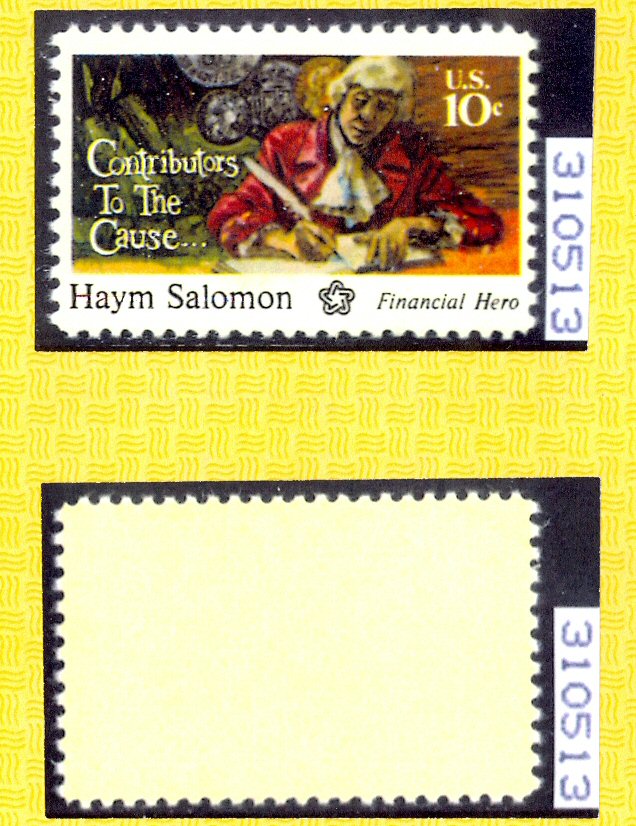 I agree with the consensus here that scanning the back will be meaningless 99% of the time, especially because the quality of the scan is not high enough to see anything meaningful. |
|
Send note to Staff
|
|
|
Valued Member
98 Posts |
|
|
Sure, the quality of the scan is another thing :).
After all, for me, more information is always better than less information.
Would be amazing to see high quality scans from the bluish paper stamps, the rare grills including the experimentals, the texture and color (yes I know) of the original gum, possible setoff of flat stamps, pink backs, part india paper, ribbed/laid paper, stitch watermark, perhaps paper structure and fibers, transparent vs opaque paper, printed on reverse, and so on. |
|
Send note to Staff
|
|
|
Pillar Of The Community

United States
1273 Posts |
|
|
Valued Member
98 Posts |
|
|
yes, I forgot about this size difference, indeed - this is also mentioned in the PF Opinions II, page 73, article is "Identifying Ungrilled 1869 Stamps" by Stollnitz. |
|
Send note to Staff
|
|
|
Pillar Of The Community
United States
752 Posts |
|
|
Al E Gator: your comment is exactly what Robert Ofenweller was referring to in his 1979 article in the Philatelist. He noted that the originals had a horizontal mesh to the paper whereas the reissues had a vertical mesh that led to the dimension changes you note on your post rider stamp. Odenweller noted that this only applied to the lower values of the series. But you can't get lower than the one cent. |
|
Send note to Staff
|
|
|
Bedrock Of The Community
United States
10869 Posts |
|
|
Dealing with a circular shape for 112, which would make it very difficult to see small differences, assuming that they are there. |
|
Send note to Staff
|
|
|
Valued Member
98 Posts |
|
|
the size difference is because of the paper grain, and this is quite clearly visible mostly, and if not by the curl test. |
|
Send note to Staff
|
| Edited by littbarski - 11/20/2025 3:33 pm |
|
|
Bedrock Of The Community
United States
10869 Posts |
|
|
I suspect that it is not quite as easily visible as you might think. But the sharpness of the impression relative to the issued stamp is very clear, as are the shade differences. |
|
Send note to Staff
|
|
|
Valued Member
98 Posts |
|
|
sure, also important, what I like when choosing paper grain for identification of a stamp, that it is just 0 or 1, on or off, not like any color or printing appearance. Usually you can detect the paper grain quite easily. |
|
Send note to Staff
|
|
|
Pillar Of The Community
United States
1273 Posts |
|
|
I thought about the #112 being circular which does make it difficult to determine. Not scientific by any means, but I think I would make a scan of the stamp in question at a large size, then two scans of a known #112 at the same size, cutting one in half vertically and one in half horizontally, and overlay one half of each over the scan of the stamp in question to see if there is a difference. |
|
Send note to Staff
|
| Edited by Al E. Gator - 11/20/2025 4:11 pm |
|
|
Bedrock Of The Community
United States
10869 Posts |
|
|
Valued Member
98 Posts |
|
|
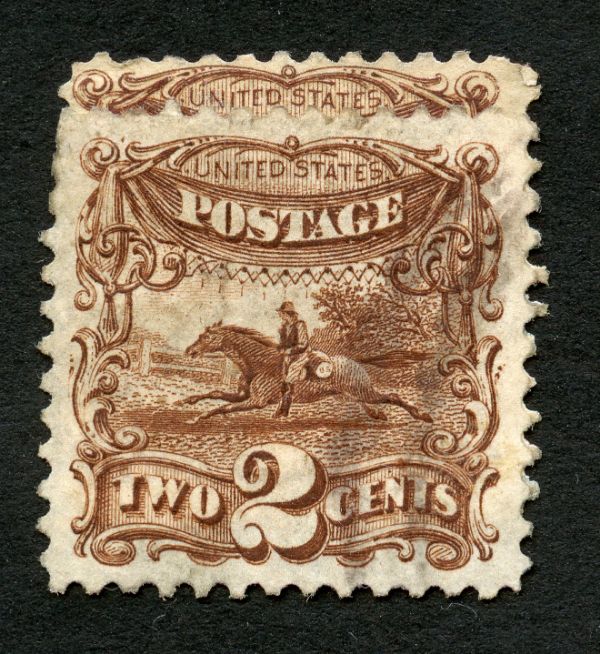
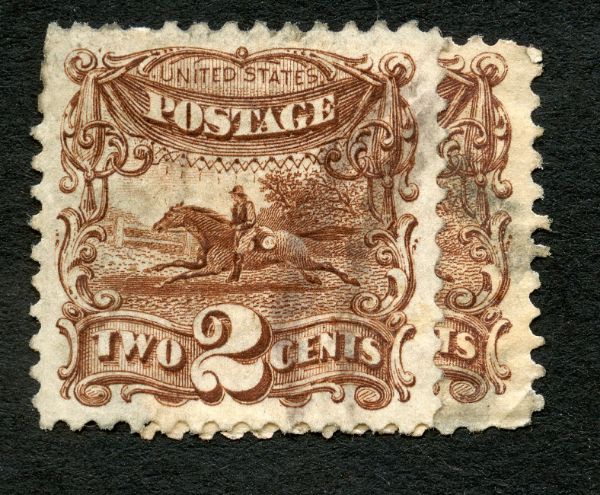
this would be an easy, but long taking task for the winter :) just take all images from any reliable online source and compare. As Siegel makes good scans, I just took the first two stamps I found and compared. The 124 is taller and less wide quite obviously. 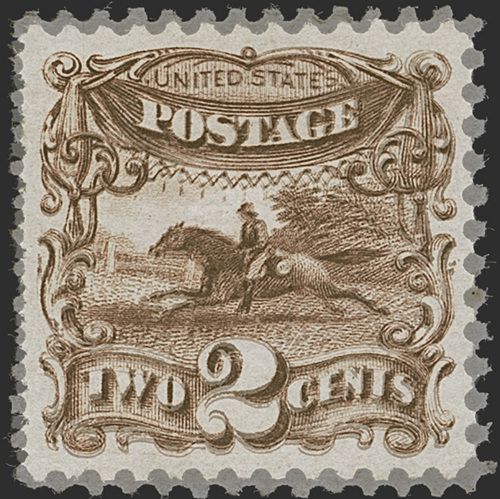 like this one could just do it with ANY reissue stamp, but it takes some time :) |
|
Send note to Staff
|
|
|
Bedrock Of The Community
12780 Posts |
|
|
Valued Member
98 Posts |
|
|
No, I don't, because I think when Siegel uses the same scanner and the same PPI / DPI setting, this is a really good start :).
And even if not: stamps have some advantage which is great: the perforation. You can just take the perforation to calibrate the size (just in addition).
But I don't want to show or prove here anything about image editing, only wanted to add an example to the mentioned articles which talked long ago about this size difference. Perhaps somebody has some more recent research or PF opinion to share about this.
|
|
Send note to Staff
|
|
|
Replies: 137 / Views: 11,224 |
|




 Posted 11/20/2025 2:28 pm