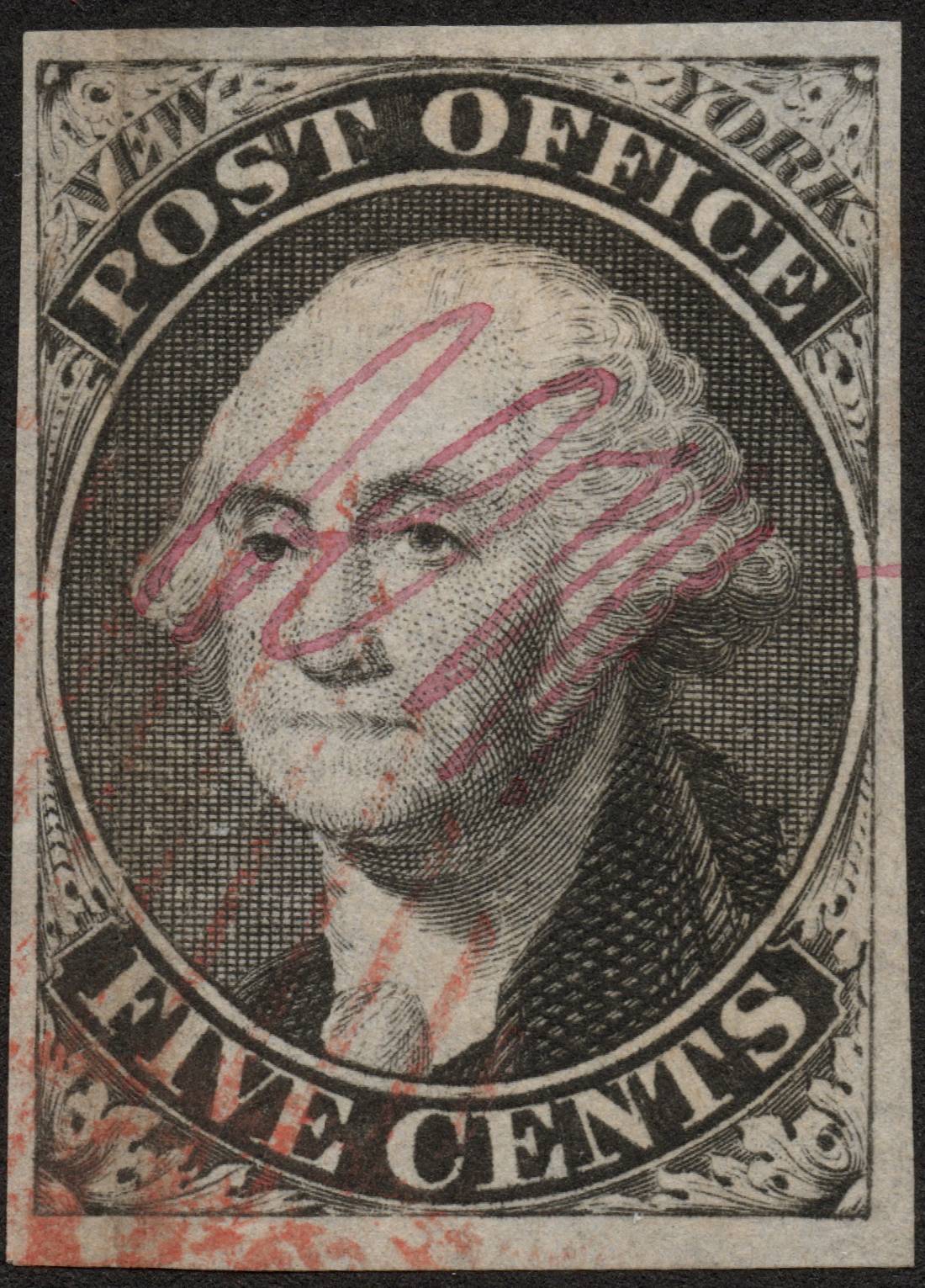
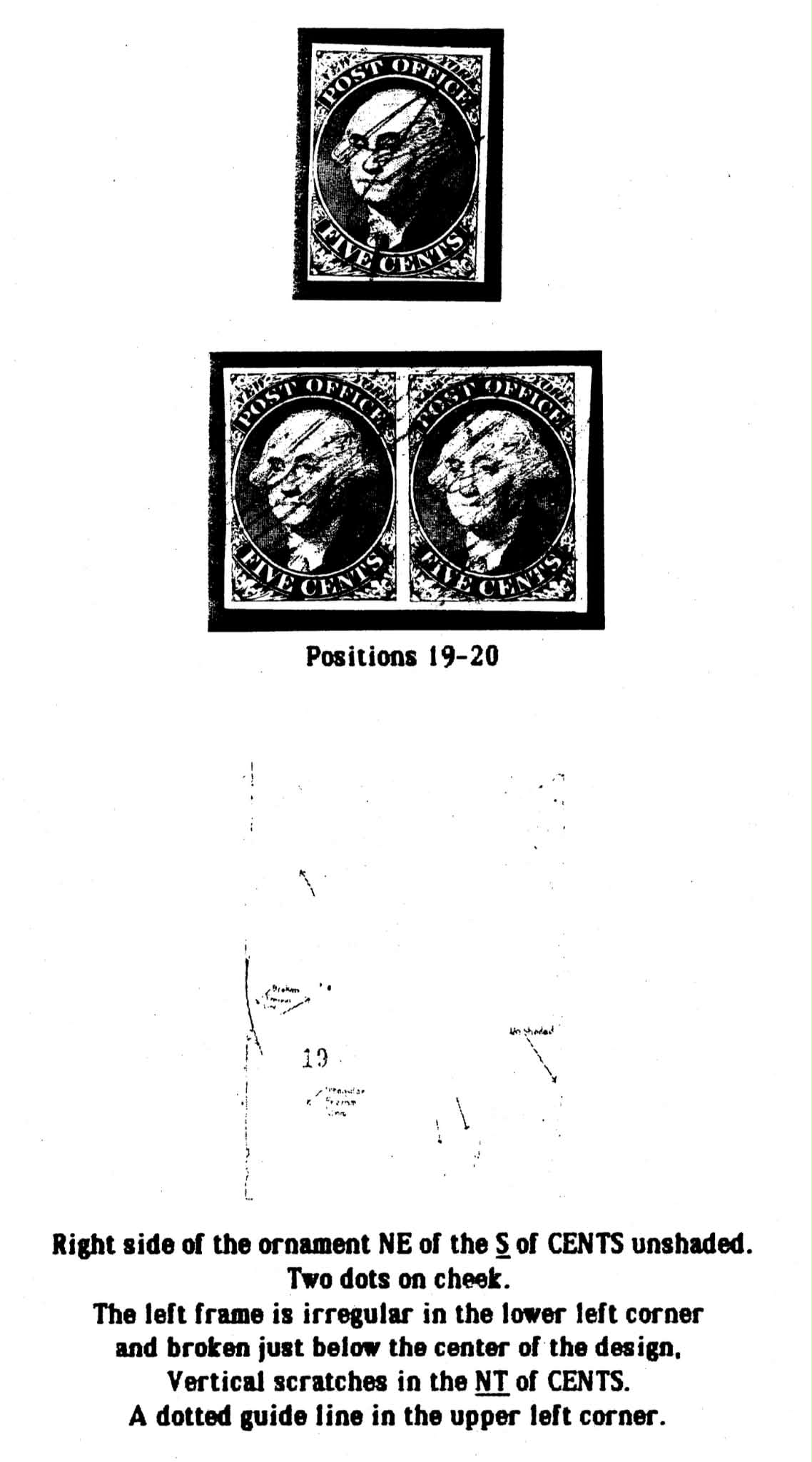
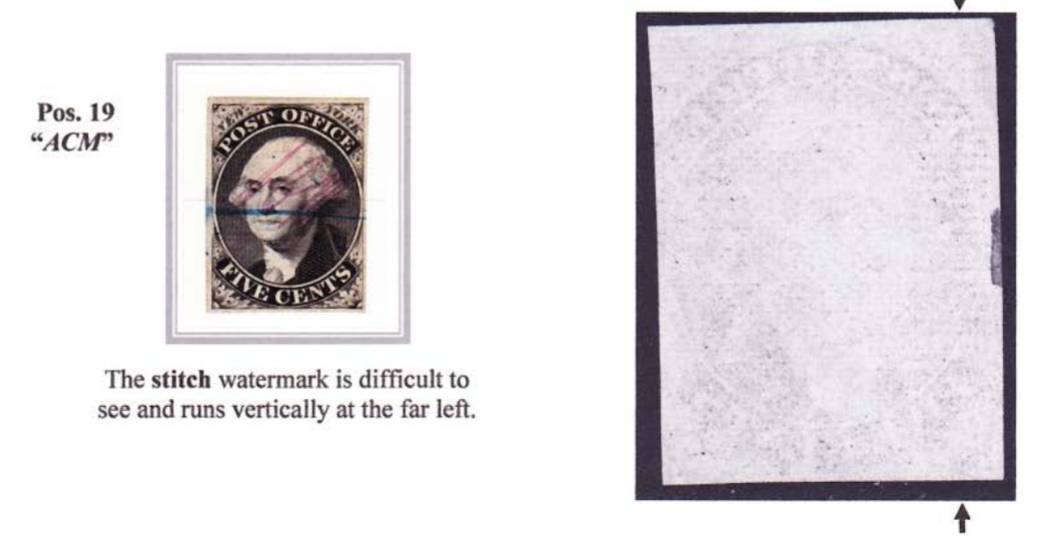
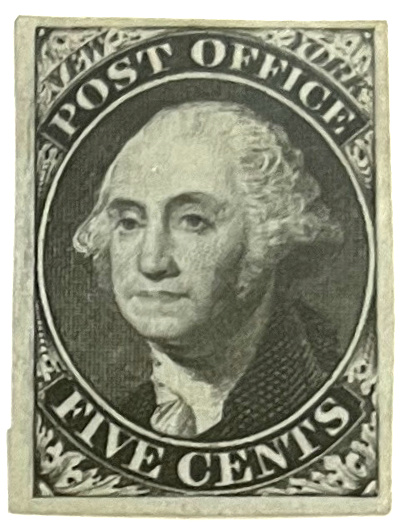
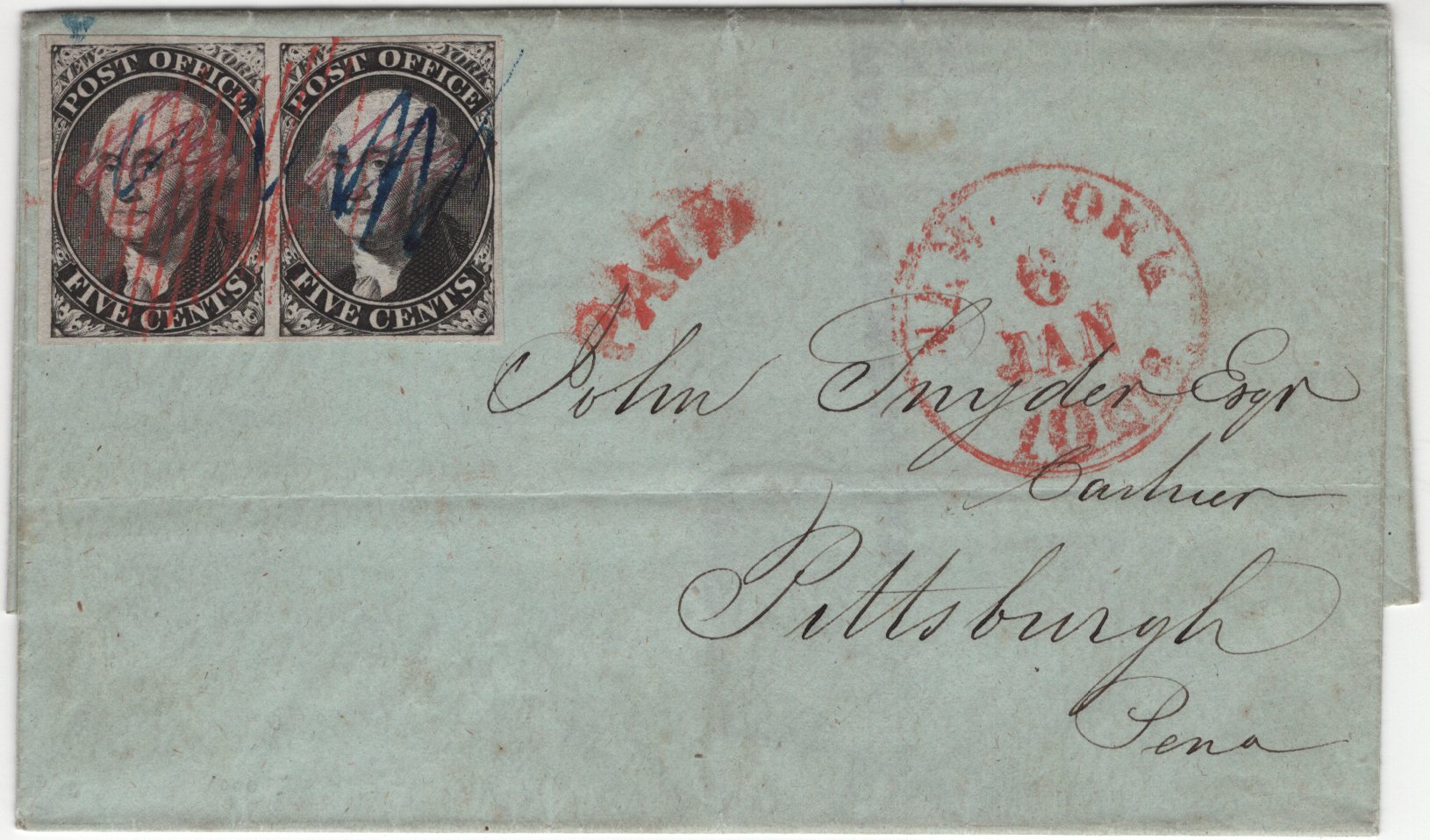
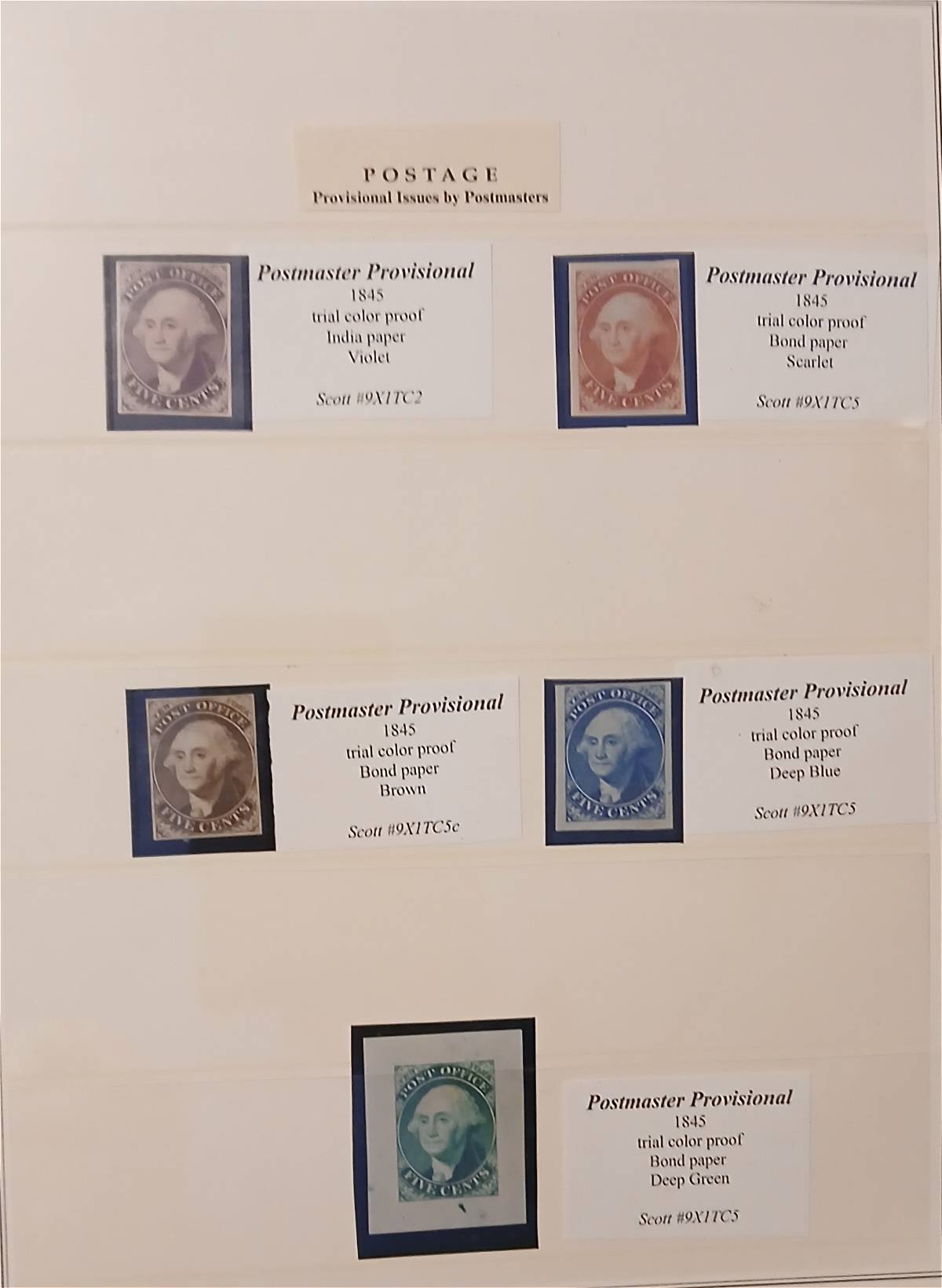
I didn't see anything on this stamp and wanted to share and also get some insight by those who have researched, plated & just want to share.
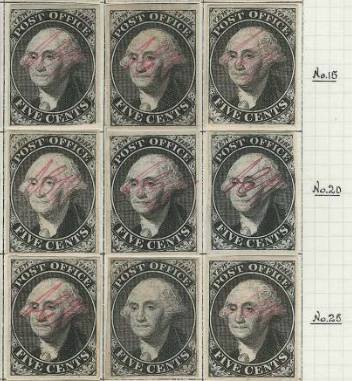
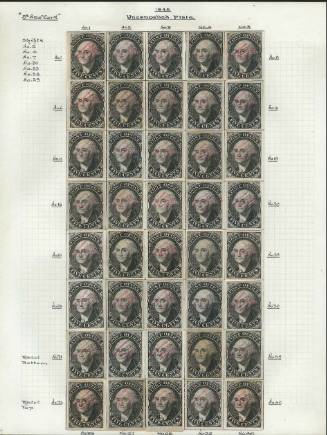
here is a full reconstruction plate which was of 40, in rows of 5.
the plating took many years to complete, Several attempts at plating the stamp were
made as early as 1894, but the first published reconstruction in the 5x8 format was not made until 1921 and with that also came a more accurate census.
There was about 5500 made from 1845 untill the 1st recognized postage stamps of 1847 US #1 & #2. The first were delivered on July 12th, 1845, They were placed on sale on July 14th, the same day Morris ran ads about their availability in the New York papers. Of the 5500 New York Postmaster Provisional 500 where unused, leaving 5000, There were 3590 panes of 40 stamps printed, for a total of 143,600 stamps. Less the 40% of these still remain on cover but this number is declining daily. The earliest known covers are postmarked on July 15th, 2 domestic, 11 foreign. they where printed on different paper types. The vast majority (95+%) of stamps were printed on a bluish-white paper. In the last shipment of stamps from Rawdon, Hatch & Wright (January
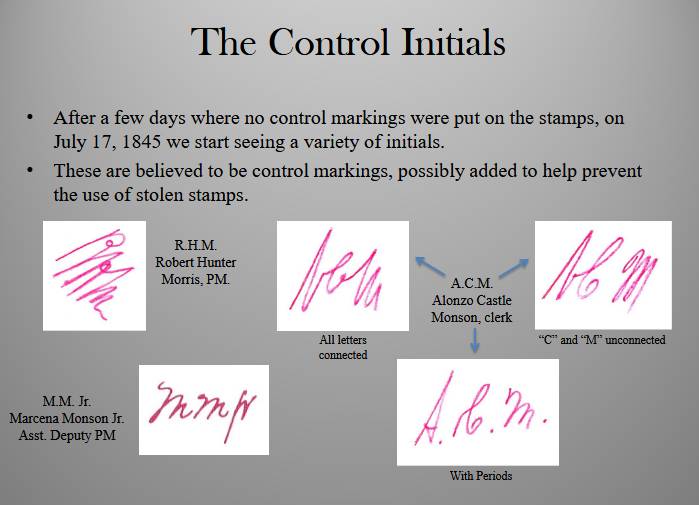
1847, some sheets were on a deeper blue or battleship gray paper. They are difficult to distinguish from the front, especially when cancelled, but may be seen more easily from the back. A review of the Scheuer census (USPCS) indicates that 85% of manuscript cancels are in a bright blue ink. About 10% in black, & 5% are in magenta.
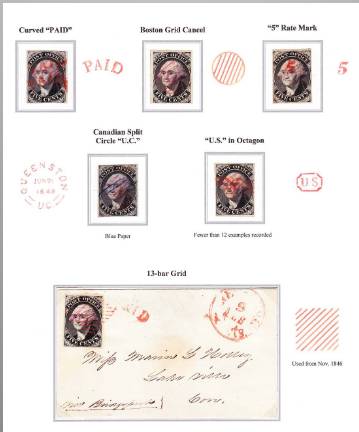
Hand cancellations consisted of all in red, Curved PAID, "5" rate marker, Boston 7 bar grid circular cancel, "U.S." in Octagon, (fewer the 12 examples recorded) NY 13 bar square grid, (Used from November 1846) Canadian split circle "U.C."..
Foreign Mail has many different marking most known is the red circular NEW-YORK on top, 5 PAID on the bottom. The 5c rate was for a letter up to half an ounce sent up to 300 miles.
An additional 25 decimes was paid by the addressee.
The additional charge covered British sea post and transit (10 decimes) and French transit (15 decimes). I hope everyone enjoys this.





 Posted 01/03/2026 7:20 pm