To prevent concerns about regumming and to avoid the hinged-vs-never-hinged dilemma, some collectors actually prefer no gum, especially on early stamps.
Kelleher has an auction next month, the William H. Harrison collection, which focuses on the eye appeal from the front of the stamp.
The owner's criteria was "Acquire the nicest, facially attractive example that one can find and afford." The stamps should be sound, but the quality of the gum was not a concern. The important attributes are centering, color, paper, and perforation.
Here is an example, a beautiful 1869 set, the majority have no gum.
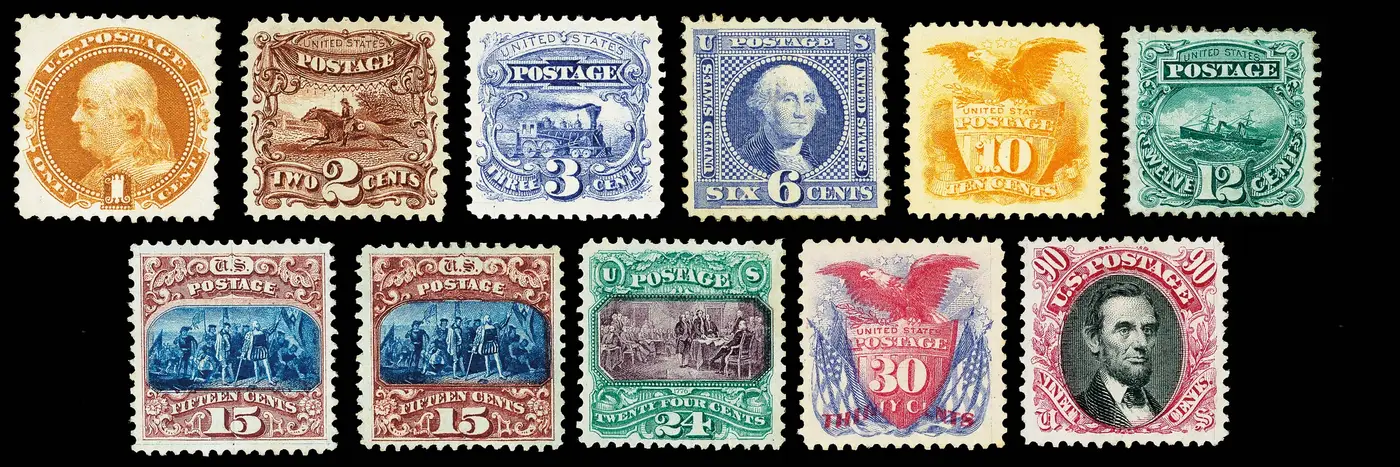
You would have to spend more than twice as much to buy as nice of a set that still had a bit of the original adhesive on the reverse. This collector would rather save that money to buy more pretty stamps rather than investing in something on the back of the stamps that you will rarely look at.
That said, I do admire the amazing rarity of gleaming clean shiny NH gum on a classic stamp, but for the same money, I would prefer a better-looking lightly hinged copy rather than a not-as-nice never hinged one.
There is also the subject of how badly a stamp is hinged. It would be helpful for the catalogs to give prices for lightly hinged versus hinged versus a heavy hinge remnant. I have sent in some stamps to get graded that I was sure were NH but they came back as 'previously hinged'. The evidence of a hinge mark is so small and light it could easily be overlooked (as I did). A minuscule pinpoint gum skip of the same size would still allow the NH designation but because a hinge mark is alleged, the stamp has now lost half its value. Worse yet, my never-hinged-looking stamp is now valued at the same price as one with a big obvious hinge or a hinge remnant. That doesn't seem fair.
It is these experiences that have actually led me to appreciate lightly cancelled used stamps rather than mint.





 Posted 01/24/2026 4:40 pm


