| Author |
 Replies: 12 / Views: 858 Replies: 12 / Views: 858 |
|
|
Valued Member
United States
30 Posts |
|
|
Somehow I collected a number of 856 Panama Canal Plate Blocks. One of them has an odd number where the color is black not purple and there is a black F before the number. The second image shows the normal purple plate block number. Any insite as to why this plate number differs from the rest is greatly appreciated. 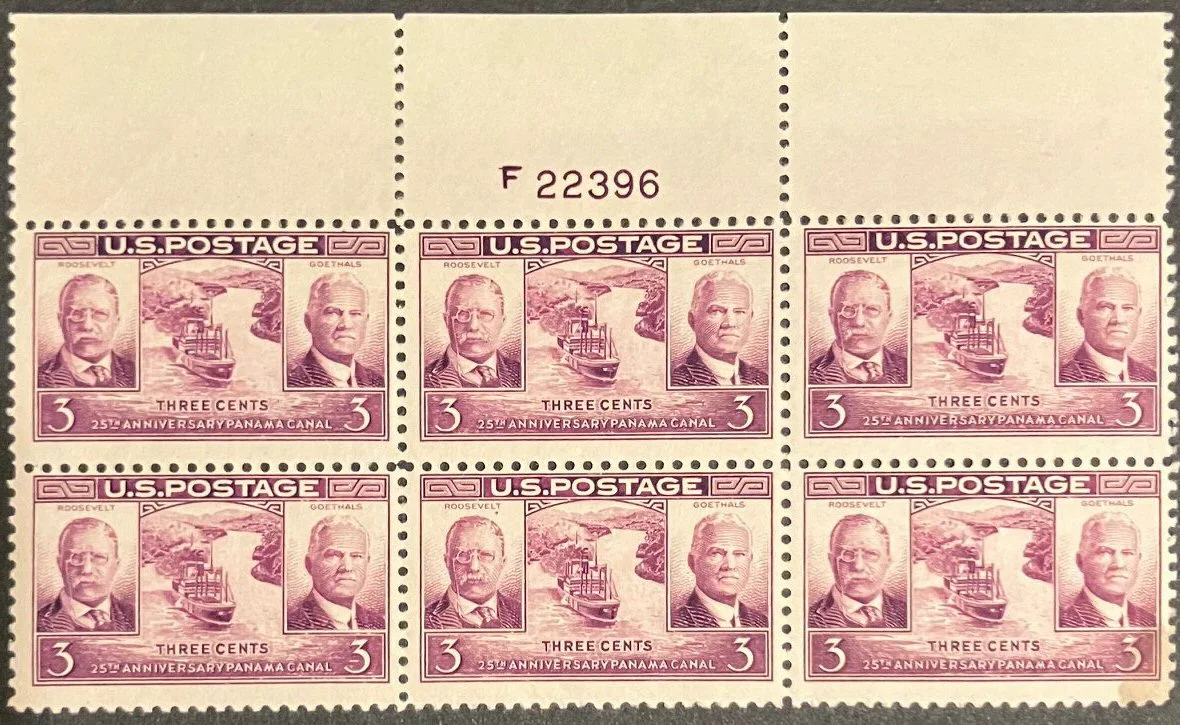 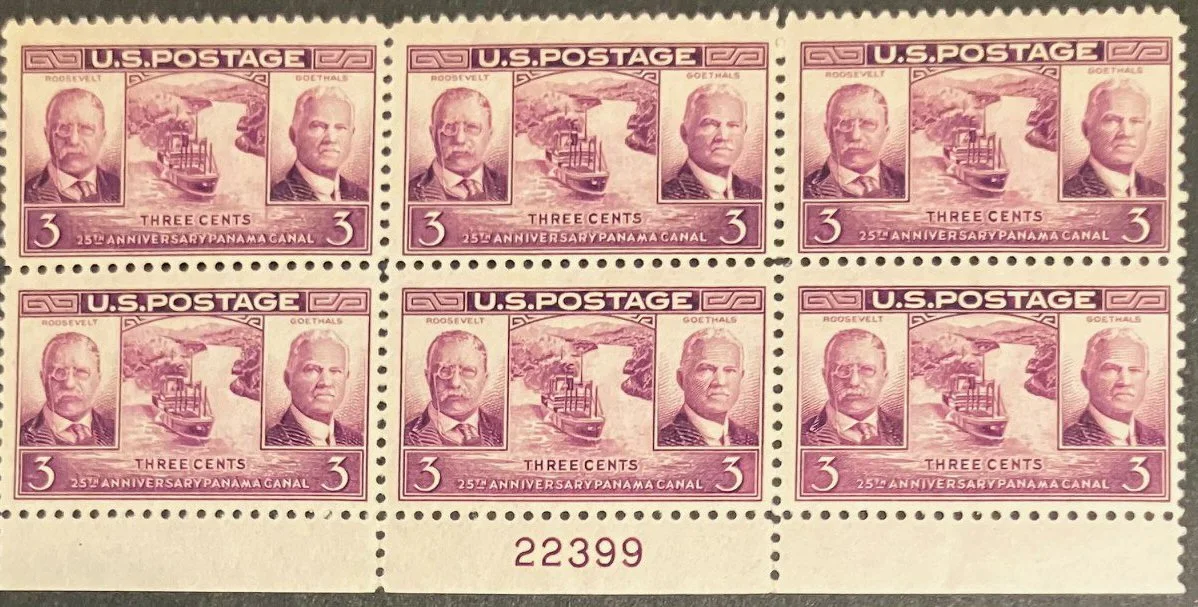 |
|
Send note to Staff
|
|
|
|
|
Pillar Of The Community
Netherlands
6647 Posts |
|
|
It looks very deep purple and not black to me.
But there lies the problem with colour perception and online colours. |
Send note to Staff 
|
|
|
Bedrock Of The Community
12778 Posts |
|
|
It looks purple to me. The "F" means that the plate was finished (hardened). Quote:
According to Wallace Cleland in the June 1990 Issue of the United States Specialist: "Apparently the "F" was originally the initial of Frank Martie, foreman of the hardening section; but one suspects that later custom transferred the meaning to "finished". |
|
Send note to Staff
|
|
|
Valued Member
United States
30 Posts |
|
|
Upon deeper inspection the numbers are black. When viewing the whole block the I was swayed by the total color of the block. So the only difference is the F. Is the presence of the F unsual?
Thank you |
|
Send note to Staff
|
|
|
Bedrock Of The Community
12778 Posts |
|
|
Pillar Of The Community

United States
1159 Posts |
|
|
There are exceptions, but typically you will find the "F" near the top plate number on the upper right pane of flat plate sheet stamps of the 1920s and 1930s. For example, here is a complete press sheet of 200 Scott #758 showing the F before the plate number in the upper right pane of 50 stamps. 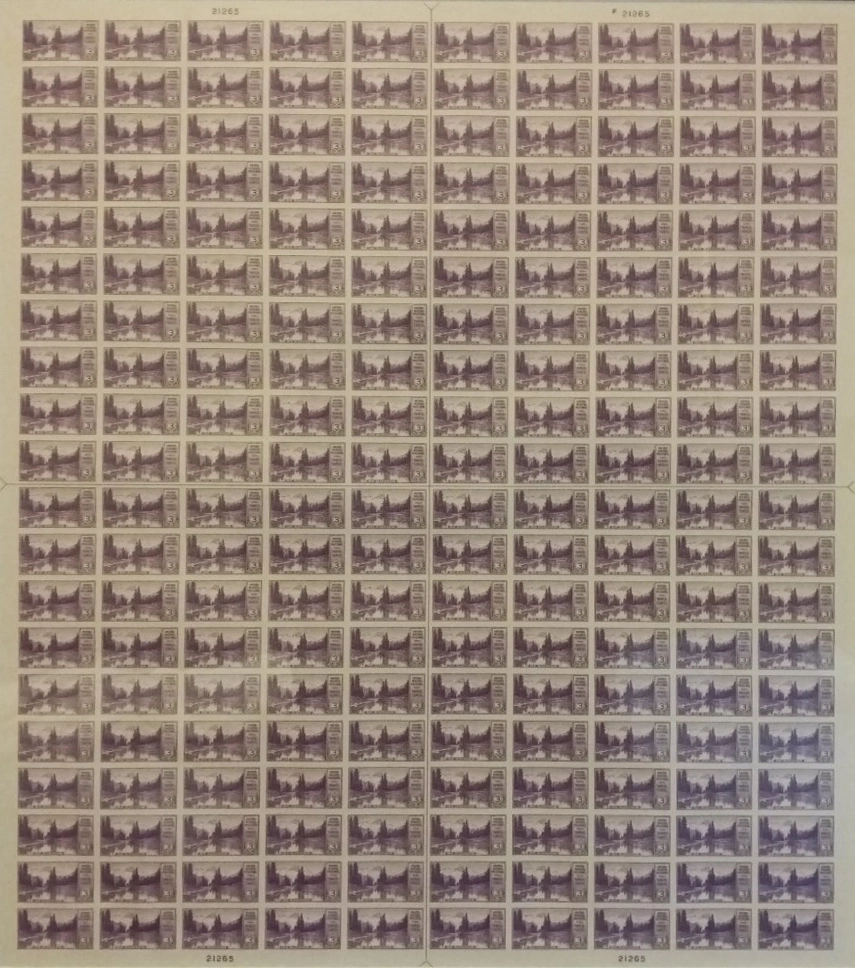 (photo from the internet, the stamp is not mine). |
|
Send note to Staff
|
|
|
Pillar Of The Community
United States
4465 Posts |
|
|
Quote:
Upon deeper inspection the numbers are black. When viewing the whole block the I was swayed by the total color of the block. Did you miss type? Or are you still claiming the Pl# is black? It is not. |
|
Send note to Staff
|
|
|
Valued Member
United States
30 Posts |
|
|
Perhaps this is the source of my confusion. Two same numbers where the lower one is plainly purple and the upper much darker. I do have some red blindness which does not help but the upper one appears black from a distance. When I blow up the picture I do see very deep purple colors. I will be relying on analyzing photos in the future, especially for color, in order to attain more accurate observations. Thanks again. 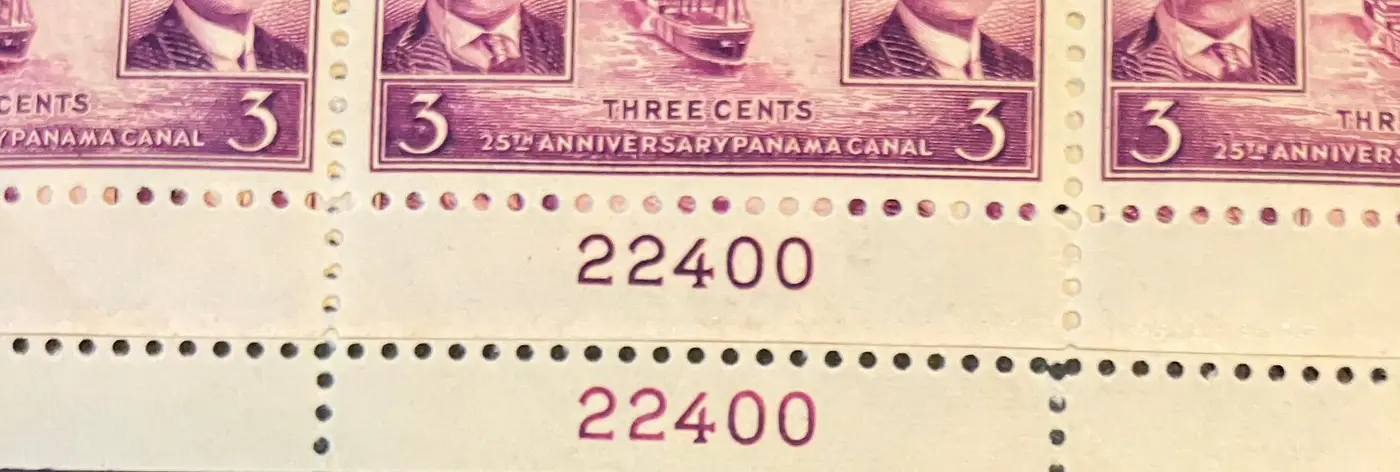 |
|
Send note to Staff
|
|
|
Pillar Of The Community
Netherlands
6647 Posts |
|
|
You, perfectly, illustrated why the many "is my stamp the very rare shade and I will not accept 'no' for an answer" posts are futile. In addition to what has been written on this forum about distortion by devices, different people perceive colours differently. |
|
Send note to Staff
|
|
|
Pillar Of The Community
United States
4465 Posts |
|
|
Quote:
Perhaps this is the source of my confusion. Two same numbers where the lower one is plainly purple and the upper much darker. I do have some red blindness which does not help but the upper one appears black from a distance. When I blow up the picture I do see very deep purple colors. I will be relying on analyzing photos in the future, especially for color, in order to attain more accurate observations.
Thanks again. One color of ink was used. That said, the perceived color changes (shades) due to the coverage (thickness) of the ink as is demonstrated within the stamp design itself. One color ink but different sized engraving line produce different perceived shades of the same ink color. Note that the dark appearing plate number is the same as some portions of the printed stamp design. I also suspect that some of your color perception on this particular stamp issue is affected by your level of color blindness. |
|
Send note to Staff
|
|
|
Pillar Of The Community
Netherlands
6647 Posts |
|
|
That is why some catalogues may list both deep purple and dark purple as "shade" varieties of a single stamp. |
|
Send note to Staff
|
| Edited by NSK - 01/28/2026 01:39 am |
|
|
Bedrock Of The Community
12778 Posts |
|
|
Whenever I think I see something that defies logic I ask myself if that thing could logically be. In this case, as PPG stated, there was one pass with one ink. No matter what your brain is telling you there would be no realistic way for the plate number to be a different ink color. Firstly, it would have been discovered and reported by now since copious amounts of this stamp were printed and have been collected and used for over 80 years. Secondly, if you understand the manufacturing process even a little you know that printing the design and plate number in different colors is impossible. Thirdly, why on earth would anybody do such a thing if they could do such a thing which they can't (See "Secondly" above).
|
|
Send note to Staff
|
|
|
Valued Member
United States
30 Posts |
|
|
Yes I must educate myself as to the printing process. Thank you all for the education.
JT |
|
Send note to Staff
|
|
| |
Replies: 12 / Views: 858 |
|



 Posted 01/26/2026 11:50 pm


