The Post Office Department announced in the summer of 1922 that a new series of flat plate ordinary stamps, now called the Fourth Bureau Issue, would be replacing the Washington-Franklin series that had been in use since 1908. Rutherford B. Hayes, our nineteenth President, would be featured on a stamp in the new series.
The Hayes family, the first family of Ohio, convinced President Harding, also an Ohioan, and the Post Office Department that the Hayes stamp should be released on October 4, 1922, in Fremont, Ohio, Hayes hometown and burial-place. The city was planning a major celebration to commemorate the one-hundredth anniversary of President Hayes birth.
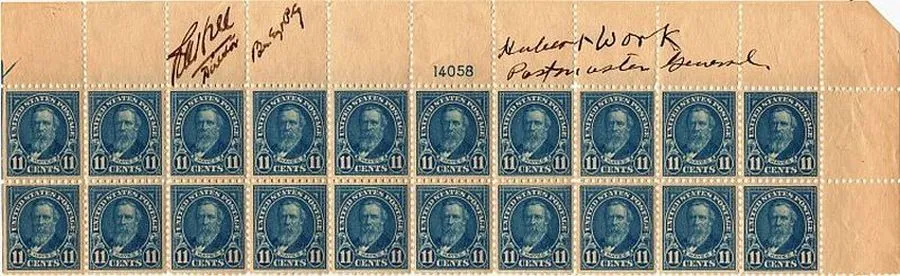
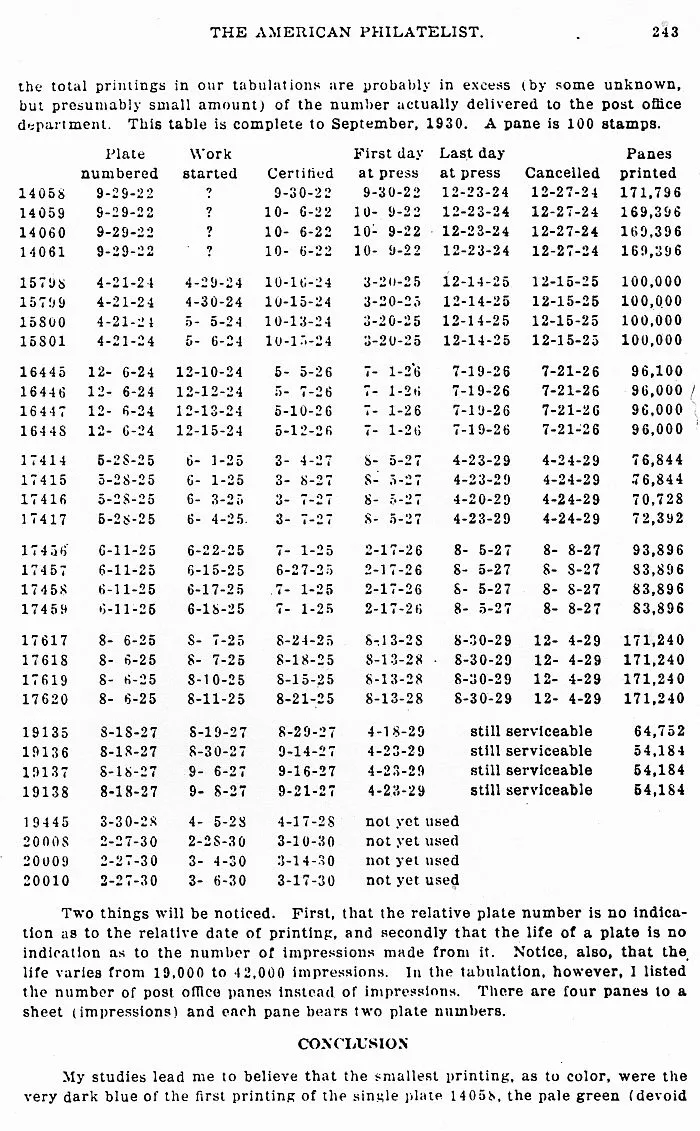
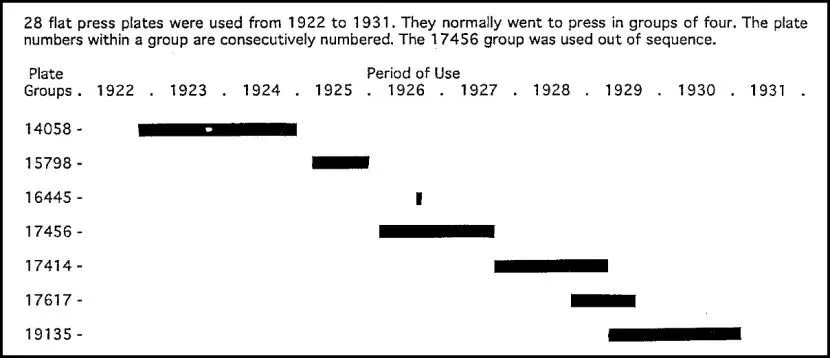
The Bureau of Engraving and Printing (BEP) had little time to react to its new priority and only one printing plate, not the usual four used on a flatbed printing press, would be available to prepare stamps for the first day release in Fremont. Six hundred sheets or 240,000 stamps were printed from plate #14058 on Saturday, September 30.
A pane of 100 Hayes stamps, signed by the Postmaster General and the Director of the BEP, was presented to the Hayes family at a first day ceremony, the first of its kind in the United States, on Wednesday, October 4 in Fremont.
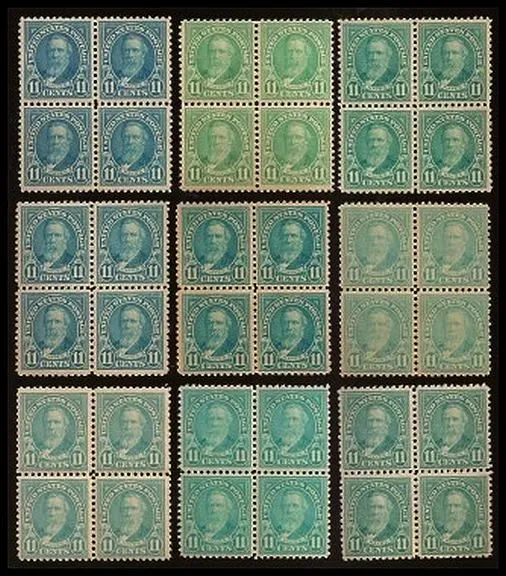
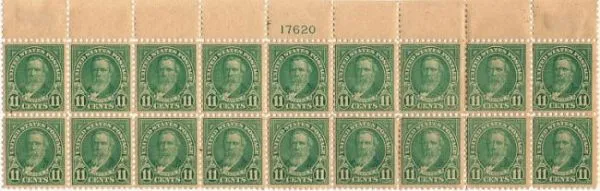
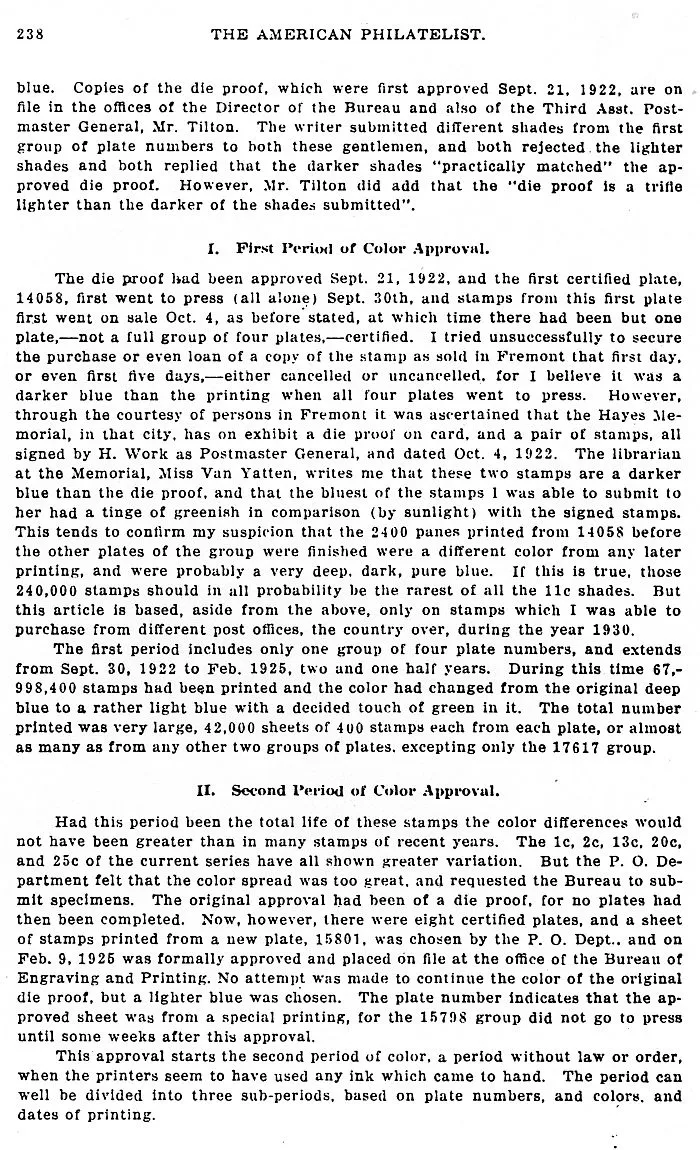
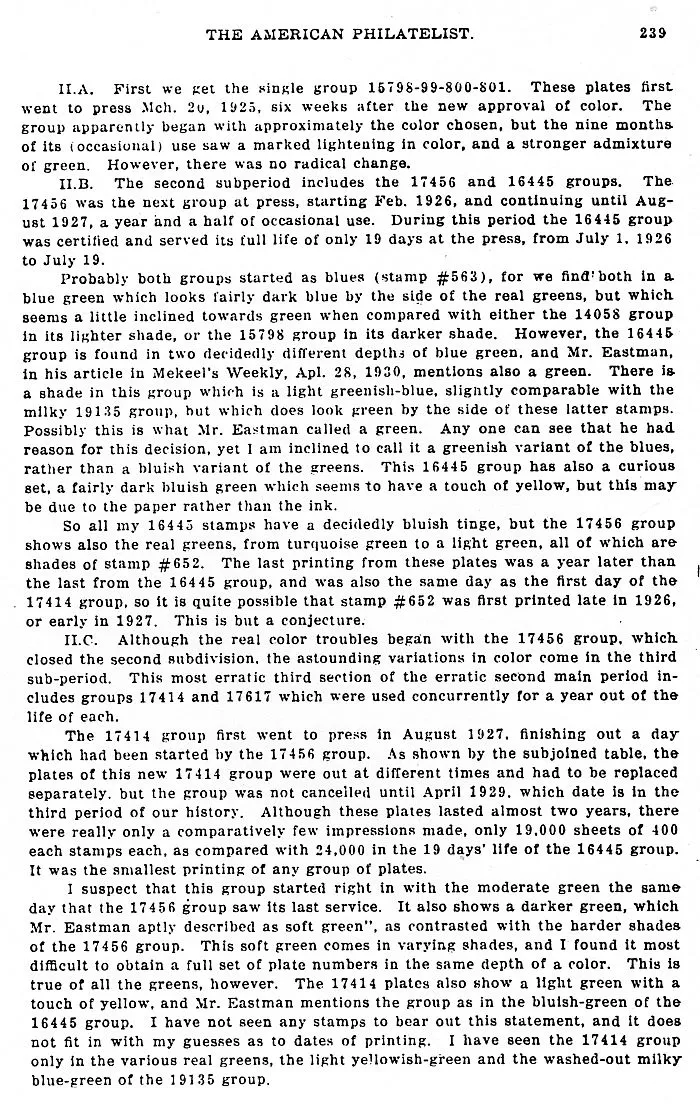
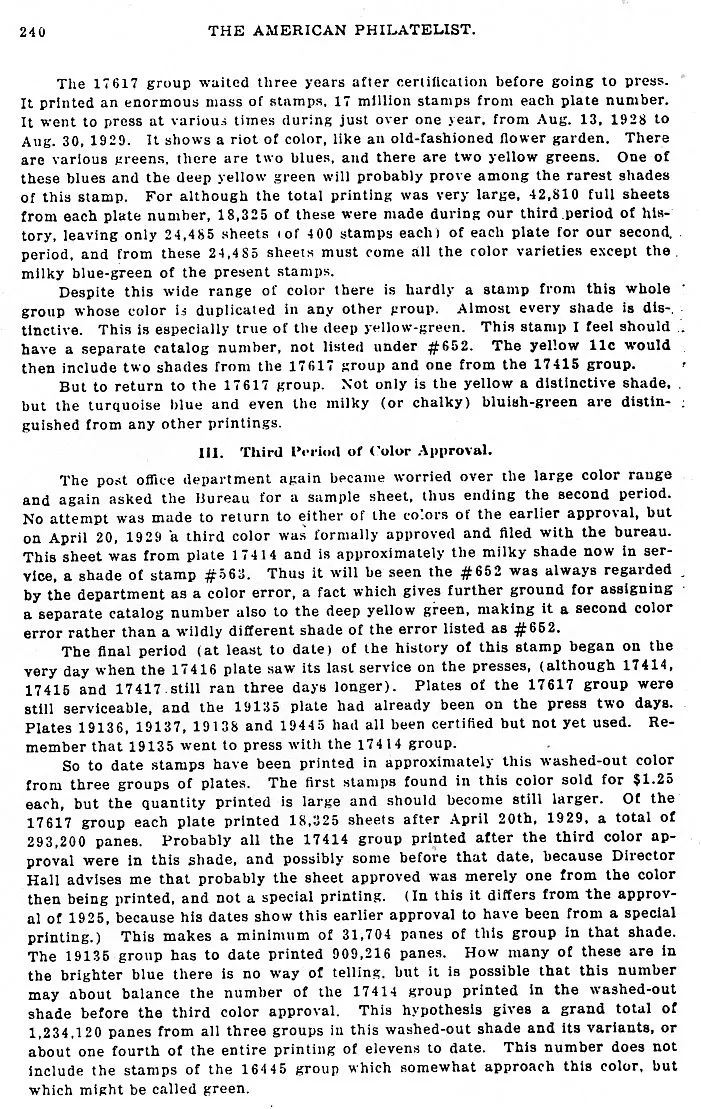
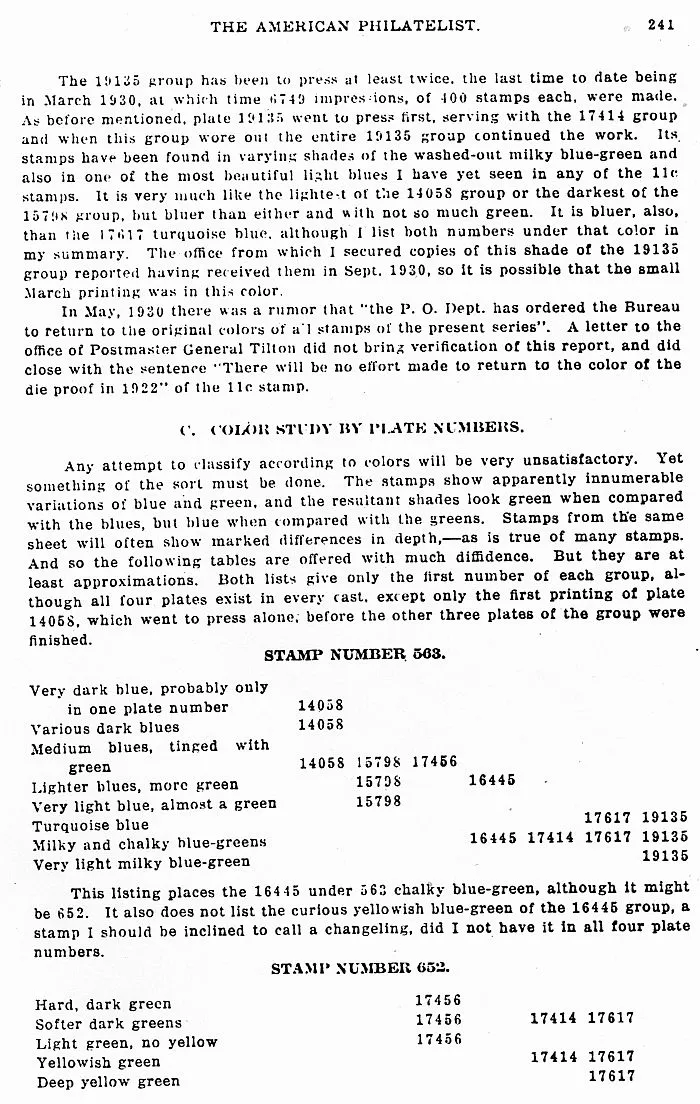
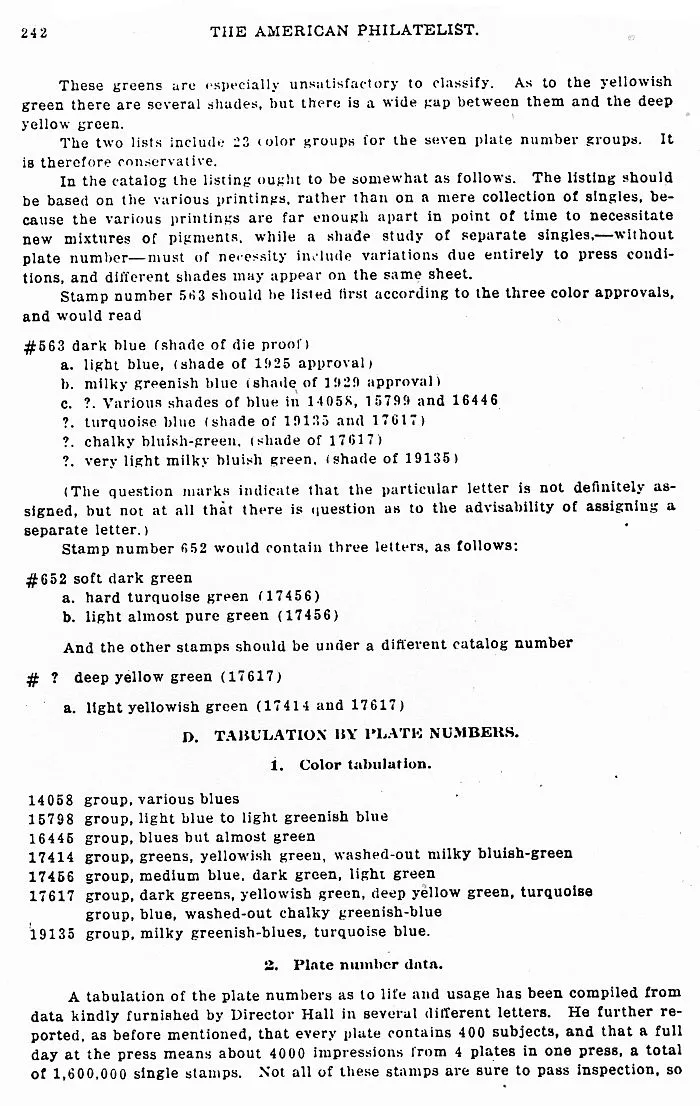
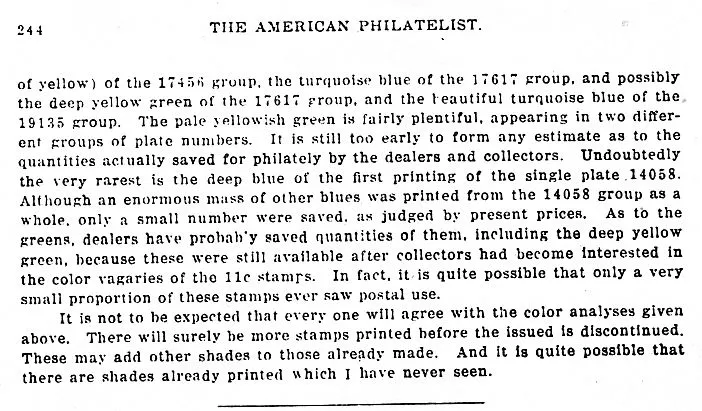
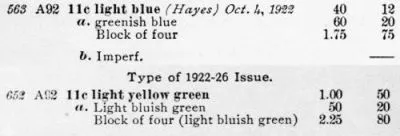
Hayes stamps in the original peacock blue color would soon disappear from post offices and be replaced by a multitude of new colors over the next nine years. It is said that Sc. 563 was printed in more color varieties than any other stamp printed by the BEP in the twentieth century. The following exhibit is a good example of the variety.
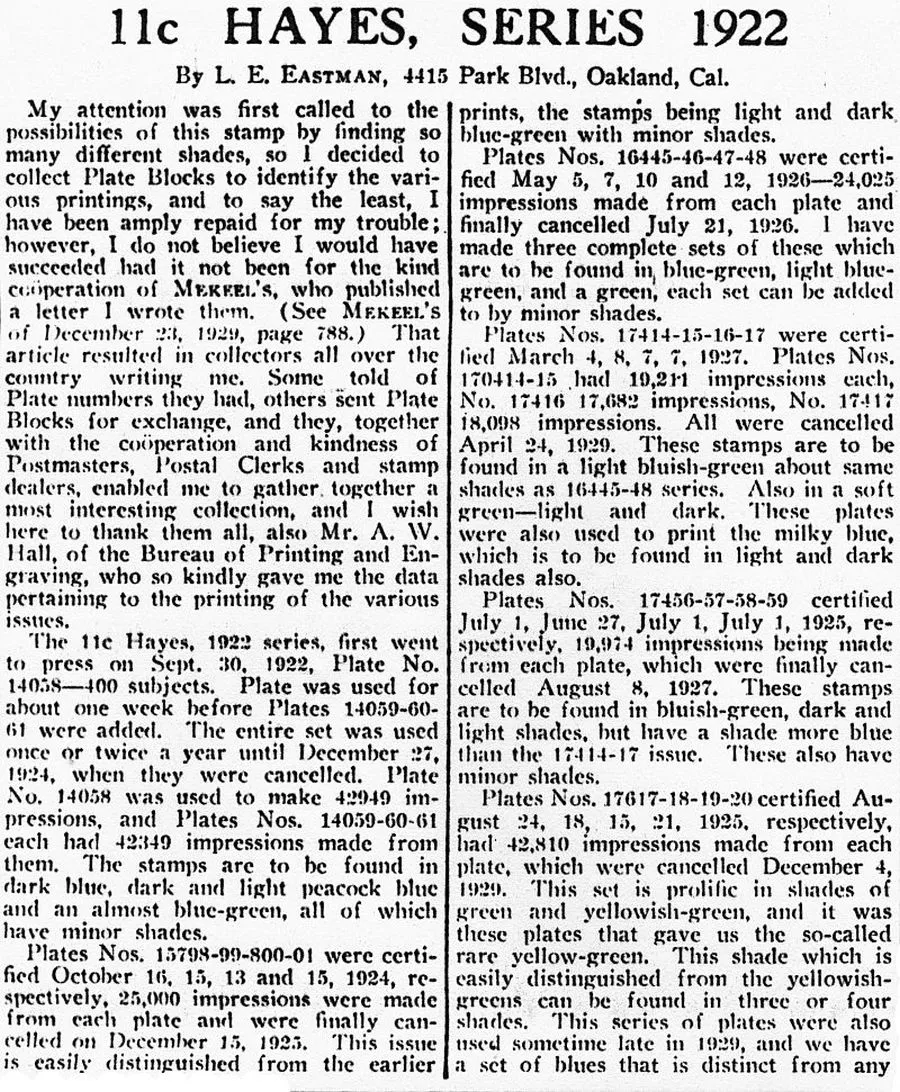
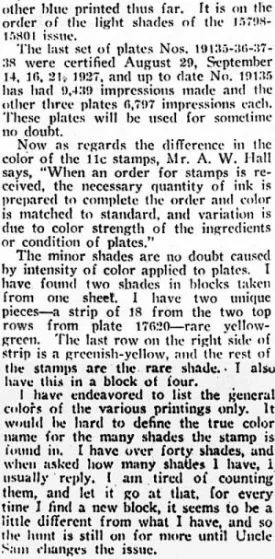
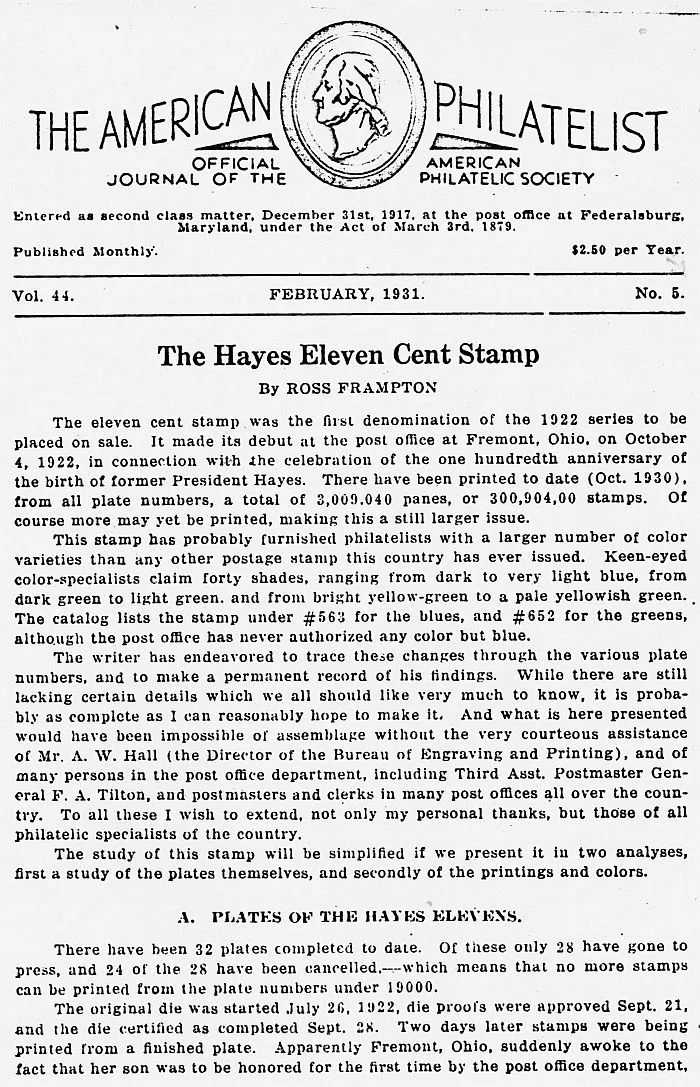
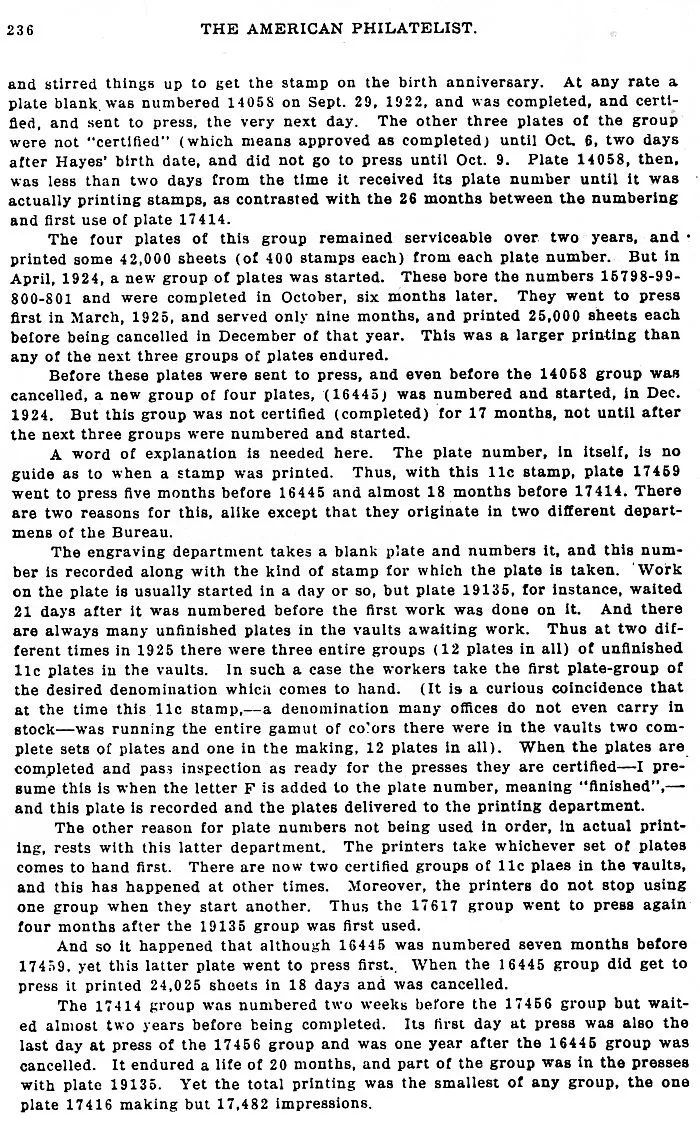
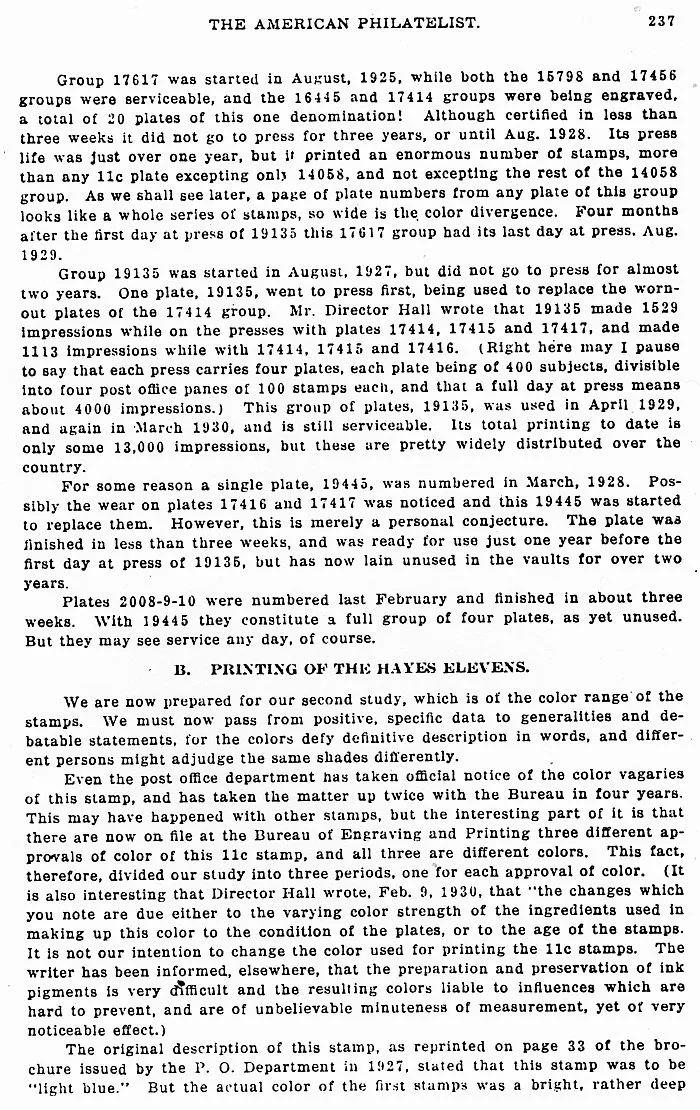
Two significant studies of the Hayes colors were published during the early 1930s. The first, by L. E. Eastman. appeared in Mekeel's Weekly Stamp News in April, 1930. The second, by Ross Frampton, was published in the February, 1931 edition of The American Philatelist. The Eastman article is below. The Frampton article will follow in an add to the topic.





 Posted 02/10/2026 10:36 pm



 </center>
 </center>


