| Author |
 Replies: 3,980 / Views: 1,934,712 Replies: 3,980 / Views: 1,934,712 |
|
|
|
Pillar Of The Community
1918 Posts |
|
|
Quote:
Were these engraved by José Moreno Benavente as well? Did Talleres de Especies Valoradas / Casa de Moneda employ any other stamp engraver in Senor Morena's era? Which was his last stamp engraving for Chile? Yes florian, these airmail stamps (1934) were the first stamps engraved by Moreno in Chile. Moreno engraved the vignettes but frames and lettering were engraved by James W. Philip. Philip was born in England and came to Chile in 1916. He was a technical specialist in graphic arts and printing and also he was engraver of lettering and ornaments. Those airmail stamps are the only ones in which he participated. His main work was the engraving of bonds and banknotes (ornaments, frames) Between 1935 and 1972 only Moreno engraved postage stamps (incl.vignettes, frames, lettering...all the work!) Since 1959 he had the help of Marcos Simpson (born 1937) who had been trained by him, but only in the engraving of banknotes, not stamps. The last stamps engraved by Moreno were issued in 1972 (but engraved in 1970) : IV Cent.La Araucana. However in the engraving of banknotes he continued until 1976-77. 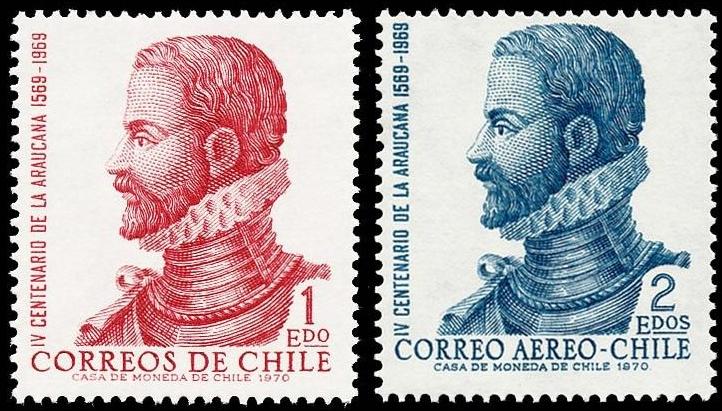 Marcos Simpson engraved some stamps in 1975 (Fragata Lautaro), 1977 (Diego de Almagro), 1991 (Catedral de Santiago), 1993 (Casa de Moneda), 1994 (Alberto Hurtado), 1995 (Andres Bello), 1995 (Gabriela Mistral) |
Send note to Staff 
|
|
|
Pillar Of The Community
Czech Republic
623 Posts |
|
|
jorgesurcl - Thank you very much for your detailed and invaluable information.
In my old collection of used stamps I keep two more Latin American specimens whose engravers I would like to discover and I wonder if you happen to know their names.
1. Costa Rica 1930, dated 1929, 10 c red, Columbus Soliciting Aid of Isabella, printed by Waterlow & Sons Ltd., London, type of Costa Rica 1923, dated 1921, 10 c red, same vignette but larger in size, printed by American Bank Note Co., again vignette same as U.S.A. 1893, 5 c chocolate, Columbus Soliciting Aid of Isabella, picturing painting by the Czech artist Václav Brožík (1851 - 1901), vignette engraved by Charles Skinner (1841-1932), printed by National Bank Note Co.
2. Nicaragua 1862, 2 c blue.
Thank you very much for any info. |
|
Send note to Staff
|
| Edited by florian - 10/21/2013 05:31 am |
|
|
Pillar Of The Community
Czech Republic
623 Posts |
|
|
cynical - Yes, this was a stunning debut for a 42-year-old beginner in stamp design / engraving, wasn't it?
Pierre Gandon is known to have been fascinated by stamps such as Kolo Moser / Ferdinand Schirnböck's 1906 Bosnia and Herzegowina ones since his boyhood days as a stamp collector as he would recall in interwies.
See the excerpts from an interview with Pierre Gandon published in "Ceux qui créent nos timbres-poste", Tome II, 1954 (Those who create our stamps, Volume II , 1954), expanded with passages from Gandon's recollections "Plaisirs du Timbre" (Stamp Fun) published in "Art et Philatélie" (Art and Philately) in 1974 (here between / ... /).
First in French, in simplified spelling as the French acute and circumflex accents will not appear here:
"Quand j'étais enfant, /comme tout galopin qui se respecte,/ je collectionnais les timbres. J'ai revé des heures entieres sur ces petites vignettes qui donnent aux enfants et aux poetes le gout de l'aventure /en evoquant des pays fabuleux: forets mystérieuses de Bornéo, peuplées d'animaux étranges ..., paysages de Bosnie-Herzégovine, si finement gravés ..., cascades de Tasmanie .../"
"Je contemplais ces petits rectangles de papier aux couleurs des plus ravissantes: couleur de pasteque, de grenade, de bétel, couleur des bleus des mers du Sud qui m'apportait le parfum des pays lointains. Les noms prestigieux imprimés au bas des timbres ne m'enchantaient pas moins. Je me souviens des timbres du Rarotonga qui me rappelaient les voyages de Cook ..., Zanzibar, métropole des marchés d'esclaves ..., le Tonga et ses oiseaux exotiques ..., Tahiti et la douceur des îles..., Tobago ..., le Mozambique."
"/Avec mes timbres/ j'avais le monde entier dans le creux de la main et mon esprit vagabondait par mille chemins ou foisonnaient les émerveillements."
"/C'est pourquoi je leur garde toujours une reconnaissance secrete, pour les heures de reves qu'ils m'ont données, pour l'enrichissement qu'ils m'ont apporté a l'époque ou mon esprit se formait./"
Now in an attempt at a translation into English:
"When I was a child, /like any self-respecting kid,/ I collected stamps. I spent whole hours musing about these small vignettes that give children and poets a taste of adventure /by evoking fabulous countries: mysterious forests of Borneo, populated by strange animals ..., landscapes of Bosnia and Herzegovina, so finely engraved ..., waterfalls of Tasmania ... /"
"I contemplated these small rectangles of paper in the loveliest of colours: those of watermelon, pomegranate, betel, the blue colour of the South Seas which brought me the scent of distant lands. Prestigious names printed at the bottom of the stamps did not enchant me any the less. I remember the Rarotonga stamps, which reminded me of Cook's voyages ... , Zanzibar the slave market metropolis... , Tonga and its exotic birds ..., Tahiti and the delights of the isles ..., Tobago ... , Mozambique. "
"/With my stamps/ I had the whole world in the palm of my hand and my mind wandered a thousand paths where the wonders abounded . "
"/That's why I keep owing them secret gratitude for the hours of dreams they gave me, for the enrichment they provided me with when my mind was formed. /"
|
|
Send note to Staff
|
| Edited by florian - 10/24/2013 04:25 am |
|
|
Pillar Of The Community
1918 Posts |
|
|
florian :US Columbian 5c. vignette engraved by Charles Skinner: 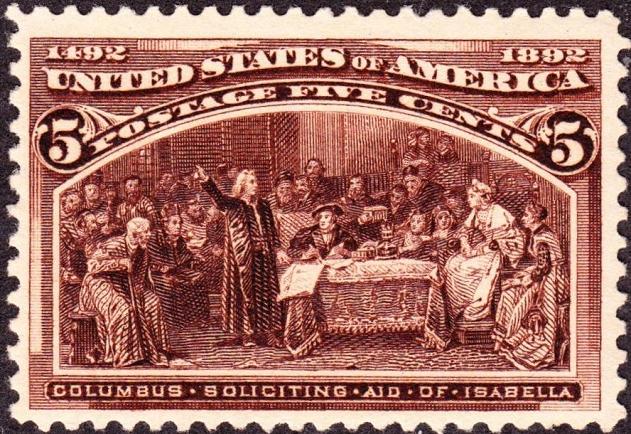 Costa Rica - vignette engraved by Marcus W. Baldwin (1853-1925) 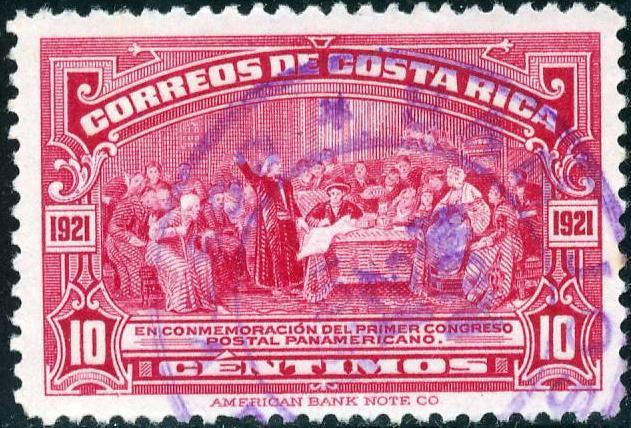 Costa Rica 1930- Printed by Waterlow & Sons - Engraver : ? 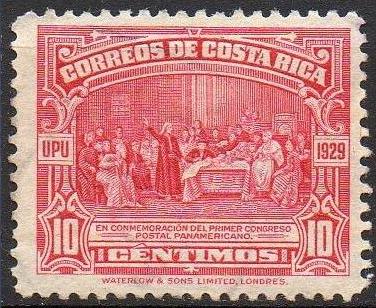 |
|
Send note to Staff
|
| Edited by jorgesurcl - 11/06/2013 11:36 pm |
|
|
Pillar Of The Community
Czech Republic
623 Posts |
|
|
jorgesurcl - Splendid images! Thank you so much for both of them making comparison possible as well as for the name of the engraver of the Costa Rica vignette. |
|
Send note to Staff
|
| Edited by florian - 10/26/2013 03:31 am |
|
|
Pillar Of The Community
1918 Posts |
|
|
ARGENTINA1868 -Printed by American Bank Note Co. Engraved by James Bannister (1821-1901) 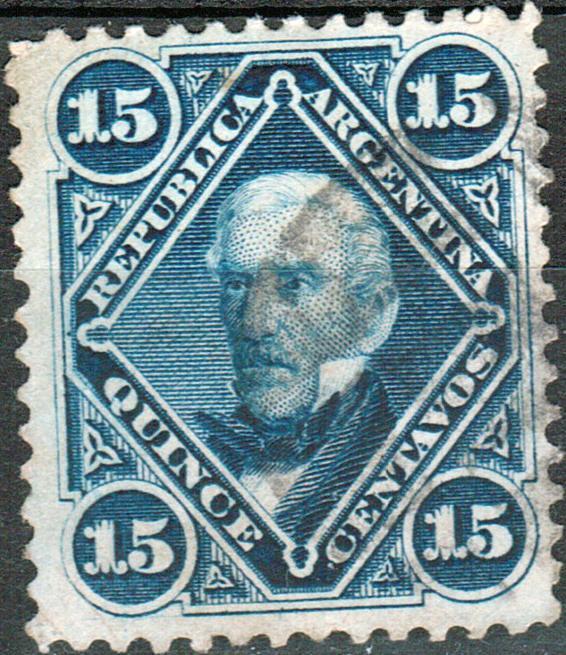 1889 - Printed by South American Bank Note Co. in Buenos Aires Engraved by Ferdinand Schirnböck (1859-1930) 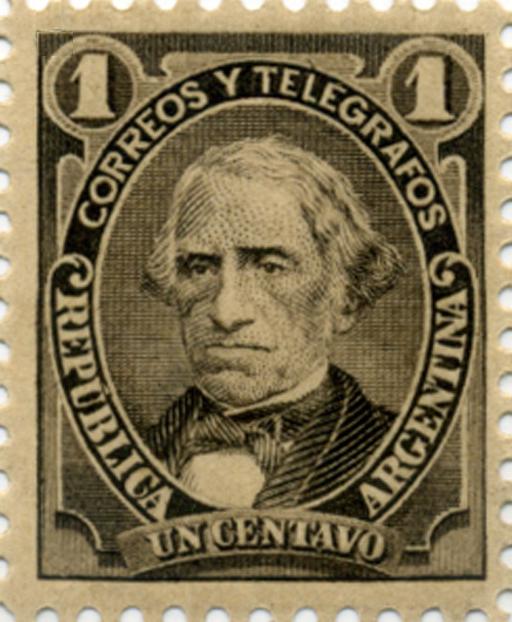 1889 - Printed by South American Bank Note Co. in Buenos Aires Engraved by Ferdinand Schirnböck (1859-1930) 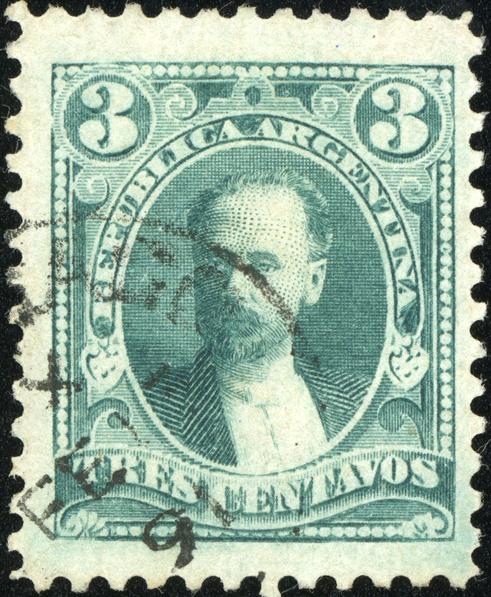 |
|
Send note to Staff
|
|
|
Pillar Of The Community
1918 Posts |
|
|
ARGENTINA - 1902 River Port of Rosario Printed by South American Bank Note Co - Buenos Aires Engraved by Wilhelm G. Nuesch (1863-1926) 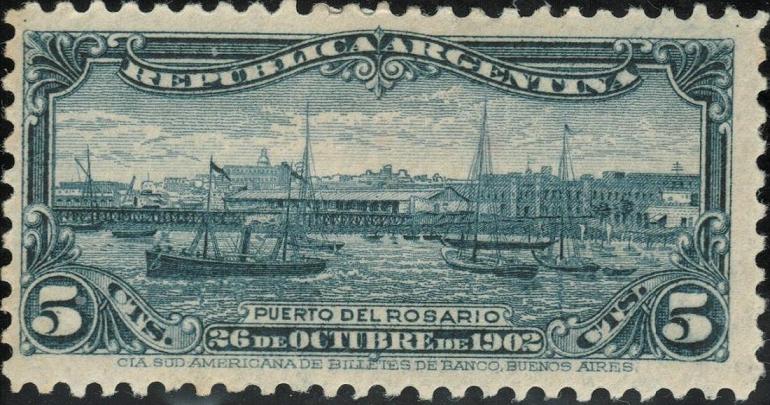 |
|
Send note to Staff
|
|
|
Pillar Of The Community
Czech Republic
623 Posts |
|
|
jorgesurcl - Thank you very much for presenting engravers working for Latin America as well as their works hitherto remaining anonymous for most of us. Most appreciated. |
|
Send note to Staff
|
|
|
Valued Member
United Kingdom
314 Posts |
|
|
I attach two very low res scans from forthcoming auction lots by France International. The descriptions read: "Artist proof. (2008) John Calvin. Manuscript. Set of 2 die proofs (positive & negative) in black signed by the engraver JUMELET." Similarly: "Artist proof. (2008) Cardinal Richelieu. Chateau at Indré-st-Loire. Set of 2 die proofs (positive & negative) in black (GHM: actually brown!) signed by the engraver JUMELET" I have never previously come across "positive and negative" engravings before. Can any reader explain their significance in the stamp production process, please? GLENN 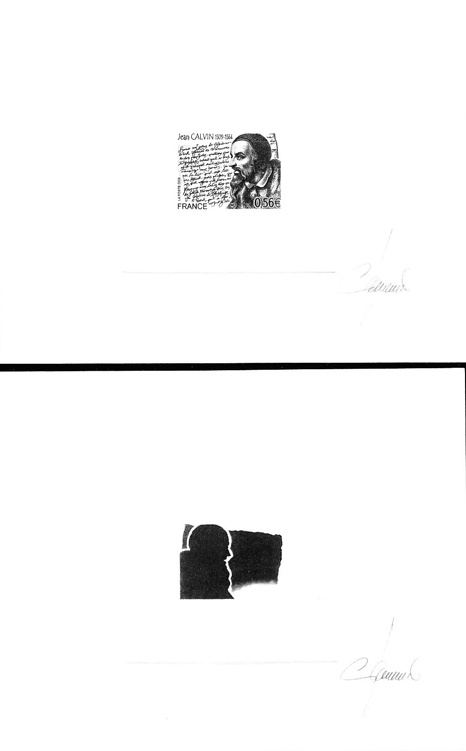 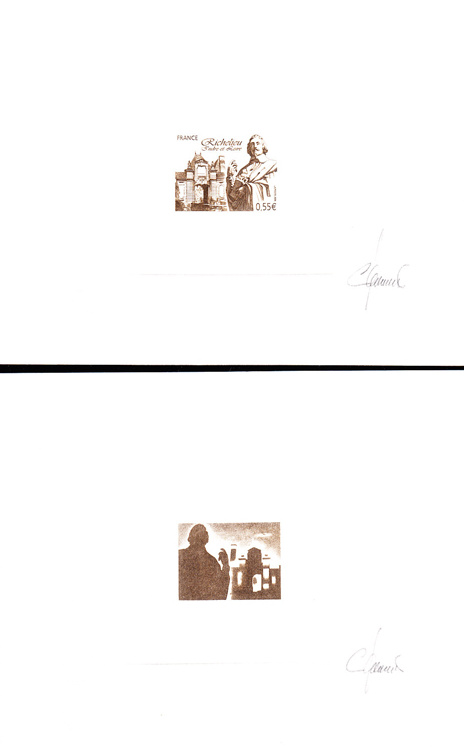 |
|
Send note to Staff
|
|
|
Valued Member
United Kingdom
314 Posts |
|
|
France International also has a number of engravings linked to specific stamp issues. Description of typical offering reads: "Artist proof. (1995) Manger scene. Die proof of engraving signed by GOFFIN. These engravings were made in conjunction with designs accepted by the post office and consist of themes related to the accepted design. There were only 11-15 made and they are printed on the same heavy paper as the artist proofs. One was made for the Postal Museum; the rest were given to the engraver and the designer of the stamp in question. The dimensions are 19 x 21 cm, but the die itself (and hence the image, including the signature) measures 14 x 14 cm. This design based on the set of Provençal nativity figures, Scott Nos B664-9, Yvert Nos 2576-81" 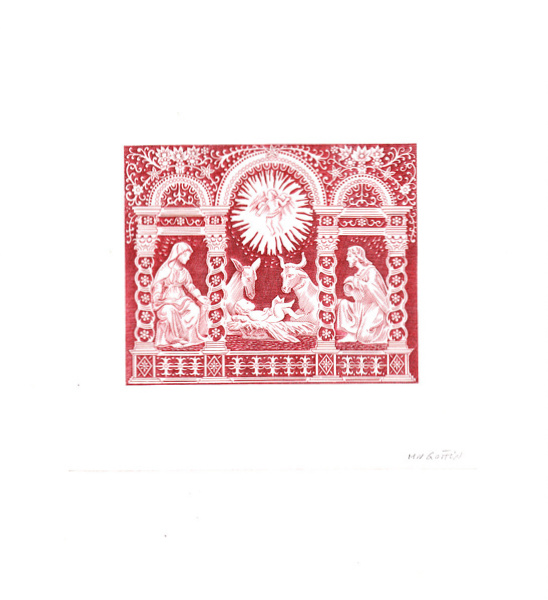 If you like your engravings large, then this is a lovely series that are on offer. (US$90 estimate on the one that I depict above.) GLENN |
|
Send note to Staff
|
|
|
Pillar Of The Community
Czech Republic
623 Posts |
|
|
65170 - Quote: "I have never previously come across "positive and negative" engravings before." Glenn, let me refer you to http://blog-impressions-timbrees.bl...ouleurs.html containing the explanation in the following paragraphs: ... Apres un pré-chauffage, le papier est humidifié pour subir une premiere impression. Cette premiere impression n'aura pas de relief. Le cylindre cliché est gravé en creux et l'image a l'endroit. Apres encrage avec des rouleaux toucheurs découpés et essuyage, l'encre est déposée par pression, image a l'envers, sur un cylindre en matiere synthétique souple de report qui a son tour dépose l'encre par pression a l'endroit sur le papier, comme en offset. L'impression est séchée dans un tunnel infra rouge. ... La deuxieme impression est en taille-douce directe. Le cylindre est donc gravé en creux image a l'envers pour avoir une impression image a l'endroit. L'encrage est obtenu par trois rouleaux toucheurs découpés soit manuellement, soit par découpage laser : les "chablons". Un essuyeur enleve l'encre en exces pour ne la laisser que dans les tailles de la gravure. Apres un deuxieme mouillage du papier, le cylindre clichés dépose directement son encre par pression avec un "presseur", lui-meme appuyé par un cylindre de contre-pression. Cette impression est séchée a son tour et refroidie brutalement au contact de cylindres creux ou passe de l'eau froide pour créer un choc thermique. ... I had to get the text rid of the acute and circumflex accents as these will not appear in the posts here. The first of the two paragraphs quoted above concerns "positive" engravings (= gravé en creux image a l'endroit) resulting in "negative" proofs, the second refers to "negative" engravings (= gravé en creux image a l'envers) resulting in "positive" proofs. "Positive" engraving is about the part of the design to be printed by offset recess which is engraved as meant to be viewed on the stamp. "Negative" engraving is about the part of the design to be printed by classical recess which is engraved in reverse, as a mirror image of what is meant to be viewed on the stamp. The descriptions in your post mention sets "of 2 die proofs (positive & negative)", not "positive and negative" engravings. Consider the French terms "épreuve / image positive / négative" in photography. Hence possibly, by hitherto not yet established extension or perhaps confusion, the neologisms, new coinages. Regards, Florian |
|
Send note to Staff
|
| Edited by florian - 11/01/2013 03:51 am |
|
|
Pillar Of The Community
Czech Republic
623 Posts |
|
|
65170 - Fine engraving to go with the very nice 1995 set of Provençal nativity figures by Marie-Noëlle Goffin (born in 1935). I do enjoy her art and wish her all the best.
Glenn, thank you for bringing her art of graphic design and taille-douce to mind. |
|
Send note to Staff
|
| Edited by florian - 10/31/2013 06:49 am |
|
|
Valued Member
United Kingdom
314 Posts |
|
|
Many thanks Florian for your response to my query. Negative engravings are what we encounter all the time, so I will comment no further. However....Positive engravings - this is presumably what is also known in English as "offset intaglio"? I must admit that I am still struggling to understand why a printer would want a printed image of the inked chablon roller (assuming that I have correctly read the French text). I attach a chablon roller scan of one being prepared... 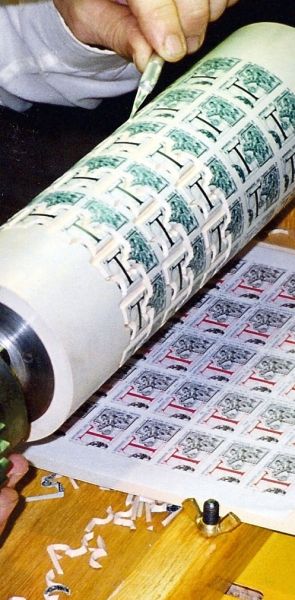 Am I right in thinking that this is the so-called positive engraving? Incidentally, I own a couple of Bradbury Wilkinson dummy stamps that have been printed in reverse. It is assumed (correctly?) that these were printed directly from the transfer roller prior to the image being rocked onto a printing plate.  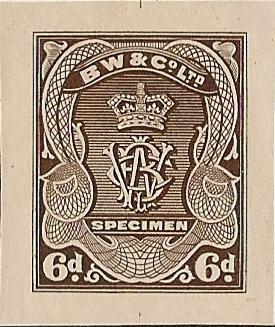 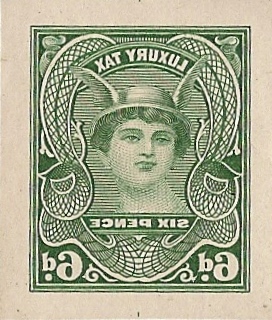 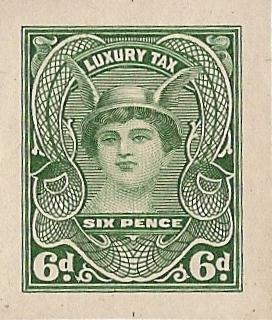 (The correct way reading stamps shown above are the result of the scan being "flipped" to see the design as was intended. No examples are known of these actual dummy stamps printed the correct way round, just the transfer roller versions.) I have never seen other examples of a transfer roller being inked and printed from. Would this have been normal, does anyone know? I suppose that there is a tiny chance that the die was actually engraved the correct way round, so all printing would, of course, be in reverse, but this seems unlikely, surely? Any further input from readers welcomed, please. Regards, GLENN |
|
Send note to Staff
|
| Edited by 65170 - 11/01/2013 03:45 am |
|
|
Pillar Of The Community
Czech Republic
623 Posts |
|
|
65170 - Glenn, I am sorry. I was still editing my post when you had finished posting your reply which I was not aware of.
Not being a native English speaker, I, too, am struggling to understand the terminology trying to arrive at explanations of how things work.
Quote: However....Positive engravings - this is presumably what is also known in English as "offset intaglio"?
Offset intaglio or offset recess (used by Galeoptix - Rein in his post of 05/07/2013 05:39 on p. 115 of this thread) but I feel doubtful about "positive" engraving. I was only trying to explain the way to arrive at similar expressions.
Quote: I must admit that I am still struggling to understand why a printer would want a printed image of the inked chablon roller (assuming that I have correctly read the French text). I attach a chablon roller scan of one being prepared...
Perhaps not a printer, but the engraver might find a "negative" proof of his work useful. Such proofs are of course of interest to collectors.
Quote: Any further input from readers welcomed, please.
Most desirable.
|
|
Send note to Staff
|
| Edited by florian - 11/01/2013 05:15 am |
|
|
Pillar Of The Community
1918 Posts |
|
|
HAITI - 1915 - Portrait of Zamor Printed by ABNCo Vignette engraved by William Adolph (1866-1947) 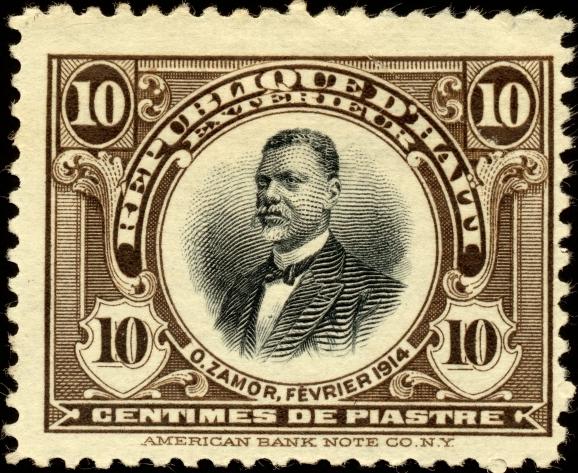 CHINA - TAIWAN CHINA - TAIWAN - 1945 Sc.605 to 610 Printed by ABNCo Engraved by William F. Ford (1892-1962) 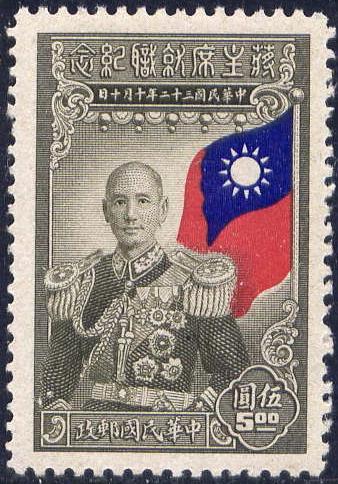 The stamp was printed in engraving/recess but the flag was printed in litho/offset |
|
Send note to Staff
|
|
|
Replies: 3,980 / Views: 1,934,712 |
|




 Posted 10/19/2013 10:57 pm


