|
This page may contain links that result in small commissions to keep this free site up and running.

Welcome Guest! Registering and/or logging in will remove the anchor (bottom) ads. It's Free!
To participate in the forum you must log in or register.
| Author |
 Replies: 15 / Views: 6,155 Replies: 15 / Views: 6,155 |
|
|
Pillar Of The Community
Australia
3547 Posts |
|
|
The Indian State of Jind (or Jhind) is an old favourite of mine. I was first drawn to it when leafing through an old British Commonwealth catalogue, and I came across its early stamps, all featuring a form of the Paisley pattern. It lies in the modern Indian States of Punjab and Haryana, in northwestern India. In its heyday, it covered an area of around 1300 square miles and had a population of around 350,000, making it a medium-sized State for the time. It was ruled by a Sikh dynasty, with connections to the ruling families of Patiala and Nabha. Its capital was the town of Sangrur, now in Punjab State. A short search on the Web for images of old Sangrur didn't produce much. The modern-day inhabitants seem to be prouder of the modern-day town  Like most of the Indian States stamps, the early stamps of Jind were valid for postage only within the borders of the State. Mail going outside the State had to carry British Indian stamps. Jind issued its first stamps in 1874: a set of five values, from ½ Anna to 8 Annas, on a thin, slightly yellowish paper. The sheets were of 50, with each stamp drawn onto the lithographic stone by hand, so that each position in the sheet is (theoretically) plateable. As the ½ Anna stamp paid the basic letter rate, there wouldn't have been much demand, apart from collectors, for the top value. Still, they're among my favourite designs:  All but the ½ Anna and 8 Anna are in distinctive colours, so they shouldn't cause any difficulty. This is the ½ Anna value  and this is the 8 Anna value  The values are written in Urdu in the central panel. The R is the initial of the Raja, Raghubir Singh. There is an interesting variety of the ½ Anna, which is quite valuable, and can go unnoticed: the whole stamp in one position on the sheet (Row 4/7) has been heavily retouched, making quite a mess of the stamp. Here it is in a pair with the normal stamp:  Gibbons lists the retouched stamp as SG J1a, at a price that makes it well worth looking out for. |
|
Send note to Staff
|
|
|
|
|
Pillar Of The Community
Australia
3547 Posts |
|
|
The lithographic stones for these first printings weren't terribly satisfactory, and were replaced quite soon. Most of the printings from the new stones were made on an entirely different paper: Gibbons describes it as a bluish laid card paper. It may not always be bluish, but it's quite thick and shows the laid lines (a watermark of closely spaced parallel lines) quite clearly. This set, in the same five values, appeared in 1876. However, before starting on the new paper, the printers printed a very few sheets of the 2 Anna on the old paper, in a very distinctive brown-buff shade:  Gibbons also list this, at a very healthy £275 mint, against £1 for the usual yellow shade. Do I really need to suggest you watch out for this one? The printings on card paper are generally cheaper and easier to find than the 1874 stamps, although they're not common used. The lower values of the 1874 printings are generally cheaper used than mint. The typical postmarks of the time repeat the Paisley pattern:  (Here on the 1874 4 Anna) The only shades Gibbons recognises in the 1876 set are (of course  ) in the top value, the 8 Anna. Here they are:  SG J11a, 'bluish violet'  SG J12, 'slate-blue', and  SG J13, 'steel blue' |
Send note to Staff 
|
|
|
Pillar Of The Community
Australia
3547 Posts |
|
|
Before we leave the first types, I should mention two other stamps you may come across. The ½ Anna blue on card paper turns up occasionally perforated This was never used for postage. Jind continued to use these stamps for revenue purposes after they were withdrawn from postal use. This stamp was only ever used as a revenue. The other you may come across is the pixillated Lion:  on the card paper, and with a lion instead of a value in the central tablet. It's thought this may have been intended as an Official stamp, but it was never put into use. Sheets of the first types turn occasionally: usually of the 2 Anna on thin paper and the ½ Anna on thick paper. The thin paper printings, from the first lithographic stones, are plain and a bit ho-hum, but the second stones had wonderful marginal markings, for those who appreciate that sort of thing: 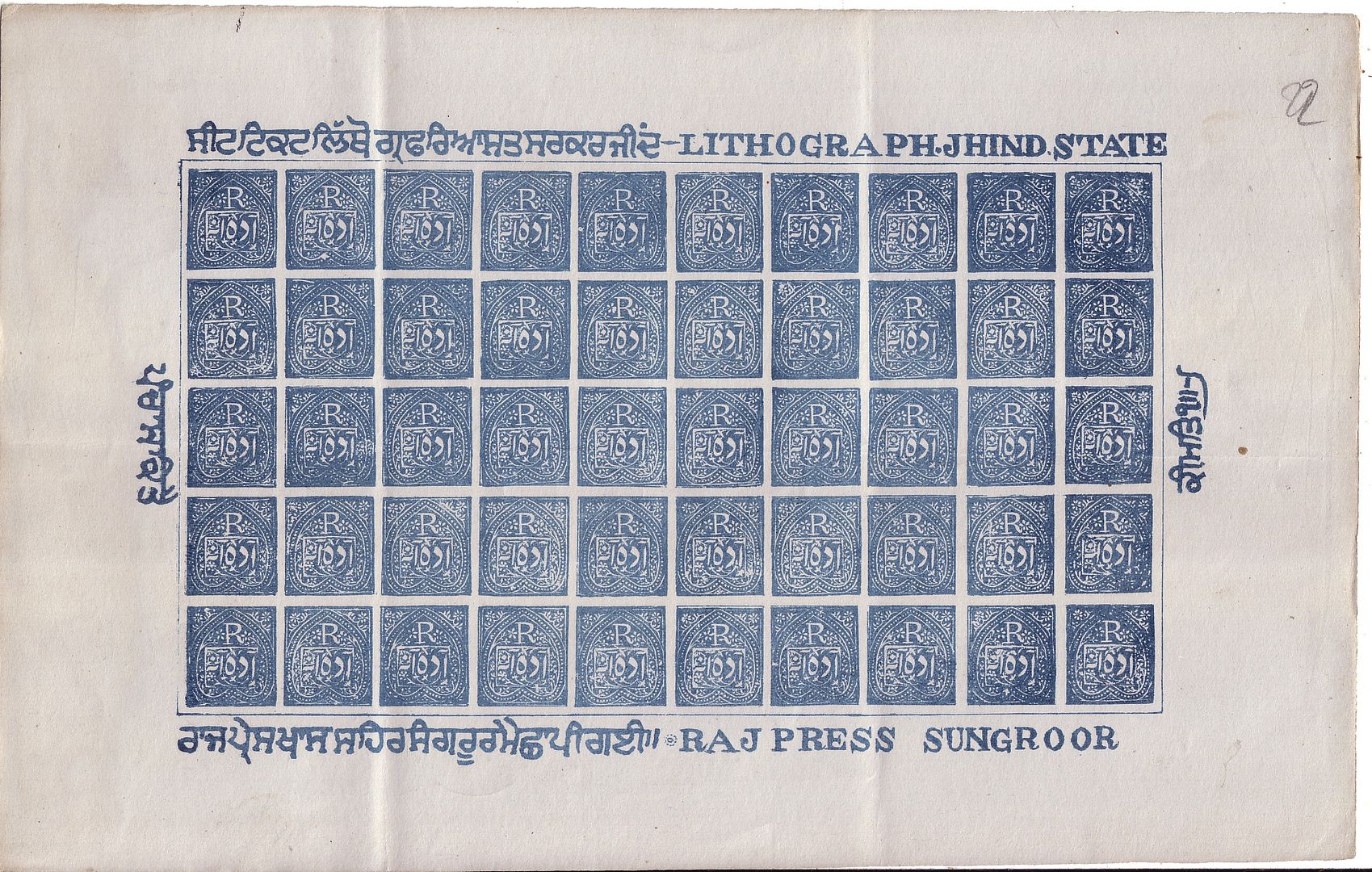 (This sheet, incidentally, came from the collection of the late Amir of Bahawalpur, a keen collector of the Indian States.) |
|
Send note to Staff
|
|
|
Pillar Of The Community
United Kingdom
1356 Posts |
|
|
These are beautiful, I can see why they have captivated you! I especially like the green 4 anna with the postmark echoing the design of the stamp. A stunner..... |
|
Send note to Staff
|
|
|
Pillar Of The Community
Australia
3547 Posts |
|
|
They are attractive designs, Stampgal: crude, but distinctive, and with their own special appeal. It was great shame that Jind decided to largely drop them in 1882, and use a variety of other designs. At the same time, it added a ¼ Anna value (the small type that prompted this thread):  These are much more common than the first types, and you could put together a simplified collection of one of each for a fairly modest outlay. They appeared first on a thin yellowish wove paper, similar to the 1874 papers, but then on laid papers of various types, and on a quite thick wove paper. In 1885, Jind also started perforating its stamps, so that the stamps appear on the different papers, either perf or imperf. There are also some good shades: The ¼ Anna exists in buff (left) and red-brown (right)  The ½ Anna is found in buff, red-brown and lemon (if that can really be called a 'shade'  )  The 2 Anna is found in blue and deep blue  and the 4 Anna in sage-green (left) and blue-green  |
|
Send note to Staff
|
|
|
Pillar Of The Community
Australia
3547 Posts |
|
|
Used are generally fairly easy to come by 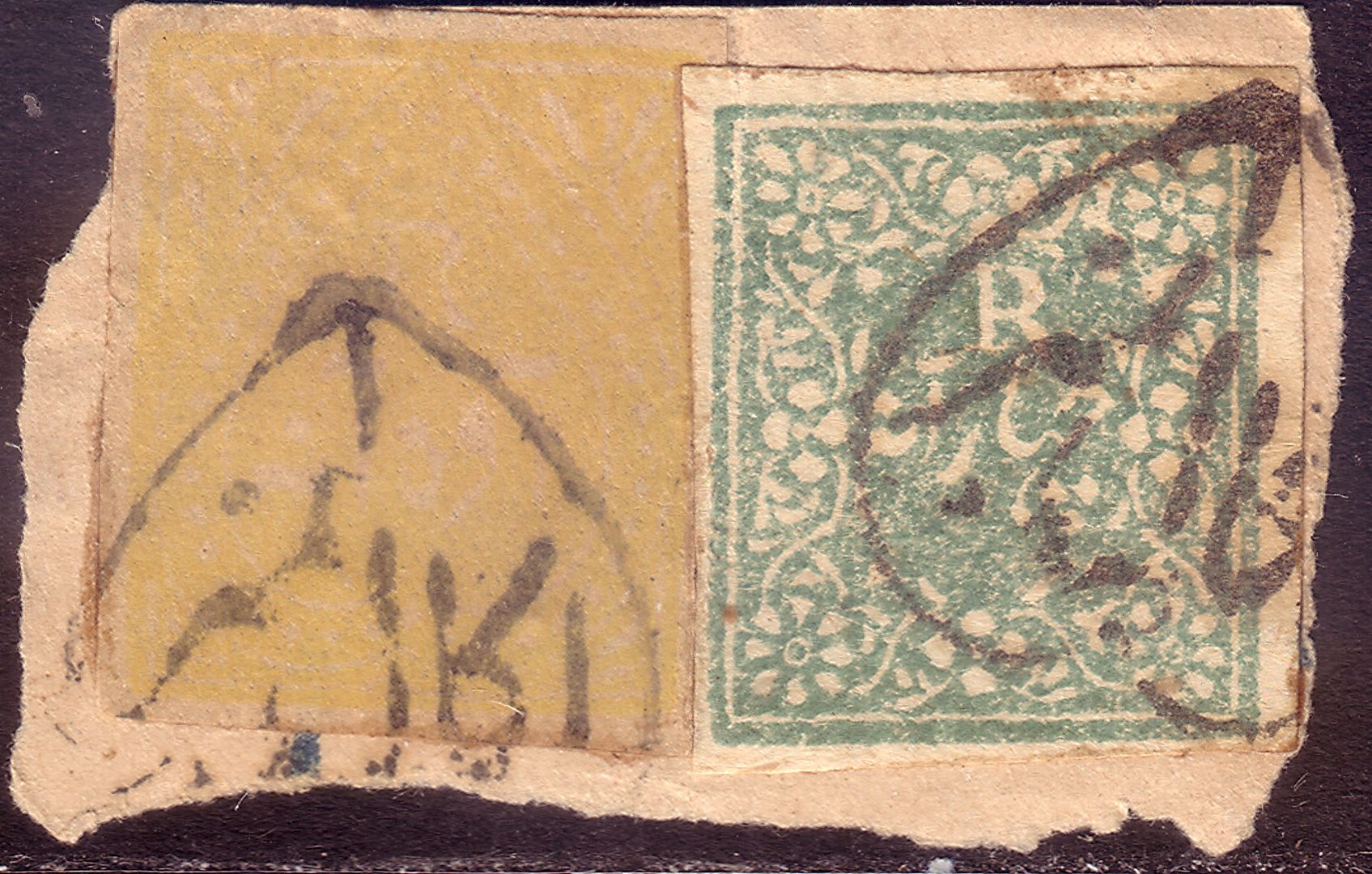 and normally have the Paisley cancel. Beware of pen cancellations: they are almost certainly revenue usages and (sorry Cinderella-lovers  ) worth much less. Covers are rare 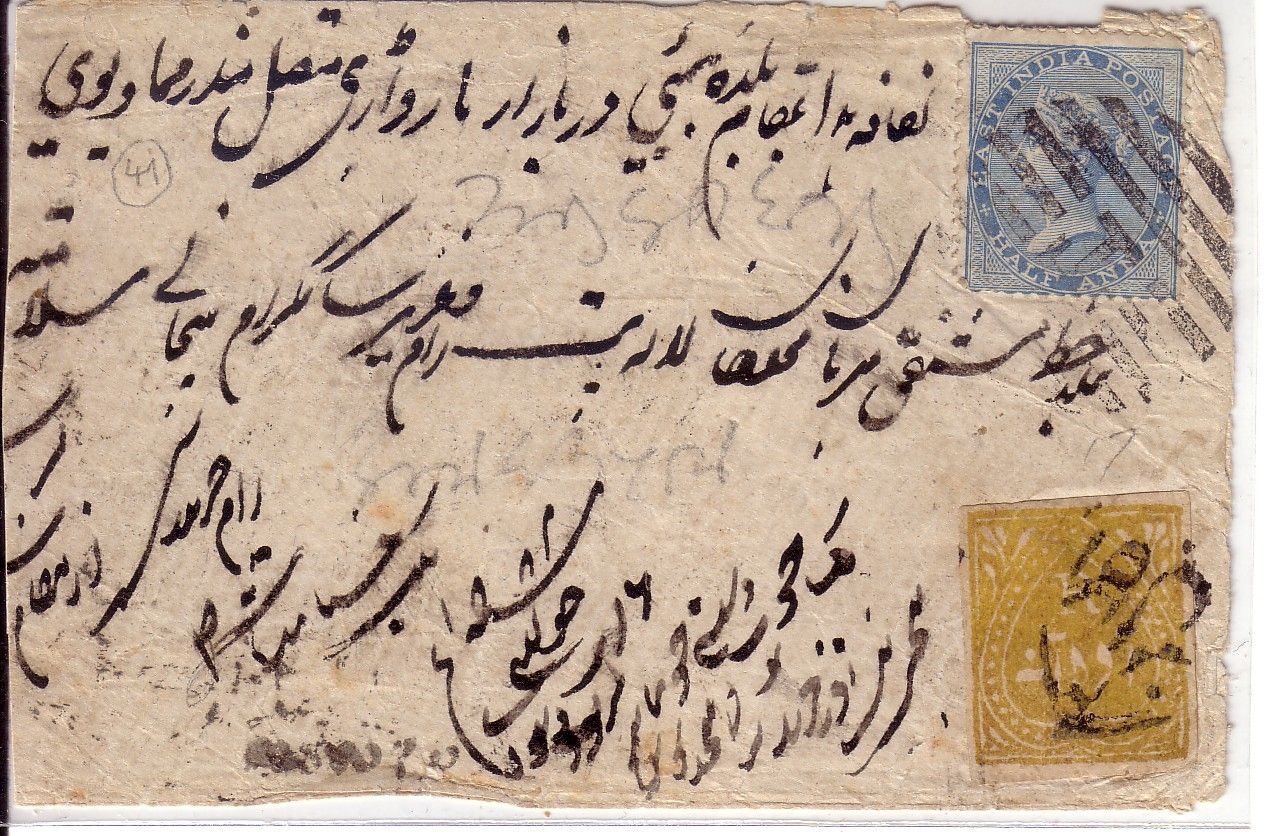 This is my only one, and it doesn't bear thinking about what it cost. Sheets, of the low values anyway, still come up occasionally, and make great display pieces, if they are rather unwieldy: 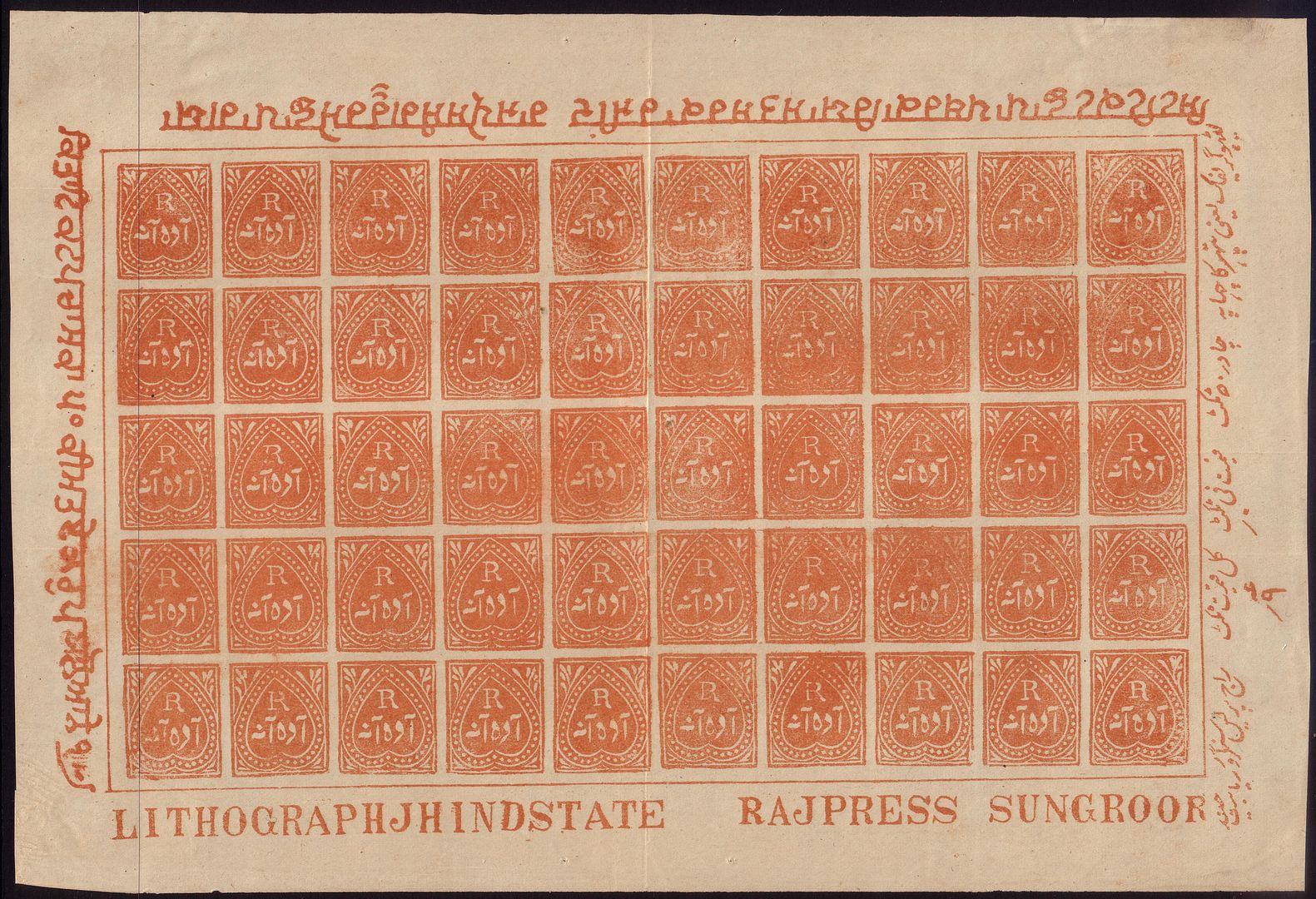 |
|
Send note to Staff
|
|
|
Pillar Of The Community
Australia
3547 Posts |
|
|
There are also a couple of errors. The ¼ Anna exists with a double print:  (normal alongside for comparison) and the 4 Anna is found in imperf between pairs  This is the most expensive item in Jind, according to Gibbons, at £600. Not cheap, but then, we are talking about the biggest ticket item from Jind ... There was probably only one sheet affected, so there could have been a maximum of 25 pairs, if the whole sheet was misperforated. Imagine what a USA item of which only 25 examples could exist would cost. Some other things to tuck away in the back of the mind: the ½ Anna lemon is rare perforated (£170 mint on wove paper; £140 mint, and £26 used, on laid paper). The top value, the 8 Anna, on the other hand is quite a common stamp: mint, the perf on wove paper is the most expensive, at £13, but on laid paper, perf or imperf, it only rates £2.50. The ½ Anna turns up occasionally in blue  These are revenue stamps - they were never issued for postage. And lastly, there are some forgeries going around.  (2 Anna imperf: Forgery at left, genuine at right)  (2 Anna perf: Forgery at left, genuine at right)  (8 Anna: Forgery at left, genuine at right) They might well fool you if you haven't seen any of the genuine stamps. If in doubt, compare the questionable stamp with a genuine one. The forgeries are usually larger. (However, there are really midget copies of the small ¼ Anna stamps out there as well, often in sheets. Again, though, the size is quite wrong.) If you can't do that, post it up here: I'll be happy to give my opinion. |
|
Send note to Staff
|
|
|
Pillar Of The Community
2664 Posts |
|
|
nice to see you havent retired tony
i am waiting for october princely state october |
|
Send note to Staff
|
|
|
Valued Member
United Kingdom
185 Posts |
|
|
I hope you don't mind me adding to this thread Tony. Here's a sheet of the strange reduced-size forgery of the quarter anna, with a part-sheet of the genuine stamp. The forgery is on wove paper which is thinner and shinier than that used for the genuine stamps, and appears to be printed by typography rather than the lithography of the originals. Unlike many of the recent Indian State forgeries that seem to be in existence, these mini-stamps have been around quite a long time. I have had this sheet for about 15 years. It was already in an old collection, and was previously mounted before that by using stamp edging, which was a practice that as far as I am aware died out long ago. Do you know when these first appeared and are there any others from the same stable? Someone went to a lot of trouble to produce them, but my question is why??  |
|
Send note to Staff
|
| Edited by peterh - 08/23/2010 8:05 pm |
|
|
Valued Member
United States
305 Posts |
|
|
Nicely done Tony. Thank you for sharing... |
|
Send note to Staff
|
| Edited by Gaff - 08/23/2010 5:50 pm |
|
|
Pillar Of The Community
Australia
3547 Posts |
|
|
Thanks, Gaff - it's always a pleasure to show off these stamps to audiences who may not be familiar with them. And you never know: maybe someone else will fall under their spell (and I'll have another sucker around to buy them when I sell up ...)
Peter, I have no idea of the background to the miniature ¼ Annas. I have a sheet myself, sitting around somewhere. As they seem to be a fairly accurate reproduction, I've always wondered if they might have been produced by some photographic process. However, I have no idea, and I've never seen any other values of Jind, or any other Indian State, treated in the same way. It's all a bit of a mystery. |
|
Send note to Staff
|
|
|
Valued Member
United States
305 Posts |
|
|
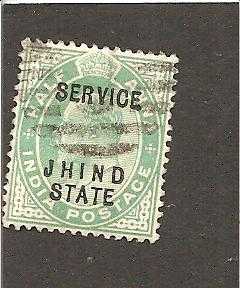 Not nearly as exciting, but found this 1907 ½ Anna on sale for a pittance & decided to grab it... |
|
Send note to Staff
|
|
|
Pillar Of The Community
Australia
3547 Posts |
|
|
When I have a moment, I'll have to do a whirlwind tour of Jind/Jhind/Jeend in its post-1885 Postal Convention years. Gaff, there is a nice (and often faked) error on your Edward VII Jhind ½ Anna, with the 'J' of 'JHIND' missing:  Not sure about this one. I can't see obvious signs of the J being scratched out, but ... |
|
Send note to Staff
|
|
|
Pillar Of The Community
Australia
3547 Posts |
|
|
In 1885, Jind committed an act of black treachery against all lovers of beautiful postage stamps. It joined a Postal Convention with British India, undertaking to stop printing its own (lovely and distinctive) stamps, and to use (DULL) British Indian stamps overprinted with its name. These were valid throughout India, rather than just in Jind, but what a price to pay ... The first type of overprint had JHIND STATE in two arcs:  (The 1 Anna stamp has the overprint inverted: compare the positions of the words with the ½ Anna stamp.) Later in 1885, Jind changed its mind on the spelling of its name, and issued a set overprinted JEEND STATE. These are all scarce, and they have been forged. Next year, Jind reverted to JHIND STATE, this time in two lines:  It continued the same with the Edward VII set, which appeared in 1903:  As the overprints were typeset, errors crept in, like the inverted overprint above. In the Edward VII ½ Anna for official use, overprinted SERVICE, the 'J' dropped out of 'JHIND' during one printing: |
|
Send note to Staff
|
|
|
Pillar Of The Community
Australia
3547 Posts |
|
|
And here is a nice commercial (with the emphasis on commercial) cover from the Edward VII era  The back is a delight for collectors of advertising covers:  The old Adam seized hold of Jind during George V's reign, and it decided to make life interesting for collectors. At first, in 1914, it continued with the old typeset JHIND STATE overprints. Then, in 1924, it decided to change the spelling again, to JIND STATE, in two lines. Finally, in 1927, it decided to print the name in a single line:  doing wonders for stamp sales It also managed one more variant, on the Indian 9 Pies (¾ Anna) surcharge on 1 Anna of 1923:  During WWII, the Indian government increased the letter rate from 1 Anna to 1 Anna 3 Pies (1¼ Annas). As there was no stamp of that denomination immediately handy, the old George V stamp of that value was resurrected temporarily:  |
|
Send note to Staff
|
|
|
Pillar Of The Community
Australia
3547 Posts |
|
|
Having successfully exploited the collectors during George V's time, Jind saw no reason to stop for the new King Emperor. At first, it retained the old single line JIND STATE, but then decided to simplify things (again) to just JIND  And here is a 9 Pies stamp, paying the postcard rate. (This sort of usage isn't at all common. You could buy a 9 Pies postal stationery card for 9 Pies, so why bother to make your own?)  And to round off this scuttle through Jind's dark days, a couple of oddities. First, a very philatelic cover, with a nice First World War patriotic label on the back:  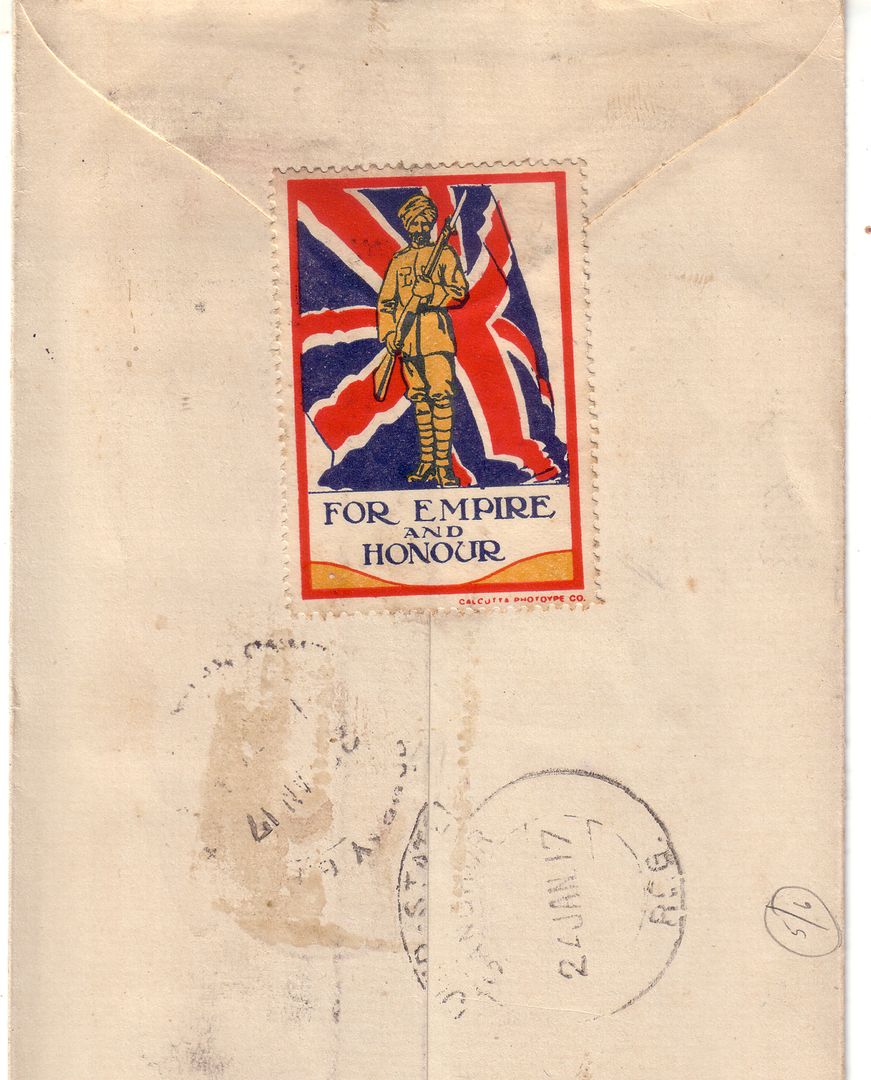 And an illegal use of Jind stamps to an overseas destination (Convention States stamps were valid throughout India, but not outside it):  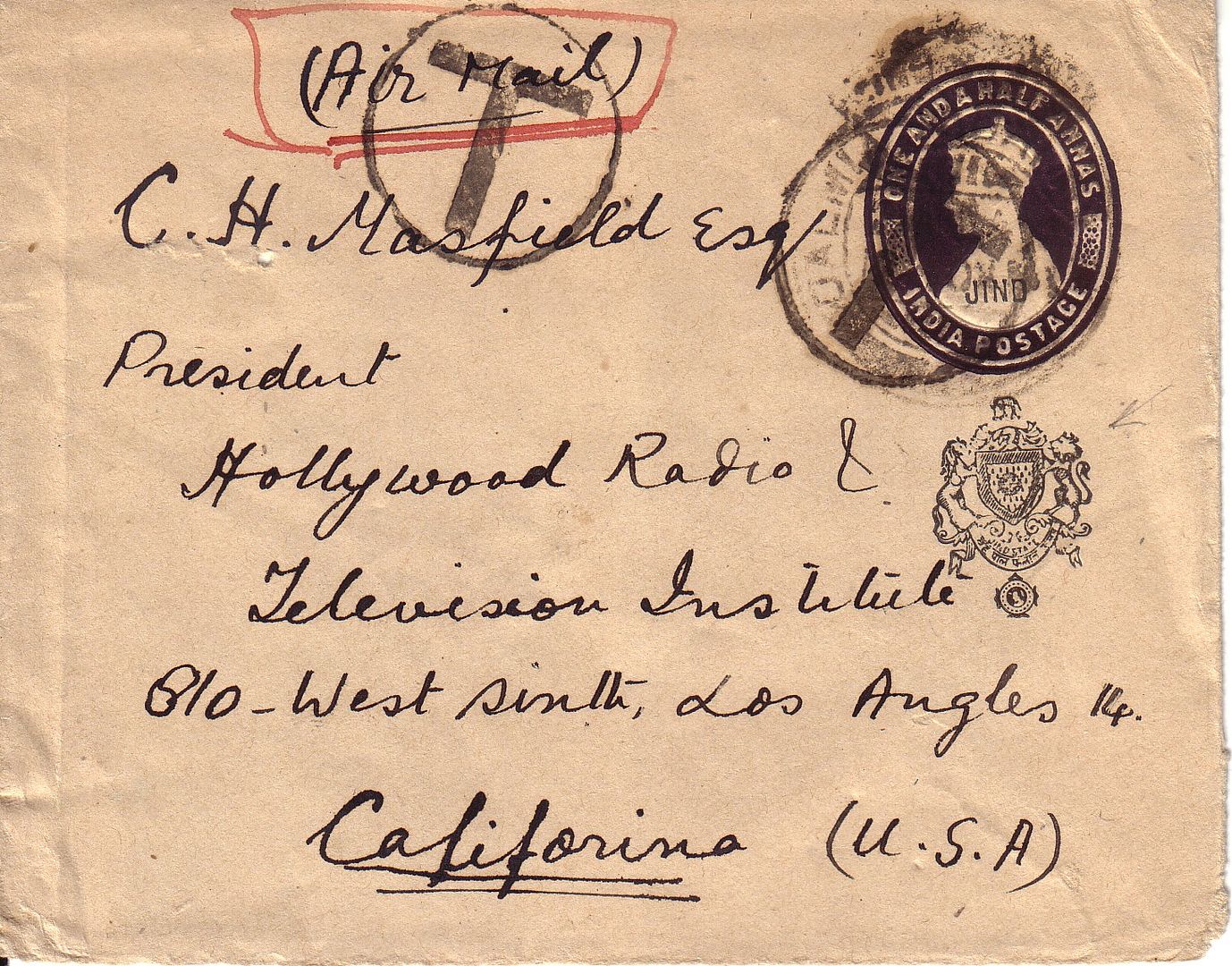 Say what you like - to me Jind philately, real Jind philately, died in 1885 |
|
Send note to Staff
|
|
| |
Replies: 15 / Views: 6,155 |
|
|
To participate in the forum you must log in or register. | |
Disclaimer: While a tremendous amount of effort goes into ensuring the accuracy of the information contained in this site, Stamp Community assumes no liability for errors. Copyright 2005 - 2026 Stamp Community Family - All rights reserved worldwide. Use of any images or content on this website without prior written permission of Stamp Community or the original lender is strictly prohibited.
Privacy Policy / Terms of Use Advertise Here |
| Stamp Community Forum |
© 2007 - 2026 Stamp Community Forums |
| It took 0.2 seconds to lick this stamp. |
 |
|
|
|


 Posted 08/22/2010 09:23 am


