| Author |
 Replies: 34 / Views: 5,925 Replies: 34 / Views: 5,925 |
|
|
|
Pillar Of The Community
Australia
3547 Posts |
|
|
Rod, on the question of the denomination of the currency, I'd guess that, given the time and place, the actual coinage would be a fearful melange of several dozen currencies. In order to share out the booty equitably, someone would have had to make an accounting into a common currency, and maybe an actual physical conversion. Sterling would likely have been the most convenient currency of account, whatever the actual currency used for the distribution was.
Aren't you sad at the passing of that fine old naval tradition? |
Send note to Staff 
|
|
|
Bedrock Of The Community
Australia
38679 Posts |
|
|
I am thinking 18th century naval practice,
tiny wooden ships,
humid hot days down the Malabar coast,
dubious ratings pulling on ropes all day
no solution for scurvy as yet,
are you with me thus far?.........
|
|
Send note to Staff
|
|
|
Pillar Of The Community
Australia
3547 Posts |
|
|
Well, yes, all that of course. But how about the payday? Leaping between ships with a cutlass clenched in your teeth, followed by a spot of plunder and pillage? |
|
Send note to Staff
|
|
|
Pillar Of The Community
United States
7103 Posts |
|
|
Here is the recounting of the entry into Fort Gheriah/Geriah from Scenes in India:
"Colonel Clive then marched into the fort and took possession.
The garrison had suffered little loss, nor, on our side, was it at all severe. Upon entering Geriah, Colonel Clive was surprised to see what trifling mischief the works had sustained, notwithstanding the tremendous fire which had been directed against them. So great was the height and so extraordinary the thickness of their walls, that the garrison found an indestructible shelter behind them. All the ramparts not hewn out of the solid rock, as at Severndroog, were built of huge masses of stone, so prodigiously ponderous that no weight of metal could make an impression upon them. A year's cannonading would not have effected a practicable breach; yet such was the vigour of the fire poured from the British ships against these impregnable ramparts that it terrified the garrison into a surrender, in spite of the solidity of their battlements.
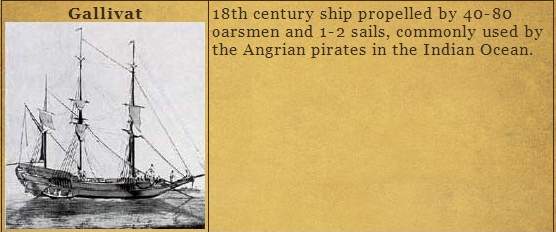
The treasure found within this town was not great. The money and effects were valued at about a hundred and twenty thousand pounds. Besides this, there were on the batteries two hundred guns, in good condition, six brass mortars, and a large quantity of ammunition of every description. The grabs which were burnt, consisted of eight ketches and one armed vessel. Upon the stocks were two large ships, in great forwardness, one of which was to carry forty guns, and the other twenty-six. Besides these, there was a large number of gallivats — small vessels that attend on the armed ships, to tow them when necessary, and are likewise used for boarding."
Regarding the alleged romance of the era, I have to find the author's recounting of their steps to keep their last turkey alive so that they would have food to make the next landfall/supply. It involved force feeding a sickly turkey that was pretty much dying anyway by the time it was finally dispatched. The author has a knack for making you glad you weren't there.
|
|
Send note to Staff
|
|
|
Bedrock Of The Community
Australia
38679 Posts |
|
|
Fantastic yarn Collin!  ..and people think stamp collecting just involves little bits of paper. |
|
Send note to Staff
|
|
|
Bedrock Of The Community
Australia
38679 Posts |
|
|
Quote:
Leaping between ships with a cutlass clenched in your teeth, followed by a spot of plunder and pillage?
...Yes, well, there is that  I just hope I was well enough to have maintained at least some of my own teeth. |
|
Send note to Staff
|
|
|
Bedrock Of The Community
Australia
38679 Posts |
|
|
Pillar Of The Community
United States
7103 Posts |
|
|
If I can be indulged one more non-stamp-related diversion, here is the same author's story of their last turkey...
"We found provisions at Mascat reasonable, and the meat, poultry, and vegetables, remarkably good; this probably struck us the more forcibly, as the day before our arrival we had been reduced to our last turkey, which was all but starved to death when its throat was cut to make us a curry. For more than a week it had been kept alive by being crammed with stale fish and mouldy biscuit, the only aliment with which it could be supplied; and as we had scarcely any fresh water, the miserable creature was all but dead when it was killed. Had we continued at sea a couple of days longer, we should have been in a wretched condition, as the whole of our provisions were exhausted."
Ah, yes, the romance of the seafaring life...
It was also 110 degrees in the author's cabin on board the ship. Hard to find respite from that... |
|
Send note to Staff
|
|
|
Pillar Of The Community
United States
5894 Posts |
|
|
A bucket of cool seawater over the head might have helped. If one was not averse to being drenched, that is. |
|
Send note to Staff
|
|
|
Pillar Of The Community
United States
4106 Posts |
|
|
don't forget the "buggering of the cabin boy".
The stench of people who hadn't washed in a year..
maggots in the food, bad water. |
|
Send note to Staff
|
|
|
Pillar Of The Community
United States
7103 Posts |
|
|
The author relates the experience of an American captain that pulled into the same harbor. The captain said his ship was overrun with insects on the voyage. Upon reaching port, the insect infestations were cleared out overnight, thanks to the cockroaches that came aboard. If the stories can be believed, that was apparently the usual occurrence for ships calling on Indian ports. |
|
Send note to Staff
|
|
|
Bedrock Of The Community
Australia
38679 Posts |
|
|
I never really believe some of the stories,
maggots yes, but unwashed? how can that be, when they
lived on the biggest bath on the planet?
Long, long ago in my hazy memory, I recall some sort of
hammock made from sail cloth that was jury rigged over the side
one hopped in for a dip as the ship was moving.
A rope and a bucket thrown over the side for douche?
(in Thailand they call that "Dak Nam" and I believe in
warm humid climes, that is the most refreshing thing
one can do, beats a traditional shower hands down)
|
|
Send note to Staff
|
|
|
Pillar Of The Community
Australia
3547 Posts |
|
|
The preference for washing is a fairly recent phenomenon in the West, though. 18th Century England was, by all accounts, a fairly smelly place, and the great Dr Sam Johnson was, by Boswell's account, particularly ripe. Here is Johnson's comment on Kit Smart (author - as all cat lovers should know - of For I will consider my cat Jeoffry):
'I did not think he ought to be shut up. His infirmities were not noxious to society. He insisted on people praying with him; and I'd as lief pray with Kit Smart as any one else. Another charge was, that he did not love clean linen; and I have no passion for it.' |
|
Send note to Staff
|
|
|
Pillar Of The Community
2664 Posts |
|
|
cjd,
i thought the british are reknowned for spreading cockroaches all over the world through their ships
Tony,
the currency of india were the coins struck under the name of the mughal emperor right till 1835 when the EIc started making money under its own name and the unifrom coinage act of 1835 was passed william died soon after but coins continued to be struck till 1840 as they didnt want to spend money on the dies.
oh well do we have anyone here who has milled coinage of british india or east india company by any chance? |
|
Send note to Staff
|
|
|
Pillar Of The Community
Australia
3547 Posts |
|
|
Quite so, Spock. But as these were pirates, and they were raiding ships of every nationality, they probably collected quite a range of coins, from just about everywhere: Mughal, French, Dutch, British, Portuguese and, for all I know, Chinese as well. People seem to have been much more carefree about coinage 250 years ago. |
|
Send note to Staff
|
|
|
Replies: 34 / Views: 5,925 |
|




 Posted 11/02/2010 05:28 am