Stamp Community Family of Web Sites
Thousands of stamps, consistently graded, competitively priced and hundreds of in-depth blog posts to read


Stamp Community Forum
 
Username:
Password:
Save Password
Forgot your Password?

This page may contain links that result in small commissions to keep this free site up and running.

Welcome Guest! Registering and/or logging in will remove the anchor (bottom) ads. It's Free!

Can These Be Just Faded Cover?

 
To participate in the forum you must log in or register.
Author Previous TopicReplies: 7 / Views: 1,785Next Topic  
Valued Member

United States
488 Posts
Posted 12/20/2010   1:36 pm  Show Profile Bookmark this topic Add LONEDAN to your friends list Get a Link to this Message
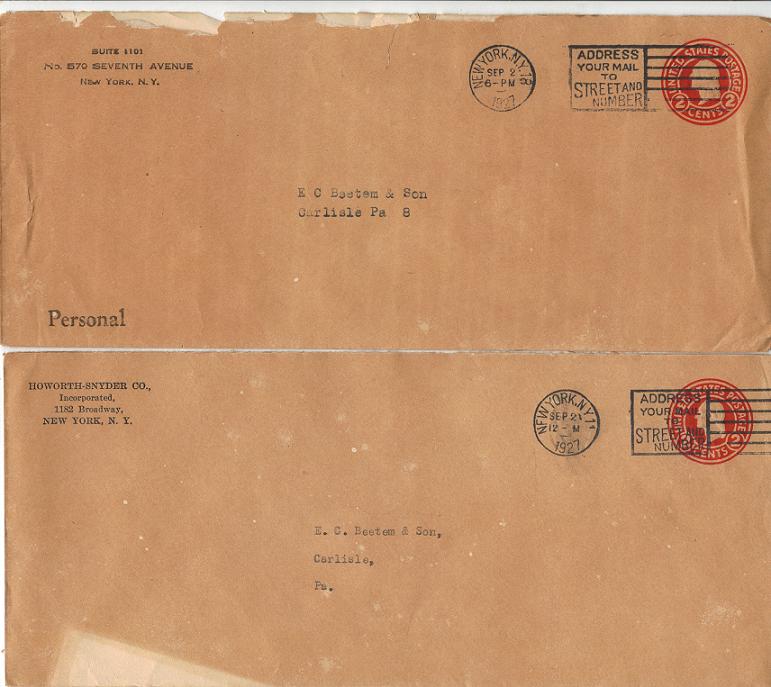
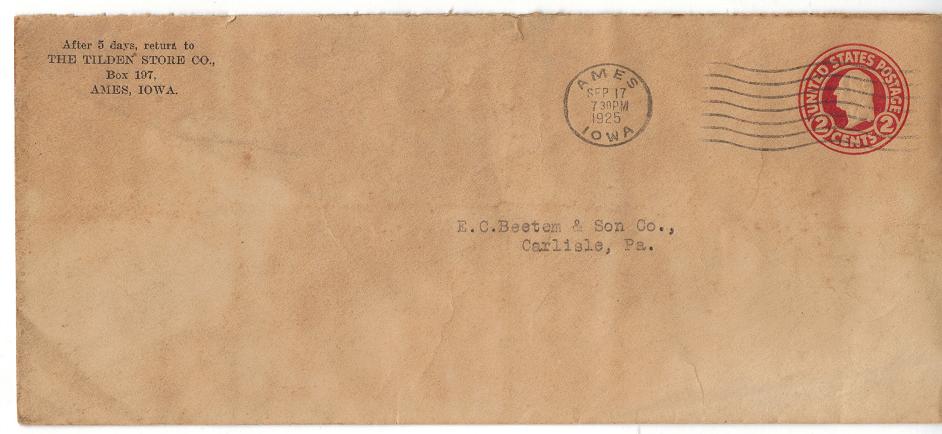
i found three covers in my cover box

is this color due to a fading?
this color is just on the front page of the cover
there also seems a difference in the die types

i would appreciate and help


Send note to Staff

Pillar Of The Community
United States
4106 Posts
Posted 12/20/2010   2:01 pm  Show Profile Bookmark this reply Add stampvirgin to your friends list  Get a Link to this Reply
the first one is ribbed paper.. that should be obvious.
the 1st and 2nd. may be the same die type, the 3rd one is not.

look in the specialized catalog, the differences in the 2 cent stamped envelope dies can be subtle.
Send note to Staff  Go to Top of Page
Valued Member
United States
488 Posts
Posted 12/20/2010   2:09 pm  Show Profile Bookmark this reply Add LONEDAN to your friends list  Get a Link to this Reply
i know little about paper types
is this a color change due to fading or something else?
Send note to Staff  Go to Top of Page
Pillar Of The Community
Canada
4648 Posts
Posted 12/20/2010   3:51 pm  Show Profile Bookmark this reply Add Bujutsu to your friends list  Get a Link to this Reply
Hi Lonedan

You can tell the 'ribbed' paper by the vertical lines as can be seen in the top scan.

I am not an expert on US postal stationery items so, maybe someone with more expertise can help here.

Chimo

Bujutsu
Send note to Staff  Go to Top of Page
Valued Member
United States
488 Posts
Posted 12/20/2010   4:08 pm  Show Profile Bookmark this reply Add LONEDAN to your friends list  Get a Link to this Reply
the ribs show up much better on the scan than In person
i guess the scans may show some things better but colors worse
Send note to Staff  Go to Top of Page
Edited by LONEDAN - 12/20/2010 4:10 pm
Pillar Of The Community
United States
1518 Posts
Posted 12/20/2010   5:14 pm  Show Profile Bookmark this reply Add bfranton to your friends list  Get a Link to this Reply
I too, have some embossed covers, and there have been a couple of most informative posts regarding them. You might wish to click on search and enter embossed... you'll get a whole list!
Send note to Staff  Go to Top of Page
Bedrock Of The Community
United States
12128 Posts
Posted 12/20/2010   6:36 pm  Show Profile Bookmark this reply Add wt1 to your friends list  Get a Link to this Reply
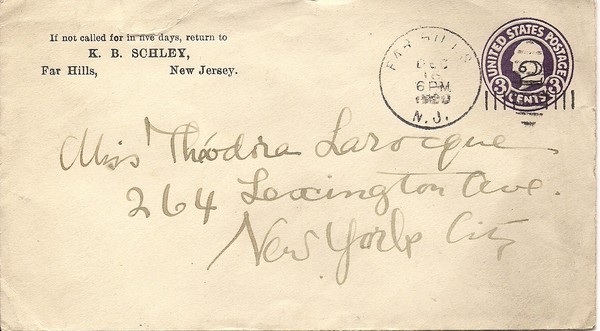
As long as we're on the subject of postal stationery, I thought I'd post this one. I must have thumbed through this cover at least a dozen times through the years and only recently realized that it is a postage revalued overprint from 3 cents to 2 cents, making it either a Scott U458, U459 or U460 (the differences being the color of the envelope in either white, amber or oriental buff). Since the cover is postmarked 1920, it's over 90 years old now and has faded, making it difficult to determine what color the envelope may have originally been. While it isn't anything of great value no matter what Scott # it turns out to be, it certainly proves that postal stationery items deserve a second look.

Send note to Staff  Go to Top of Page
Bedrock Of The Community
Australia
38679 Posts
Posted 12/20/2010   6:43 pm  Show Profile Bookmark this reply Add rod222 to your friends list  Get a Link to this Reply


Quote:
i know little about paper types
is this a color change due to fading or something else?


Aha! the culprit is that silent killer Lignin.

Paper is made from wood, which is made up mainly of white cellulose. Wood also has a lot of a dark substance in it called lignin, which ends up in the paper, too, along with the cellulose. The exposure of lignin to air and sunlight is what turns paper yellow.

Lignin makes wood stiff and trees stand upright. It eventually turns paper yellow because of oxidation.­ Lignin makes wood stiff and trees stand upright. You could say it acts as a glue to bind the cellulose fibers together. It is a polymer, a substance that is formed by the joining of simpler molecules into giant molecules that act differently than the smaller molecules did. Dr. Hou-Min Chang, a professor of wood and paper science at N.C. State University in Raleigh, N.C., compares lignin to the concrete used in buildings, with cellulose as the steel frame. Without lignin, Chang says, a tree could only grow to be about 6 feet tall. Lignin also helps protect the wood from pests and other damage.
Newsprint, which must be produced as economically as possible, has more lignin in it than finer papers. At the mill, the wood that will be turned into newsprint is ground up, lignin and all.

Paper manufacturers utilize the benefits of lignin in some types of paper, though. Brown kraft paper, the dark brown paper used in grocery store bags, and cardboard are stiff and sturdy because they have more lignin in them, and because those kinds of paper aren't treated with bleaching chemicals. It doesn't matter how dark they are because the printing on them is limited.

To make a fine white paper, the mill puts the wood through a chemical solvent process, which separates and discards the lignin. Pure cellulose is white, and the paper made from it will be white and will resist yellowing.

Lignin eventually turns paper yellow because of oxidation. That is, the lignin molecules, when exposed to oxygen in the air, begin to change and become less stable. The lignin will absorb more light, giving off a darker color. Chang says that if newsprint were kept completely out of sunlight and air, it would remain white. After only a few hours of sunlight and oxygen, however, it will start to change color.
Send note to Staff  Go to Top of Page
  Previous TopicReplies: 7 / Views: 1,785Next Topic  
 
To participate in the forum you must log in or register.

Go to Top of Page

Disclaimer: While a tremendous amount of effort goes into ensuring the accuracy of the information contained in this site, Stamp Community assumes no liability for errors. Copyright 2005 - 2026 Stamp Community Family - All rights reserved worldwide. Use of any images or content on this website without prior written permission of Stamp Community or the original lender is strictly prohibited.
Privacy Policy / Terms of Use    Advertise Here
Stamp Community Forum © 2007 - 2026 Stamp Community Forums
It took 0.34 seconds to lick this stamp. Powered By: Snitz Forums 2000 Version 3.4.05