I just came across this seemingly common cover from 1920:
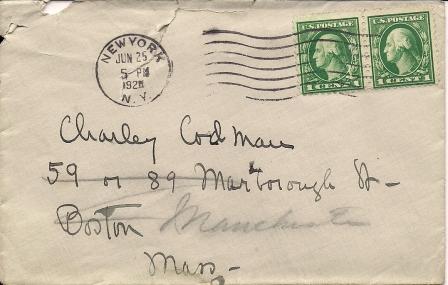
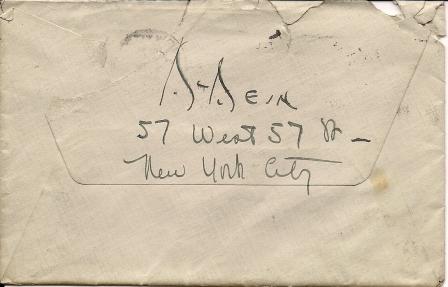
I almost put it aside as nothing more than junk until I noticed the return address on the back. In checking the address out on the internet, it seems that it could, in fact, be from Neysa McMein, an American Illustrator who was commemorated on U.S. Stamp 3502m (part of the American Illustrators Sheet), especially since the return address matches this brief biography:
Quote:
Neysa McMein (1888-1949)
While most recognized commercial artists of her time were male, Neysa McMein excelled as one of the leading and most influential artists. Her professional illustrator's career started with the sale of her first drawing to the Boston Star in 1914, after her attendance at the Art Institute of Chicago and a brief soiree into the field of acting. In 1915 another cover was sold, this time to the Saturday Evening Post. During the lean years, she subsidized her income by doing pastel portraits. They were popular and brought her many commissions.
As her career flourished, Neysa McMein was commissioned to create covers for McClure's, Liberty, Woman's Home Companion, Collier's, and Photoplay and did all covers for McCall's magazine between 1923 and 1937. She also did ad art for various companies such as Palmolive soap and Lucky Strike cigarettes. McMein is responsible for "inventing" the image of Betty Crocker, that vision of a fictional housewife that ended up portraying the wholesome likeness of American women. Few other images have done more to nurture strong middle-class, moral domestic values.
McMein was a member of the Algonquin Round Table, a group begun in 1919. It included some of the most talented writers, journalists and artists in New York City. The Round Table then included: Edna Ferber, Irving Berlin, Dorothy Parker, Alexander Woollcott, Harpo Marx, Jascha Heifetz and others. They met daily for lunch at a large round table in the Algonquin Hotel, thus the name, and were recognized during the 1920's for their spirit and urbane sophistication. McMein's own studio, at the time located on West 57th Street, was also a meeting place for these same artisans. The Round Table survived until 1943.
The handwriting looks quite similar to that of some illustrations she signed, even though the return address only uses a last name, the writing is quite unique.
Yet another reason why it's so important to look beyond the surface at some of these dated covers.





 Posted 12/21/2010 12:07 am


