|
This page may contain links that result in small commissions to keep this free site up and running.

Welcome Guest! Registering and/or logging in will remove the anchor (bottom) ads. It's Free!
To participate in the forum you must log in or register.
| Author |
 Replies: 7 / Views: 1,516 Replies: 7 / Views: 1,516 |
|
|
Rest in Peace
United States
1225 Posts |
|
|
|
|
|
Send note to Staff
|
A well regulated Militia, being necessary to the security of a free State, the right of the people to keep and bear Arms, shall not be infringed. (The exact & entire wording of the 2nd Amendment to the U.S. Constitution) |
| Edited by artlaunier - 09/25/2011 6:46 pm |
|
|
|
|
Bedrock Of The Community
United States
12128 Posts |
|
|
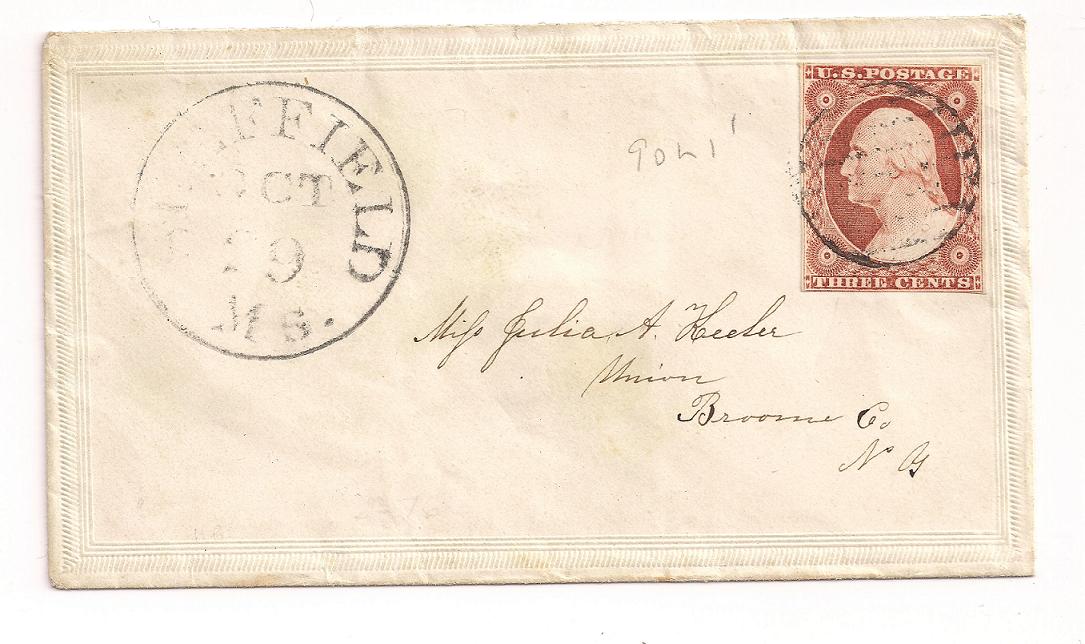
As it relates to your second scan, a 10E was issued in July 1851 and according to this brief biography, which I believe to be the named addresee, she married in December 1855, which helps to narrow down the usage of this example to within four years or sometime from 1851-1855: 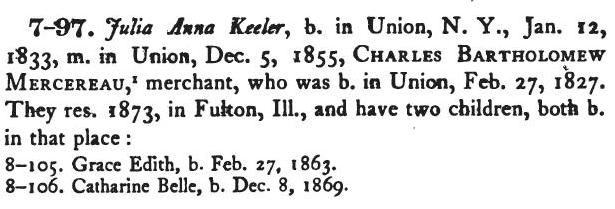 |
Send note to Staff 
|
|
|
Pillar Of The Community
United States
2555 Posts |
|
|
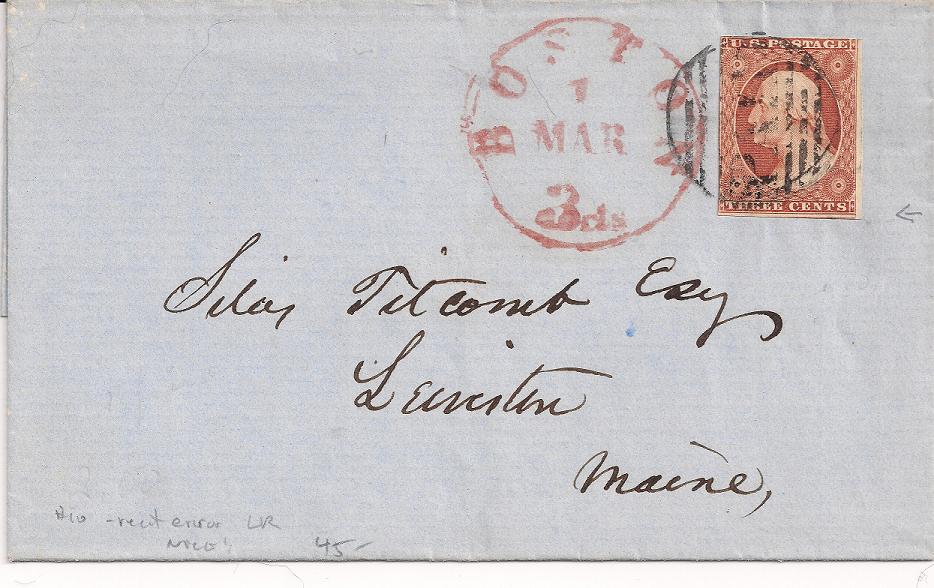
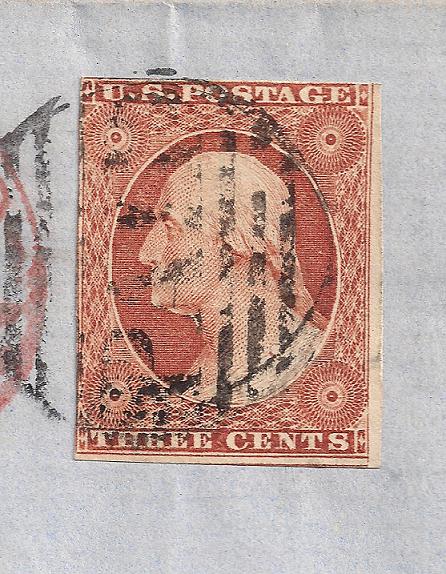
The stamp on your first cover is from position 90L2E. That position has the recutting error where the outer right frameline extends down and joins to the stamp below. There is only one other orange brown stamp that has a similar error and that is position 1L1i. 90L2L looks very similar as they are the same position, the only difference being from re-entry and some more recutting.
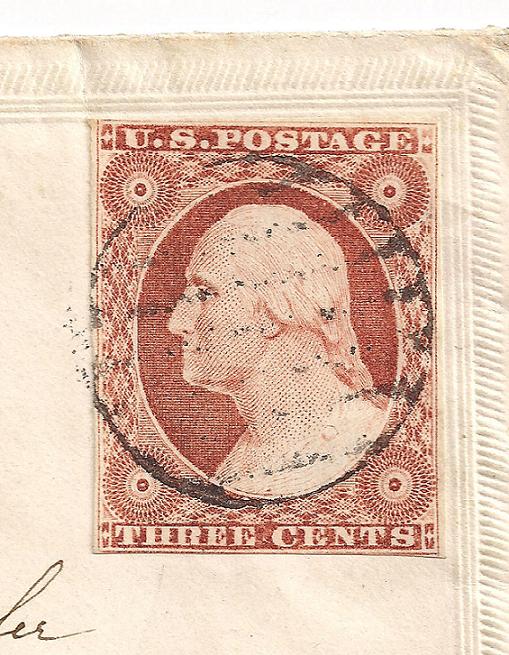
I cannot say whether your second stamp is from Plate 1E or i, it looks to be one of them for sure. It was a mistake in the listing to say it was from Plate 1E but there is no real difference in value between the two. I have no reason to believe the position marked on the cover, 90L1i, is wrong. The color is a pale orange brown. That stamp is so clean and fresh looking it literally looks like it was printed and mailed yesterday. |
|
Send note to Staff
|
|
|
Pillar Of The Community
United States
1357 Posts |
|
|
Rest in Peace
United States
7097 Posts |
|
|
I also have a 10A on cover. What does it accomplish having it certed exactly? I am just curious and not being cynical..too early in the morning for that...lol |
|
Send note to Staff
|
|
|
Rest in Peace
United States
1225 Posts |
|
|
Why have any stamp certified, on or off cover? JMO, if a stamp is worthy of certification off cover wouldn't it be just as, or even more so, worthy to be certified on cover?
IMO, there are several reasons to have a stamp certified, particularly when there are slight differences between them and another. Like A10 design, the 10, 10A, 11, 11A, 25, 25A where the perforation and the color are the major difference, they still follow the same A10 design. Then there are at least 15 different scott numbers for the 1 cent Ben Franklin. Counting imperf & perf varieties there are
and the A5 design 5, 5A, 18
and the A6 design 6, 6b, 19, 19b,
and the A7 design 7, 20
and the A8 design 8, 8A, 21, 22,
and the A9 design 9, 23
and the A20 design 24
and I'm sure I missed some.
Most differences are, at best, hard to determine. The type, the plate, etc. I can figure out perf & imperf, unless someone cut off the perfs.
Some carry a huge difference in value as just the single stamp. Then if its on cover the value can take another jump. The 2011 Scotts
for example;
5 single $85,000.00 then on cover $95,000.00
6 single $13,000.00 then on cover $17,500.00
7 single $160.00 then on cover $190.00
8 single $3,250.00 then on cover $3,500.00
9 single $120.00 then on cover $140.00
10 single $200.00 then on cover $275.00
11 single $15.00 then on cover $17.50
Me, I still cann't tell the difference between a #8 and #9, at least I'm uncertain. So, I'll pay the cert fee and then I'll know for sure. Using the same logic should hold true if its on cover or not.
Just my humble opinion...
Art |
|
Send note to Staff
|
A well regulated Militia, being necessary to the security of a free State, the right of the people to keep and bear Arms, shall not be infringed. (The exact & entire wording of the 2nd Amendment to the U.S. Constitution) |
| Edited by artlaunier - 09/28/2011 1:00 pm |
|
|
Pillar Of The Community
United States
2555 Posts |
|
|
Rest in Peace
United States
1225 Posts |
|
|
I just got my covers back from Bill Weiss and am happy to say they came back as positive 10a. I had little doubt, considering the source of the covers. Even happier, the single came back as a positive 10a VF-XF.
Art |
|
Send note to Staff
|
A well regulated Militia, being necessary to the security of a free State, the right of the people to keep and bear Arms, shall not be infringed. (The exact & entire wording of the 2nd Amendment to the U.S. Constitution) |
|
| |
Replies: 7 / Views: 1,516 |
|
|
To participate in the forum you must log in or register. | |
 New South Wales Numeral Cancels Value Question: Full Sheet, Austria Scott # 840A-H, Issued 5'24'1969. Who Was The Upper Keswick, N.b. Postmaster In 1941 Big Blue Album - How Far Along Is Everyone? Pushing 330,000 All Different Worldwide Stamps In One Collection . History And Usage Of Usir "silver Tax" Stamps What Did You Do Philatelically: Today Or Recently? Indypex 2026, September 18, 19, And 20, 2026 Cover Calendar For Month And Day -Pics Show Me Your Sports Stamps! Fruits Anyone? Food On Stamps! Chile Casa De Moneda De Chile Philatelic Souvenir Cards Of The 50's And 60's Postmarks.day By Day Minkus Supreme Global Albums (The Big Red Thread) Wanted: On-Cover Solo Uses Of United States 14¢ American Indian Stamp Extinction Of Non-Spray Cancels, Minneapolis Lacks The Year Germany Michel #110 Color Computers, Electronic Devices, Software, Information Technology, And Internet On Stamps Portuguese 1910 Overprinted "republica" Forgeries Show Your US 1851-57 Imperforate Stamps Coffee, Tea, And Other Hot Brews! The Stamps Of Indo-China. 1851-57 12c Washington Thematic Group On Freemasonry New South Wales Numeral Cancels Value Question: Full Sheet, Austria Scott # 840A-H, Issued 5'24'1969. Who Was The Upper Keswick, N.b. Postmaster In 1941 Big Blue Album - How Far Along Is Everyone? Pushing 330,000 All Different Worldwide Stamps In One Collection . History And Usage Of Usir "silver Tax" Stamps What Did You Do Philatelically: Today Or Recently? Indypex 2026, September 18, 19, And 20, 2026 Cover Calendar For Month And Day -Pics Show Me Your Sports Stamps! Fruits Anyone? Food On Stamps! Chile Casa De Moneda De Chile Philatelic Souvenir Cards Of The 50's And 60's Postmarks.day By Day Minkus Supreme Global Albums (The Big Red Thread) Wanted: On-Cover Solo Uses Of United States 14¢ American Indian Stamp Extinction Of Non-Spray Cancels, Minneapolis Lacks The Year Germany Michel #110 Color Computers, Electronic Devices, Software, Information Technology, And Internet On Stamps Portuguese 1910 Overprinted "republica" Forgeries Show Your US 1851-57 Imperforate Stamps Coffee, Tea, And Other Hot Brews! The Stamps Of Indo-China. 1851-57 12c Washington Thematic Group On Freemasonry
Disclaimer: While a tremendous amount of effort goes into ensuring the accuracy of the information contained in this site, Stamp Community assumes no liability for errors. Copyright 2005 - 2026 Stamp Community Family - All rights reserved worldwide. Use of any images or content on this website without prior written permission of Stamp Community or the original lender is strictly prohibited.
Privacy Policy / Terms of Use Advertise Here |
| Stamp Community Forum |
© 2007 - 2026 Stamp Community Forums |
| It took 0.28 seconds to lick this stamp. |
 |
|
|
|


 Posted 09/25/2011 6:43 pm