Welcome to Stamp Community Forum, Peter!
Quote:
I have the following panes of 50 stamps each:
9 UL Plate block #'s 35640-35645
9 LL Plate block #'s 35640-35645
9 UR Plate block #'s 35640-35645
9 LR Plate block #'s 35640-35645
1 UL Plate block #'s 35634-35639
1 LL Plate block #'s 35634-35639
1 UR Plate block #'s 35634-35639
1 LR Plate block #'s 35634-35639
It seems to indicate to me that they were originally sheets of 200 that were separated.
That is correct. When printed, they are sheets of 200, which are then cut into 4 panes of 50. Even though we call them "mint sheets", they are actually "panes". The uncut full sheet is sometimes called a "press sheet" to avoid confusion.
When you have all 4 positions for a specific set of plate numbers, it is called a "matched set".
Quote:
There are 2 sets of the 5 different slogans along the edge of each pane above the plate numbers.
In Scott they list the Plate blocks at 20, 6#, 5 slogans and 12, 6#, 5 different slogans.
My question is whether it is beneficial to break these up into Plate blocks or other derivatives and singles to maximize the value?
Stamps like this are referred to as "face value" material. In other words, there really isn't any "true" premium. These are often sold anywhere from a small fraction below face value to a small fraction above face value. Most US collectors don't even bother with the catalog values for these "face value" stamps. I would suggest trying to sell the panes intact first. Otherwise, it will take you forever to individually sell 2000 10c stamps, unless you want to sell them wholesale (60-80% of face value).
Quote:
If so, what would be the proper layout for the separation? I see where the plate block of 12 could be separated but that would leave 18 singles. I don't see how a plate block of 20 would be created.
There are very few collectors of the full plate strips (i.e., the entire side, not just the plate block). Those 5 slogans are arranged in mirror image from the opposite ends. By collecting the full plate strip of 20, you can see the symmetry, but you aren't getting any additional new selvage markings. Most people I know who collect blocks, will either collect the PB12 or the complete pane. I rarely run into someone who actively pursues the full plate strips. It sort of died out when USPS came to its senses and quit making floating plate blocks.
Quote:
Also, I have read that the Durland 2008 Catalog and 2010 Supplement would be a good resource. Particularly because it might alleviate the need to review every sheet under UV light for tagging omitted sheets in stamps other than the 1552. Is that true?
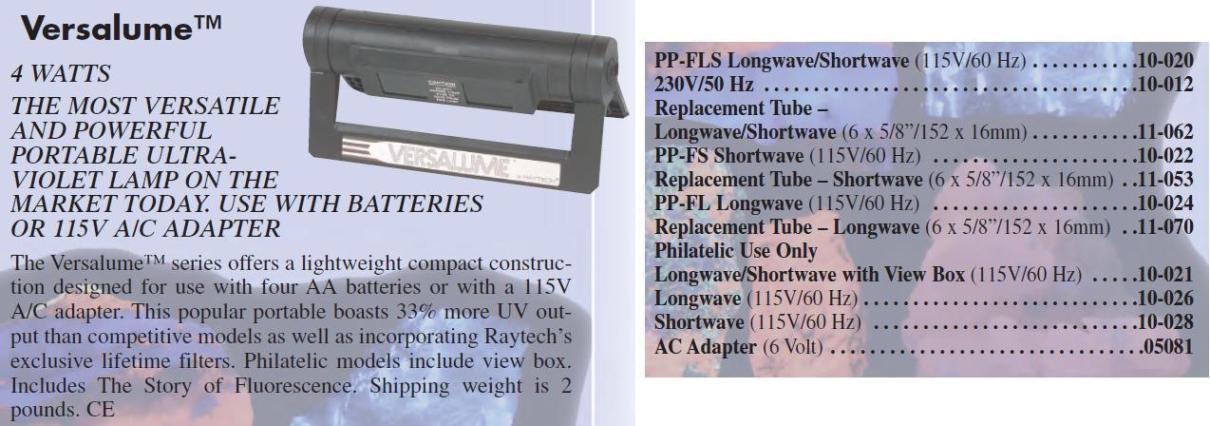
Yes, it is a GREAT resource. But not for the reason you hoped for. When Scott mentions "tagging omitted", that refers to a production error. So to find "tagging omitted" errors, you will need to use a short-wavelength UV light.
There are some stamps that were intentionally printed with and without tagging, especially during the transition period. In some cases, specific plate numbers can be associated with tagged or untagged production. This is because the early plates were used before tagging became a mainstay of mail sorting. However, you will find more often than not, that plates used to produce tagged stamps were also earlier used to produce untagged stamps. Therefore, you will often still need to use a UV lamp to make the final ID.

k





 Posted 12/15/2011 10:34 pm


 Cheers....Peter