I'll try to answer some of your questions:
Quote:
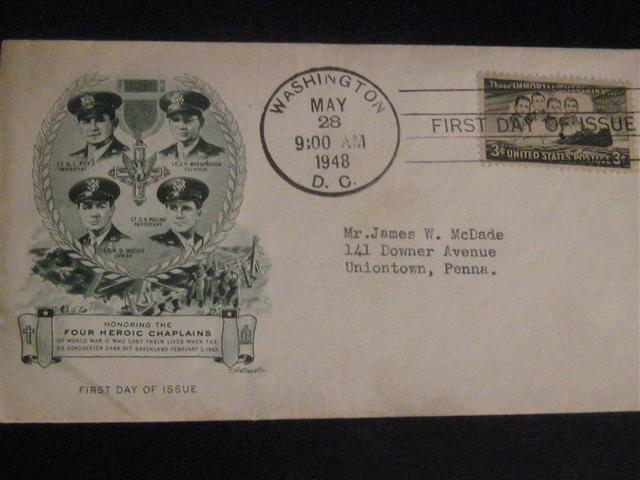
Question 1, First Photo
The first photo reads: FIRST DAY ISSUE, but I hear people call them FDCs or First Day COVERS. What is the difference?
First Day of Issue is the postmark applied to a cover that has a stamp so postmarked. When it is applied to an envelope (typically with a cachet on the left side, as in your example) it is referred to as a First Day Cover (or FDC for short).
Quote:
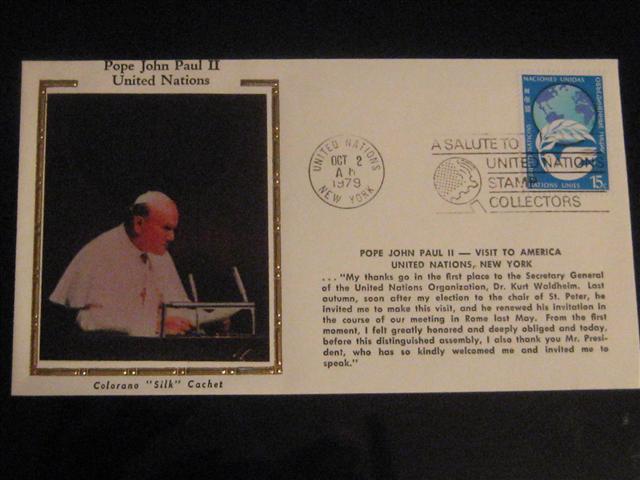
Question 2, 3 & 4, Second photo
The second one of Pope John Paul II, has a gold trim around the photo, a fancy border. It says "silk" cachet.
Is the cachet definition the photo or image to the left side?
And why is it called silk?
Is this considered a FDC?
Yes, the cachet which contains a photograph of the Pope applied to "silk" and that is why the reference to "silk cachet". Colorano was one of the most prolific producers of such items that was very popular in the 1970s and 1980s. Silk cachets are desirable by some collectors and may have a small premium over that of a conventional (non-silk) cachet.
In your example, it is NOT a first day cover, though. It was simply a commemorative postmark applied on the day of the Pope's visit as a commemorative keepsake. Colorano issued many of these for various subjects and although some find them quite collectible, few have much monetary value.
Quote:
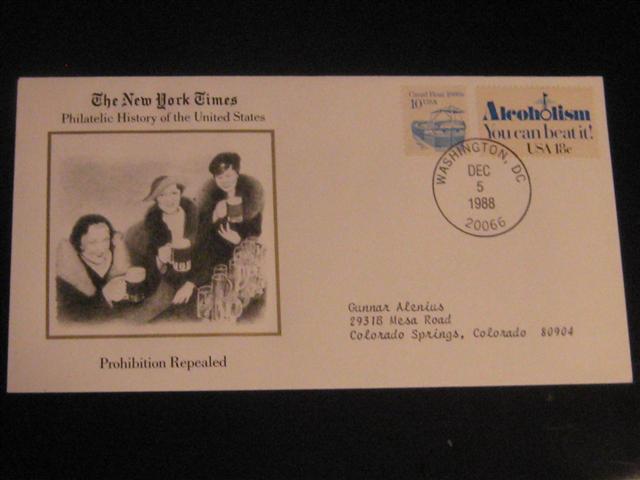
Question 5, 6 & 7, Third photo
This one has a gold square around it, but it's is not as fancy as the Pope cover. I have a bunch of these, and they all have written at top left: Philatelic History of the United States.
Is that a specific company that made these?
Is this a cachet?
Is it "silk"?
None of these are the "silk" cachet, but are special covers produced for commemorating various events with printed cachets. Many businesses tried to hawk these at high retail prices during the 1970s, 1980s and 1990s, but collectors who were drawn to them for their historical significance soon found that they were worth very little on the secondary market.
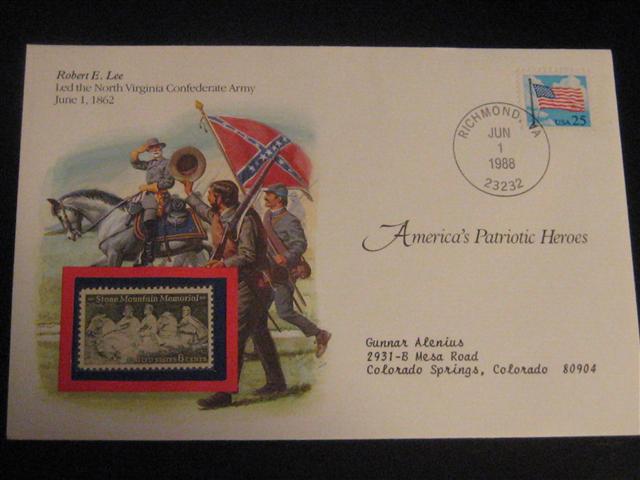
The one with the encased postage stamp is yet another of the premium covers that were sold (usually by subscription) to collectors, but since the encased stamp is a very common one, the value of the cover with the stamp is worth very little.
Quote:
Question 8, Fourth photo
These are much bigger. I weighted the one in the first photo, it weights .1 ounces, while this one weigh .5 ounces. They all have a very nice colorful image and... they also have (what I will guess is a MINT stamp) inside clear plastic. All of these that I have, all have written: America's Patriotic Heroes. These also comes with individual cards with information regarding the image.
Is this another company that issued these?
Another nice collectible, but worth little on the secondary market as oversized covers (sometimes referred to as Monarch size) are not the preferred type of covers most collectors seek due to storage considerations.
Quote:
Question 9, Fifth photo
I have no idea what this is
Looks like a gold replica?
Is it supposed to be fake gold?
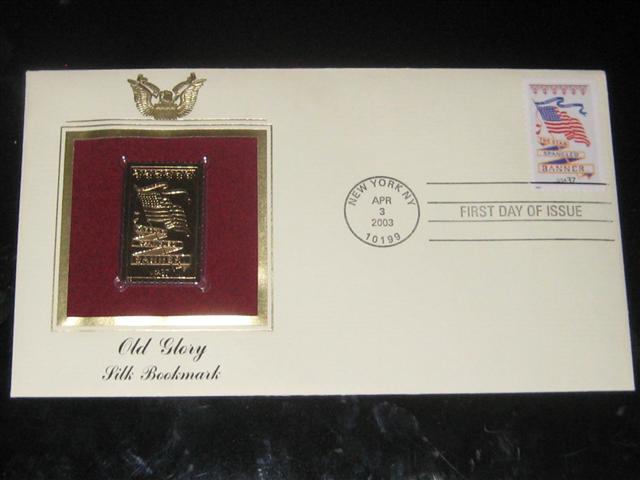
Once again, many companies produced these back a decade or two or three ago, usually by subscription. The "gold" ones especially are often posted here because people have
inherited them from family members who felt that with the value of gold prices, they may have long lasting value.
The unfortunate part is that they were only plated with the thinnest layer of gold, so you'd need hundreds of them to even make up the weight of a fraction of an ounce. As a result, what some collectors may have purchased at high retail value are really little more than an oversized cover that looks nice, but has little resale value.
Beyond the fact that the covers may not be worth all that much, one must consider the condition, too. Some covers, especially ones personalized with a name and address, or have folded corners or condition problems are generally less desirable and ultimately sell for less than unaddressed examples. Likewise, postmarked covers commemorating an event will sell for much less than first day covers.
As modern first day covers were produced in massive quantities, most catalog for only $1 or $2 retail; the secondary market typically has them selling for perhaps 20% or 30% of that figure.
I hope you find some of these comments helpful.





 Posted 03/24/2012 6:21 pm