Stamp Community Family of Web Sites
Thousands of stamps, consistently graded, competitively priced and hundreds of in-depth blog posts to read


Stamp Community Forum
 
Username:
Password:
Save Password
Forgot your Password?

This page may contain links that result in small commissions to keep this free site up and running.

Welcome Guest! Registering and/or logging in will remove the anchor (bottom) ads. It's Free!

Postage Due Stamps ID

 
To participate in the forum you must log in or register.
Author Previous TopicReplies: 9 / Views: 4,848Next Topic  
Valued Member

United States
488 Posts
Posted 04/28/2013   10:20 am  Show Profile Bookmark this topic Add LONEDAN to your friends list Get a Link to this Message
hi all

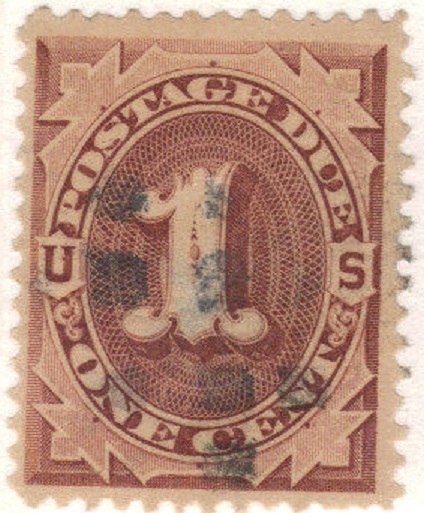
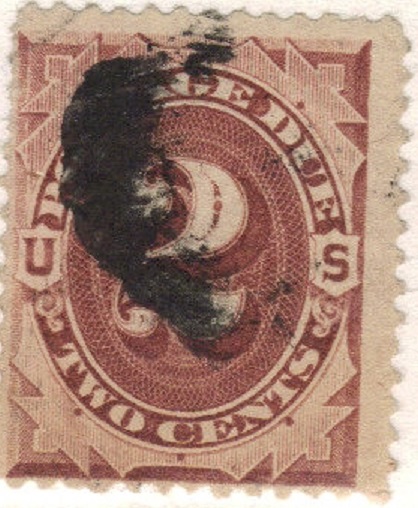
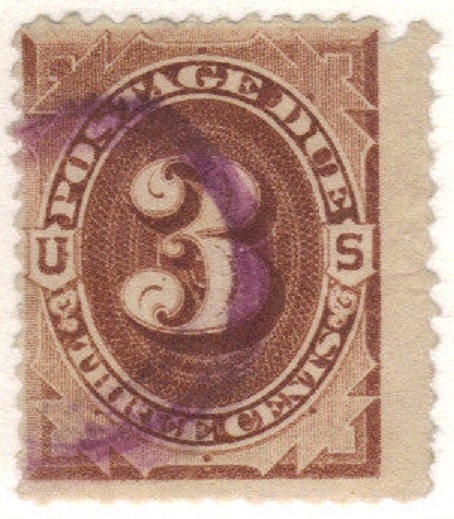
is there any way to id these postage dues stamps except by just color?

i am not really to certain about my eyes and color.[that may just because I am getting older]

i think these are j1, j2, and j3


Send note to Staff

Bedrock Of The Community
United States
10623 Posts
Posted 04/28/2013   10:34 am  Show Profile Bookmark this reply Add revcollector to your friends list  Get a Link to this Reply
The Clarets fluoresce yellow under UV light, so they are relatively easy to be sure of. The Browns and Red Browns can really only be told apart with any real certainty by having a large quantity of stamps and comparing them, both come in too many shades to really do it any other way.
Send note to Staff  Go to Top of Page
Pillar Of The Community
USA
9748 Posts
Posted 04/28/2013   10:38 am  Show Profile Bookmark this reply Add philb to your friends list  Get a Link to this Reply
i am just going through the same thing myself,,even the bright clarets are not always a sure thing !(to me anyway)
Send note to Staff  Go to Top of Page
APS 070059 Life Member International Society of Guatemala Collectors I.S.G.C. #853
Pillar Of The Community
United States
845 Posts
Posted 04/29/2013   4:38 pm  Show Profile Bookmark this reply Add HungaryForStamps to your friends list  Get a Link to this Reply
So there are no printed color references for these stamps anyone knows about?
The only recourse is to collect enough stamps to be able to eventually discern a difference?

I ask because I've been avoiding sorting the postage dues for a while given the potential effort involved.
Send note to Staff  Go to Top of Page
Pillar Of The Community
2361 Posts
Posted 04/29/2013   9:17 pm  Show Profile Bookmark this reply Add doug2222 to your friends list  Get a Link to this Reply
All 3 colors are subject to fading and toning over 125+ years. The "browns" are easy to figure out, and the "bright clarets" are next. Whatever's left over is "red brown" LOL LOL.
Send note to Staff  Go to Top of Page
Rest in Peace
United States
7097 Posts
Posted 04/30/2013   07:54 am  Show Profile Bookmark this reply Add I_Love_Stamps to your friends list  Get a Link to this Reply
Every time I read about this subject it intimidates me a lot. I think if I ever really buckle down and tackle these pages I'll just buy them as complete sets. ha-!
Send note to Staff  Go to Top of Page
Pillar Of The Community
Australia
975 Posts
Posted 04/30/2013   6:01 pm  Show Profile Check 64idgaf's eBay Listings Bookmark this reply Add 64idgaf to your friends list  Get a Link to this Reply
White and Bower have produced a book (costs up to $500) "The Encyclopedia of the Colors of United States Postage Due Stamps, Volume 5, Postage Due Issues 1879-1916".

This from Afrken's Book, "Postage Due, The United States Large Numeral Postage Due Stamps 1879-1894"

'The color shades of the Large Numeral dues pose the only real problem in studying these stamps....The very early printings of the dues were brown, not the reddish brown that the Post Office had announced in the May 5, 1879 Circular. Some of the 1882 and 1883 printings were distinctly yellowish, a yellow brown. Some earlier writers thought the yellow brown appeared in the first printings. A careful study on dated covers by Warren R Bower has shown that the earliest printings were brown and that the yellow browns did not appear until three years later. The yellow browns are particularly noticeable and common on the 3c stamps. These brown and yellow brown dues are Scott J1-J7.

The May 5, 1879 Post Office Circular had announced that the new postage due stamps would be a reddish-brown. They were not reddish-brown: the new stamps were just plain brown. The discrepancy should not be surprising. Precise color control was almost nonexistent in 1879, and exact color probably was not a high priority in the production of these stamps.
Starting in 1884, quite possibly under pressure from the Post Office Department, the American Bank Note Co began to add more red to the brown ink. The amount of red was gradually increased over the months of 1884 and 1885. It is most important to emphasise the gradual nature of the change from brown to red brown. There was no sudden, sharp change: brown from one printing, red brown from the nest printing. Rather, we have essentially a continuous variation of shades, from brown printings in 1884 to obvious red brown printings in 1885.

The intermediate shades can cause problems for people who insist on forcing stamps into inappropriate classifications."
Send note to Staff  Go to Top of Page
Pillar Of The Community
United States
517 Posts
Posted 10/10/2013   10:07 pm  Show Profile Bookmark this reply Add Newby Stamper to your friends list  Get a Link to this Reply
I don't know but I think I see a little red in them, but then again I'm a Newby Stamper.
Send note to Staff  Go to Top of Page
Pillar Of The Community
United Kingdom
544 Posts
Posted 10/11/2013   02:02 am  Show Profile Bookmark this reply Add Bamra1 to your friends list  Get a Link to this Reply

Quote:
The only recourse is to collect enough stamps to be able to eventually discern a difference?


Sorry, but surely that is the point of stamp collecting - not to have a single copy of something that someone or something has persuaded you is a SG 227Ab(ii) or whatever, but to study the stamps and find out all you can.

If you are really interested in this issue - Get lots of cheap examples. Compare them. Try to get some with clear dates on. Put them under UVF. Read all the literature. Include in that articles on chemical analysis of colour. Make up some pages showing the full range of shade. Try to come up with a sensible analysis of where the divisions are. Find other collectors who are working on the same problem and compare results. Write up your conclusions.

Then come back here and tell us what the answer is

And if you are not really interested in this issue - what does it matter precisely what type it is?
Send note to Staff  Go to Top of Page
Pillar Of The Community
United States
1614 Posts
Posted 10/12/2013   11:34 am  Show Profile Bookmark this reply Add Mike33 to your friends list  Get a Link to this Reply
Here's how I have mine identified but I'm surely no expert:


Though I did use many examples that I have to compare before I put the best in my album
Send note to Staff  Go to Top of Page
  Previous TopicReplies: 9 / Views: 4,848Next Topic  
 
To participate in the forum you must log in or register.

Go to Top of Page

Disclaimer: While a tremendous amount of effort goes into ensuring the accuracy of the information contained in this site, Stamp Community assumes no liability for errors. Copyright 2005 - 2026 Stamp Community Family - All rights reserved worldwide. Use of any images or content on this website without prior written permission of Stamp Community or the original lender is strictly prohibited.
Privacy Policy / Terms of Use    Advertise Here
Stamp Community Forum © 2007 - 2026 Stamp Community Forums
It took 0.21 seconds to lick this stamp. Powered By: Snitz Forums 2000 Version 3.4.05