| Author |
 Replies: 15 / Views: 4,081 Replies: 15 / Views: 4,081 |
|
|
Pillar Of The Community
United States
558 Posts |
|
|
Hi Everyone, I was wondering....when people purchased this stamp, what would they buy? That is a lot of money right now so I wonder how much $100 was back in the early 1900's? Is the red numbers a registration or production number? Thank you, Sue 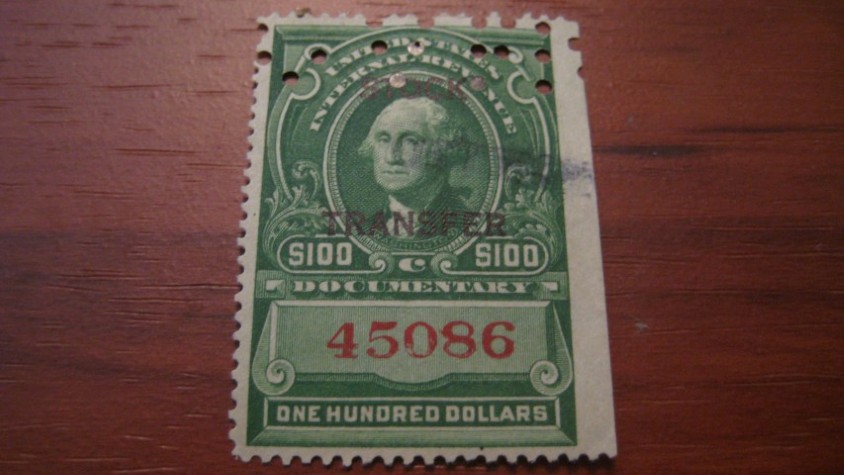 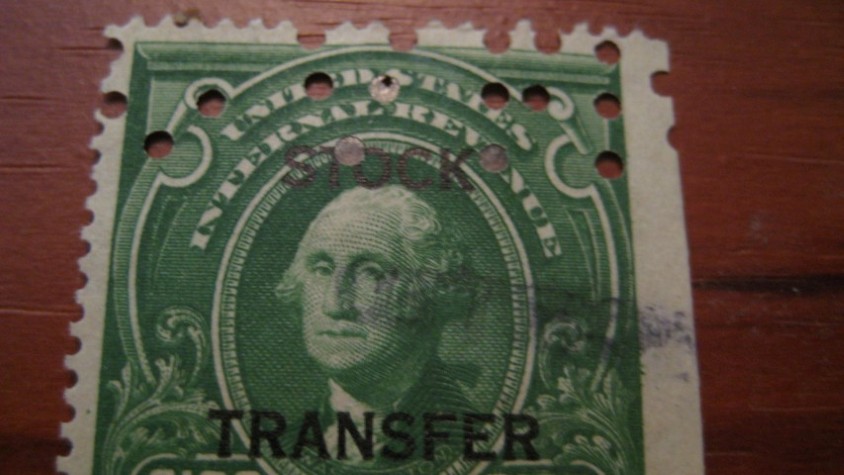 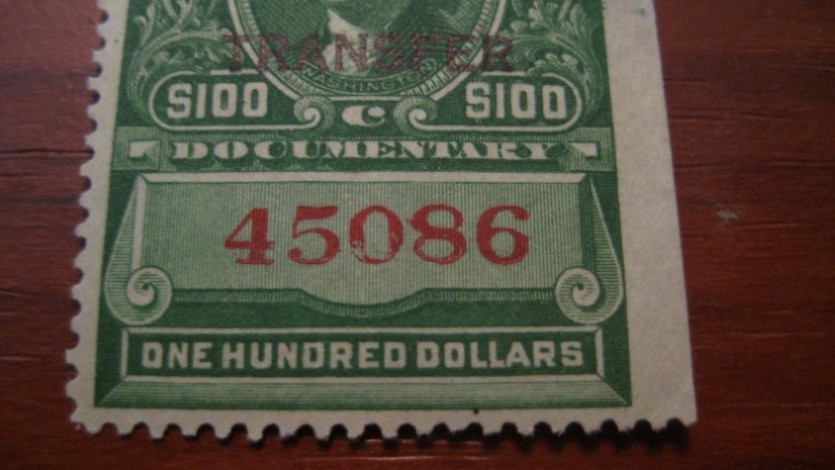 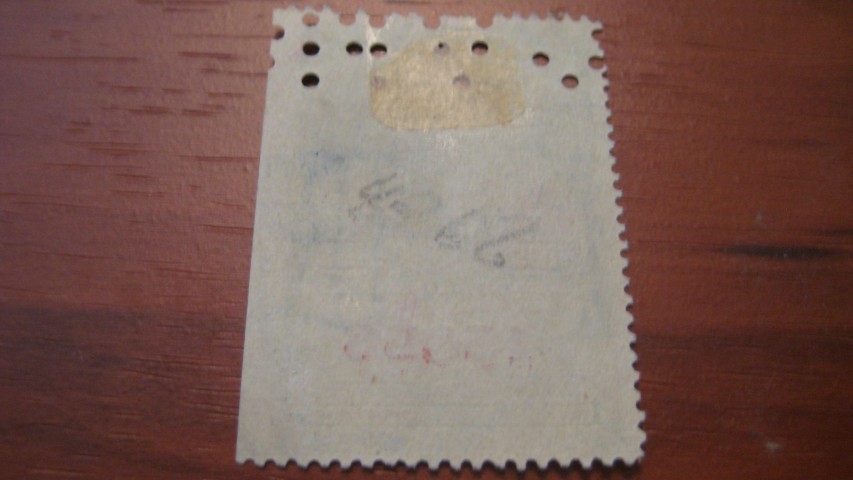 |
|
Send note to Staff
|
| Edited by SueStamps - 05/01/2013 3:52 pm |
|
|
|
|
Valued Member
114 Posts |
|
|
Quote:
When the Civil War erupted in 1861, the country was on the verge of bankruptcy. A plan was developed to generate internal revenue – money collected from taxes placed on domestic items such as tobacco, alcohol, medicine, perfume and playing cards. Stamps were provided as proof of payment. Examining used U.S. Revenue stamps offers a window into the past – the government required several unusual cancellation techniques such as private cancels, manuscript initials and perforated initials.
The same legislation that created these stamps also created the Internal Revenue Service (IRS) and the Bureau of Engraving and Printing (BEP).
Until 1862, specific Revenue stamps were required for many taxable items – leading to a wealth of interesting stamps for modern collectors. Imperforate and "part-perf" error stamps present another challenging – yet affordable – collecting opportunity. http://www.mysticstamp.com/viewProd...asp?sku=R248 |
Send note to Staff 
|
|
|
Pillar Of The Community
United States
521 Posts |
|
|
Let me begin by saying I know NOTHING about revenue stamps. This one has "Stock Transfer" overprinted, so it's probably safe to assume that this particular stamp was used for that purpose. I suppose another common use would be on deeds transferring ownership of real estate? |
|
Send note to Staff
|
|
|
Bedrock Of The Community
United States
12128 Posts |
|
|
Quote:
I suppose another common use would be on deeds transferring ownership of real estate? Exactly. In fact, these days real estate transfer "stamps" have often been replaced with postage meters valued at hundreds or even thousands of dollars depending on the fee required based on the value of the real estate involved. Here's an example. Note it came from a Deed in Suffolk County, Massachusetts (Boston) and is actually a Pitney Bowes Postage Meter customized for that very use: 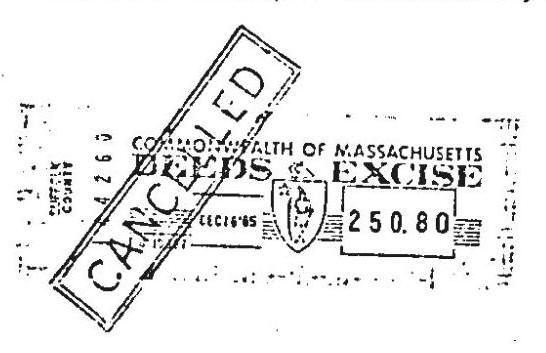 |
|
Send note to Staff
|
| Edited by wt1 - 05/01/2013 4:22 pm |
|
|
Pillar Of The Community
United States
558 Posts |
|
|
Pillar Of The Community
United States
521 Posts |
|
|
Like many other states, Nebraska has a "Documentary Stamp Tax", but there is no actual stamping (by meter or otherwise) anymore. Instead, it's simply noted on the deed: 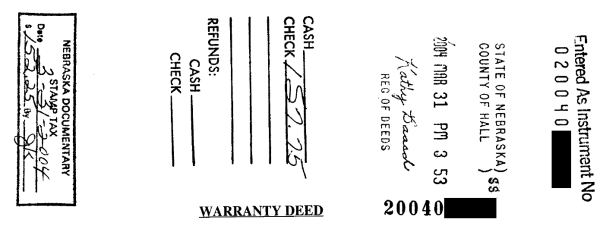 (instrument number redacted) Well, I guess there is rubber stamping. :P |
|
Send note to Staff
|
|
|
Valued Member
114 Posts |
|
|
Bedrock Of The Community
United States
10824 Posts |
|
|
This is not an R248. This is an RD22, first issued in 1918 but used until 1940. With a control number in the 45,000 range it was probably used approx. 1928-1930 but that is just an educated guess.
Although the office of Commissioner of Internal Revenue was created in 1862, the government had many taxes in place right from the beginning, often using embossed revenue stamped paper to collect them (the RM's in the Scott Specialized). Alcohol, tobacco, playing cards, and financial paper have always been taxed, sometimes heavily.
Every war has brought added taxes and a large variety of stamps to pay them; some only lasted for the duration and some lasted for 15-20 years after. |
|
Send note to Staff
|
|
|
Pillar Of The Community
United States
2546 Posts |
|
|
Back in those days, rich people paid taxes. The federal tax on stock deals might have been 0.1 % - if so, the transaction was rated at 100,000$ - or about 200 shares of APPL today. |
|
Send note to Staff
|
|
|
Pillar Of The Community
United States
1160 Posts |
|
|
Here is a value a little higher. They have a few higher than this. 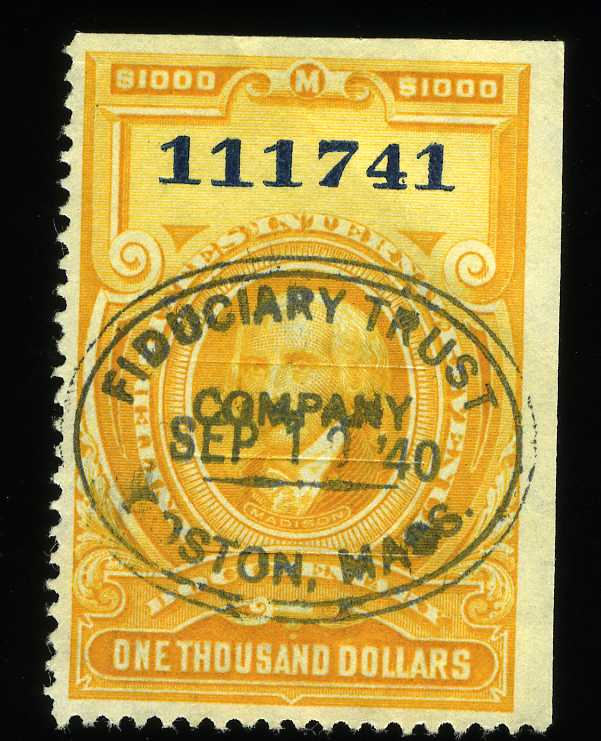 Another more interesting sideline to revenues is the use of perfins by the brokerage companies on the revenue issues. The rating system is different, some of the companies are also crossed into the regular perfin collections, although the values may be very different! You can also find railroad cancels on revenues, and other interesting things. |
|
Send note to Staff
|
|
|
Pillar Of The Community
United States
2555 Posts |
|
|
"Back in those days, rich people paid taxes."
...and they still do. Half of Americans don't pay any income tax at all, and it ain't the rich half. |
|
Send note to Staff
|
|
|
Bedrock Of The Community
United States
10824 Posts |
|
|
Why not, the rich can afford to hire accountants that know the laws inside out. Using the GAAP guide they can make a 10 million dollar profit look like a 10 million dollar loss. Sports teams do it every year.
The highest face value of a US revenue stamp is $50,000 (RX25), used to pay the tax on distilled spirits. |
|
Send note to Staff
|
|
|
Pillar Of The Community
1545 Posts |
|
|
Quote:
I wonder how much $100 was back in the early 1900's? It depends on where you live, and other things. Here are some comparisons... In the 1900's, A loaf of bread would cost you about 25 cents. A gallon of milk was $0.28, a pound of butter was $0.25, a gallon of gas was $0.04, a new home (average) was $3,395 and the annual income was $1,004. But comparisons of this are inaccurate because of the issue of buying power. How much you get for your money. And also where you live. For example, where I live a gallon of gas is about 80 times more expensive now than that 1900's price. If this were consistent for everything, a pound of butter would cost $20.00. But for other things the comparison might be very close. For a house, $270,000 is not out of line in some cities, but in others the average could be as much as half in the current market. -IBFS |
|
Send note to Staff
|
|
|
Pillar Of The Community
United States
2546 Posts |
|
|
Bedrock Of The Community
United States
10824 Posts |
|
|
According to http://www.measuringworth.com/uscom...ivevalue.phpIn 2011, the relative value of $100.00 from 1917 ranges from $1,200.00 to $25,300.00. If you want to compare the value of a $100.00 Commodity in 1917 there are four choices. In 2011 the relative: real price of that commodity is $1,750.00 real value of that commodity is $3,320.00 labor value of that commodity is $6,110.00(using the unskilled wage) or $9,430.00(using production worker compensation) income value of that commodity is $8,380.00 If you want to compare the value of a $100.00 Income or Wealth , in 1917 there are four choices. In 2011 the relative: historic standard of living value of that income or wealth is $1,750.00 contemporary standard of living value of that income or wealth is $3,320.00 economic status value of that income or wealth is $8,380.00 economic power value of that income or wealth is $25,300.00 If you want to compare the value of a $100.00 Project in 1917 there are four choices. In 2011 the relative: historic opportunity cost of that project is $1,200.00 contemporary opportunity cost of that project is $3,320.00 labor cost of that project is $6,110.00(using the unskilled wage) or $9,430.00(using production worker compensation) economy cost of that project is $25,300.00 |
|
Send note to Staff
|
|
|
Pillar Of The Community
United States
2546 Posts |
|
|
Not to make this an overly political discussion but....
If that stock transfer tax were still in existance, the US budget deficit would be looking a lot better.
The DAILY NYSE dollar volume is about 25 billion, and the NASDAQ about 80 billion. If the 0.4 tax rate on transactions were re-enacted - there would be over 400 million per market-open day in new tax revenues.
Imagine the great stamps we would have to collect! |
|
Send note to Staff
|
|
| |
Replies: 15 / Views: 4,081 |
|




 Posted 05/01/2013 3:43 pm


