Stamp Community Family of Web Sites
Thousands of stamps, consistently graded, competitively priced and hundreds of in-depth blog posts to read


Stamp Community Forum
 
Username:
Password:
Save Password
Forgot your Password?

This page may contain links that result in small commissions to keep this free site up and running.

Welcome Guest! Registering and/or logging in will remove the anchor (bottom) ads. It's Free!

Scott 165 Guide Dot?

 
To participate in the forum you must log in or register.
Author Previous TopicReplies: 11 / Views: 2,913Next Topic  
Moderator
Learn More...
United States
5094 Posts
Posted 06/13/2013   10:07 pm  Show Profile Bookmark this topic Add Partime to your friends list Get a Link to this Message
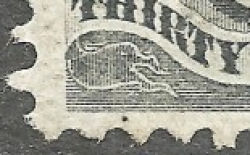
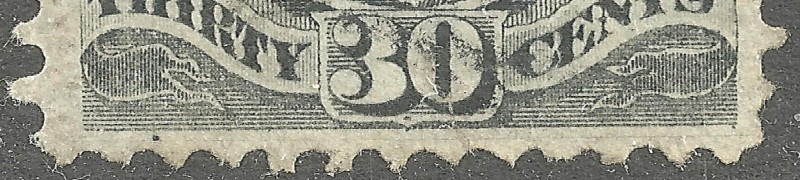
Can anyone help me with the dot in the lower left corner. Is that some sort of printing indicator? Maybe just an ink spot.


<Title Changed to imply it may be a guide dot.>
Send note to Staff
Edited by Partime - 06/14/2013 8:50 pm

Pillar Of The Community
1545 Posts
Posted 06/14/2013   4:20 pm  Show Profile Bookmark this reply Add I Brake For Stamps to your friends list  Get a Link to this Reply
I have some stamps with those same spots, in different places on the stamps. I don't think they have anything to do with the printing process, I have seen them in the vignette of the stamp. I think it is just an ink spot. But I too am waiting for an answer. Hope you get one.


-IBFS
Send note to Staff  Go to Top of Page
All science is either Physics or Stamp Collecting. -- Ernest Rutherford
Edited by I Brake For Stamps - 06/14/2013 4:38 pm
Pillar Of The Community
Learn More...
United States
1271 Posts
Posted 06/14/2013   7:26 pm  Show Profile Bookmark this reply Add Al E. Gator to your friends list  Get a Link to this Reply
I don't know about this particular dot and its location on your stamp since most dots I've seen are located much closer to the corners of an individual stamp, but guide dots were used in production of plates. They can be seen in stamp margins and can be an aid in plating early issues.

From www.1847.com:
Guide Dot - a dot on the engraved plate or transfer roll used as a guide in the spacing and alignment of stamps as the siderographer entered the subjects on the plate

There are folks on this site that have more knowledge about them than what I have. Perhaps they will reply giving you a more thorough answer regarding your stamp. Yours may just be a random ink spot and not a guide dot.

Send note to Staff  Go to Top of Page
Pillar Of The Community
1545 Posts
Posted 06/15/2013   1:39 pm  Show Profile Bookmark this reply Add I Brake For Stamps to your friends list  Get a Link to this Reply
Just to let you know Al, you have a bad link there. It leads to a page that has something to do with harmonicas.


-IBFS
Send note to Staff  Go to Top of Page
All science is either Physics or Stamp Collecting. -- Ernest Rutherford
Rest in Peace
United States
7097 Posts
Posted 06/15/2013   4:37 pm  Show Profile Bookmark this reply Add I_Love_Stamps to your friends list  Get a Link to this Reply
Send note to Staff  Go to Top of Page
Pillar Of The Community
Learn More...
United States
1271 Posts
Posted 06/15/2013   5:49 pm  Show Profile Bookmark this reply Add Al E. Gator to your friends list  Get a Link to this Reply
OPPS! left out "usa" after 1847--my mistake.
Send note to Staff  Go to Top of Page
Pillar Of The Community
United States
1942 Posts
Posted 06/18/2013   2:42 pm  Show Profile Bookmark this reply Add essayk to your friends list  Get a Link to this Reply
Hi,

I hope you don't mind if a newcomer replies. With all due respect to Bob Allen at 1847usa.com, the dot you are noticing is usually called a position dot by specialists, Your stamp has two, but we will get back to that.

fig 1


First I want to show you a plate proof with your dot and the layout lines that were on it before the plate was burnished to remove them. the position dot is rather sizeable. But if you look at the left end of the area of printing, on line with the last background shading line, you will see a very tiny dot. That dot appears on the die, but the position dot does not. That dot is a true guide dot, and one was placed at each corner of the design area to guide the engraver in the limits of the design area. Usually the guide dots were removed from each of the reliefs on the transfer roll, but as you can see from this proof, sometimes they made it all the way to the plate from one corner of the design or another.

fig 2
Now let's look more closely at the position dot.


These dots and their associated layout lines were positioned on the plate prior to entering the designs, as a guide to the siderographer in positioning the columns of cliches (a cliche is the individual design on the plate). Normally they appear above the top row and below the bottom row on both panes of a 200 subject plate. This second figure shows the key spot on the first two positions from a plate number and imprint strip of five. All five positions have the dot just as you see it here, and a layout line connects them all. Notice however that the dot is inset from the edge of the design, and not at a corner as you might expect.

fig 3
This next image should help explain why that is, and alert you to notice something on your stamp you might have missed.


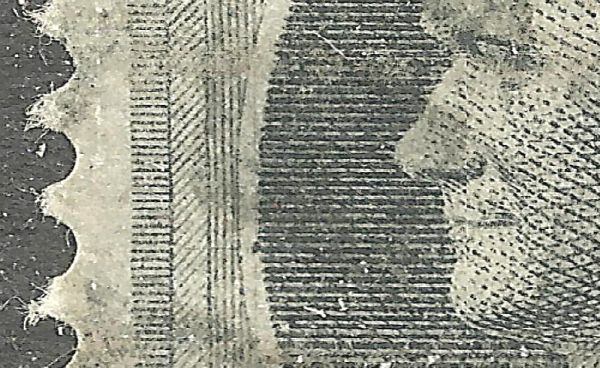
It turns out that the position dots at the tops and bottoms of the plates were not the primary dots used for alignment of each cliche. The dot for that was located inside the design area, and when visible appears in the vignette frame on a line with Hamilton's lower lip. As you can see in this picture, that dot is aligned with the position dot at the bottom, and they are connected by a layout line. Often however, this dot is obscured by the shading lines of the design, because the entries were never perfectly aligned.

fig 4
Here is a closeup of that spot on the plate number position from the proof strip.


As you can see, the dot marks the point of intersection between two layout lines. So to prepare the plate for entry, they scribed on the grid of layout lines, marked the intersection point with dots, added a dot to the outside dimensions of each column, and secured the plate in the transfer press for entry with the transfer roll.

What you have is a nice example of a stamp showing both types of position dot, pinpointing it to one of the 20 positions on the bottom row left or right. And, if I am not mistaken, there is also a residual layout line along the bottom of the design on line with the dot (looks like a fuzzy grey line in your scan). These are not commonly found, especially as nice as your example. Nice item!
Send note to Staff  Go to Top of Page
Edited by essayk - 06/19/2013 12:51 pm
Moderator
Learn More...
United States
5094 Posts
Posted 06/18/2013   4:10 pm  Show Profile Bookmark this reply Add Partime to your friends list  Get a Link to this Reply
Essayk,

Thanks so much for your detailed response. I'll have to look more closely at the "lip" dot, but it looks like you have clearly identified both position dots. I guess it is a keeper.

And, please, as a newcomer add as much information as you can ... it is much appreciated.
Send note to Staff  Go to Top of Page
Pillar Of The Community
United States
517 Posts
Posted 06/18/2013   4:12 pm  Show Profile Bookmark this reply Add Newby Stamper to your friends list  Get a Link to this Reply
I also have some stamps with dots on them and studied them and asked for help and was informed that are guide marks
Send note to Staff  Go to Top of Page
Pillar Of The Community
1545 Posts
Posted 06/18/2013   5:34 pm  Show Profile Bookmark this reply Add I Brake For Stamps to your friends list  Get a Link to this Reply

Quote:
as a newcomer add as much information as you can ... it is much appreciated.


So that's what those dots are on my stamps. Thanks for that excellent education and for correcting me.


-IBFS
Send note to Staff  Go to Top of Page
All science is either Physics or Stamp Collecting. -- Ernest Rutherford
Rest in Peace
United States
7097 Posts
Posted 06/19/2013   2:07 pm  Show Profile Bookmark this reply Add I_Love_Stamps to your friends list  Get a Link to this Reply
Wow I'm finding these dots on almost all my large banknotes and proofs! That's awesome for sure! Thank you for the information.
Send note to Staff  Go to Top of Page
Moderator
Learn More...
United States
5094 Posts
Posted 06/21/2013   01:29 am  Show Profile Bookmark this reply Add Partime to your friends list  Get a Link to this Reply
Based on Essayk's comments, here are some closeups of my example. First, showing the Lip Dot, with a hint of the layout lines:


Then the bottom, showing the residual layout line across the stamp. There is a hint of a guide dot on the very far right bottom. Very, very close to what Essayk has illustrated. Nice to know what these things actually are, after so many years.

Send note to Staff  Go to Top of Page
Edited by Partime - 06/21/2013 01:40 am
  Previous TopicReplies: 11 / Views: 2,913Next Topic  
 
To participate in the forum you must log in or register.

Go to Top of Page

Disclaimer: While a tremendous amount of effort goes into ensuring the accuracy of the information contained in this site, Stamp Community assumes no liability for errors. Copyright 2005 - 2026 Stamp Community Family - All rights reserved worldwide. Use of any images or content on this website without prior written permission of Stamp Community or the original lender is strictly prohibited.
Privacy Policy / Terms of Use    Advertise Here
Stamp Community Forum © 2007 - 2026 Stamp Community Forums
It took 0.35 seconds to lick this stamp. Powered By: Snitz Forums 2000 Version 3.4.05