| Author |
 Replies: 22 / Views: 5,240 Replies: 22 / Views: 5,240 |
|
Valued Member
United States
232 Posts |
|
|
|
|
Pillar Of The Community
United States
2948 Posts |
|
|
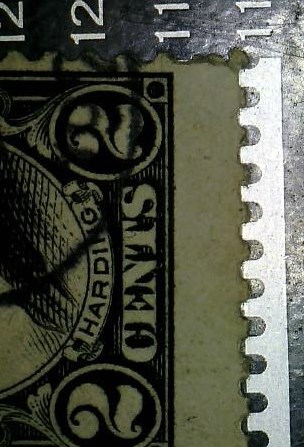
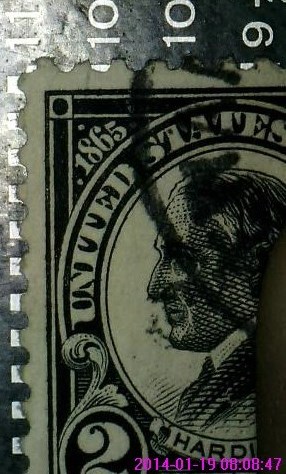
What do the perfs measure?
oops sorry I see now it reads 11. So that would make it a scott #610 or 613.
If it's a #613 it's book value is $45,000.00
But to be a 613 it has to be a rotory press version of the perf'd 11. One way to tell is to measure the image height. It needs to measure 22 1/2mm not 22 1/4mm of the flat plate version.
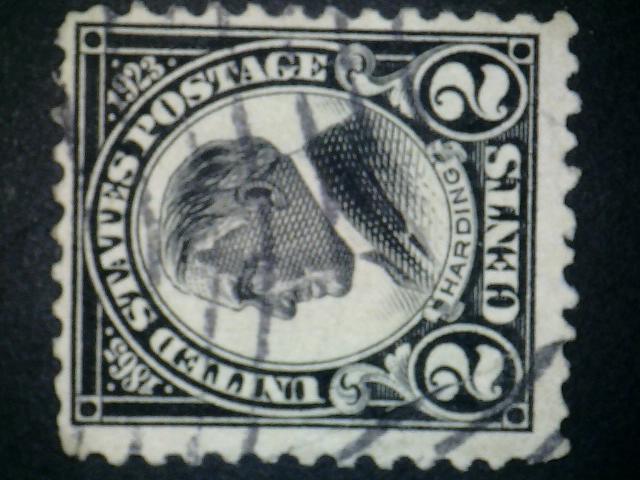
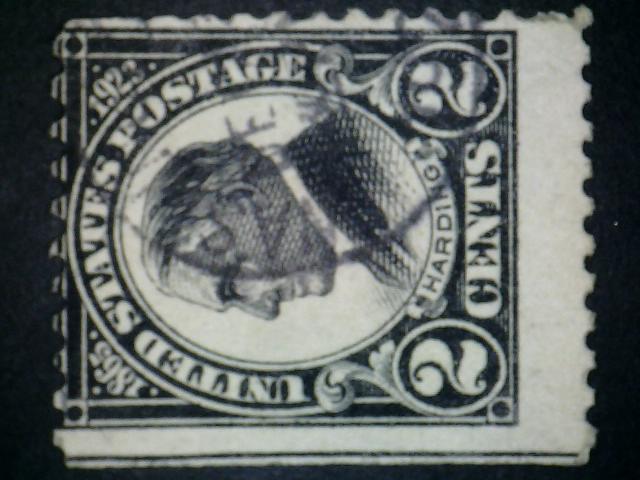
The two in your post do not appear visually to be 613's.
I'm lucky when it comes to these stamps in that I have an imperf block (only flat plate printings) and a perf 10 block (only rotary printings)and I can easily compare printing images.
|
Send note to Staff 
|
| Edited by stampcrow - 01/19/2014 12:07 am |
|
|
Valued Member
United States
232 Posts |
|
|
I have 6 of these stamps they all have 11 perfs.
Mind you I have a box that has over 6000 stamps
and several books. |
|
Send note to Staff
|
|
|
Valued Member
United States
232 Posts |
|
|
Pillar Of The Community
1849 Posts |
|
|
gracie1125...you are measuring the perfs incorrectly.
Whatever the "white" thing in the photo is....it should be reversed.
Line up the perfs...not the spaces with the perfs. |
|
Send note to Staff
|
|
|
Pillar Of The Community
United States
2948 Posts |
|
|
yup, Kevins correct about your perf guage use.
But to answer your other question, you are measuring the size of the printed image. From the top of the frame to the bottom of the frame.
Sorry I'm not at my home computer our I could show you with a picture. |
|
Send note to Staff
|
|
|
Valued Member
United States
232 Posts |
|
|
Valued Member
United States
232 Posts |
|
|
Pillar Of The Community
United States
2948 Posts |
|
|
Excellent. I didn't know how to describe it, but you got it!
You said that you have six of these stamps..? If so measure the perfs on all of them. If you find one with perf 10 set it aside.
Then you need to measure the image size in millimeters.
|
|
Send note to Staff
|
|
|
Valued Member
United States
232 Posts |
|
|
Valued Member
United States
232 Posts |
|
|
So, much for that, I have found 2 more and not one of the 8 has a 10 perf. |
|
Send note to Staff
|
|
|
Pillar Of The Community
United States
2948 Posts |
|
|
Ok then. You'll need to measure the image to see if you have a scott #613. |
|
Send note to Staff
|
|
|
Valued Member
United States
232 Posts |
|
|
Pillar Of The Community

United States
1273 Posts |
|
|
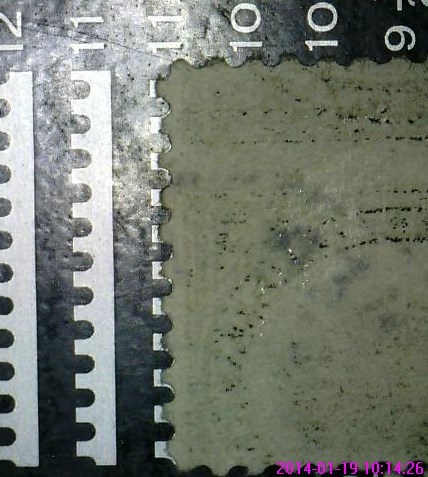
To measure the image(design), you measure, in millimeters, from border(of the design) to border---east to west then north to south. For a 2-cent Harding to be a #613, it must be a rotary press printed stamp which will measure 19.25mm east to west and 22.50mm north to south. Rotary press printed stamps will not have any traces of ink on the back of the stamp. The image you have posted where you are showing the back of the stamp against a perforation measuring guage is showing ink spots on the back of the stamp. That tells you it is a flat plate printing where the sheets were stacked one on top of another, after printing, and where some of the ink was not completely dry on a sheet, therefore transfering some ink to the back side of the sheet stacked on top of it. That stamp, perf. 11x11, Flat Plate printed, is #610.  |
|
Send note to Staff
|
|
|
Pillar Of The Community
United States
1946 Posts |
|
|
For measuring the design areas on stamps down to less than a millimeter, you need a transparent ruler you can lay over the stamp. A solid wooden or metal ruler is not good enough, because the markings are too high above the stamp for a fine reading (due to a problem called "parallax"). Also note that the rule of thumb on any ruler is that you can estimate to half of the smallest marking. So a standard ruler is good to about half a millimeter.
There is a way to get precise readings from a solid ruler, but it requires the use of a drafting compass that has sharp points on both wings. Most folks don't have one, but if you do then carefully line up the points one on each/either side of the design at the corners, taking care not to gouge the stamp. Then carry that spread to the ruler for a measurement.
Whatever works for you, but you need to be able to get consistent readings.
[Almost forgot to mention that they sell transparent combo tools as perf guage and rulers through various online outlets. There is one called a "Scientific..." something or other that looks like a good choice for this sort of work if you don't already have a transparent tool. Perhaps others on the forum can give you a link.] |
|
Send note to Staff
|
| Edited by essayk - 01/20/2014 10:12 am |
|
|
Pillar Of The Community
United States
2547 Posts |
|
|
Personal commentary on the 613 mystery: [1] when measuring perfs with a gauge, it doesn't matter if you measure the holes or measure the perf tips [this should be obvious]. [2] the horizontal width of the stamps is immaterial, the vertical counts. [3] when measuring, its always best to measure against a known stamp - rather than using a ruler with numbers on it. The design of the 613 is exactly the same size as the perf10 612, and taller than the 610 and 611's. [4] the method of examining the back for ink traces is quite reliable. [5] ref scans of the 610 versus 612, the height is one 'frameline' higher. 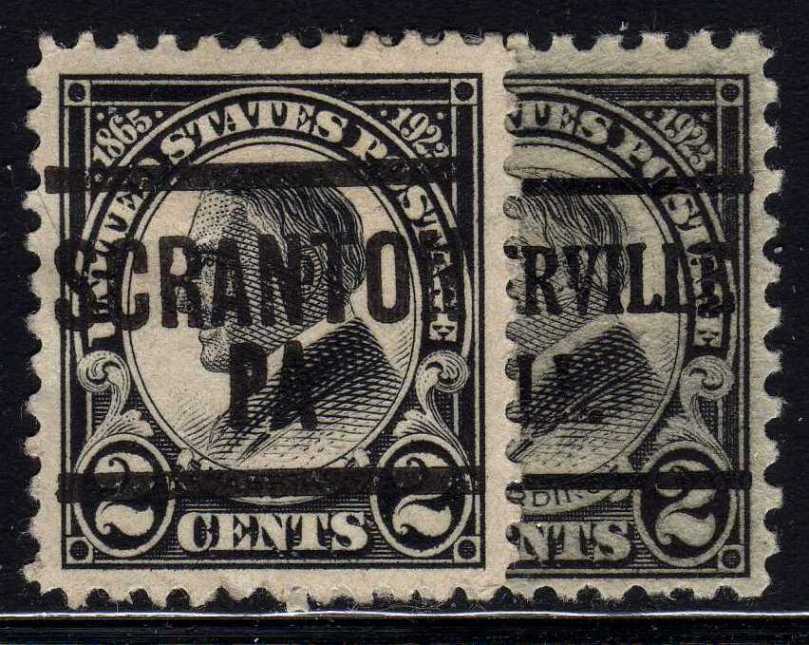 |
|
Send note to Staff
|
|
|
Replies: 22 / Views: 5,240 |
|



 Posted 01/18/2014 7:25 pm