| Author |
 Replies: 49 / Views: 14,593 Replies: 49 / Views: 14,593 |
|
|
|
Rest in Peace
Netherlands
963 Posts |
|
|
I can imagine the wire structure that goes with it :)  Thanks to K. Sralin |
Send note to Staff 
|
|
|
Rest in Peace
Canada
5701 Posts |
|
|
Quote:
The procedure for studying the ribbing is not straightforward nor easy to explain. It requires the use of oblique lighting. The stamp is held at eye level against a strong but diffused lighting, and then rotated within the field of vision until the lines of ribbing come into view. How do you know that what you are looking for is being seen. Mainly, you recognize it from previous experience. Getting off on any old lines is where a lot of false "discoveries" come from. Actual pictures of ribbing on a stamp are rarely seen. Drawings are another matter. I have to ask a stupid question  : How the heck can an a stamp that is impossible to identify from the front, and is so difficult to identify from the back, be so valuable?  |
|
Send note to Staff
|
|
|
|
Pillar Of The Community
United States
2963 Posts |
|
|
Quote:
How the heck can an a stamp that is impossible to identify from the front, and is so difficult to identify from the back, be so valuable? I have been trying to come up with a good metaphor to describe this stamp, Beesee, but I will instead defer to Lester Brookman's comment: Quote:
It is quite possible that this stamp shold be dismissed with the remark made by the old farmer when he first saw a giraffe which was "There ain't no such animal". Whether or not there actually is such a stamp as the 24c Continental, or whether or not certain 24c stamps are Continentals, has been the source of a thousand arguments What is known is this: The Continental Banknote Company took over the contract to print United States postage stamps. For the Values of 1c through 15c, a special mark was added to help identify these as Continental printings. It has also been aledged that Continental added special marks to the 24-90c values, but never put them into production. In the case of the 24c Continental, 365,000 stamps were printed from the old plate that came from the National Banknote Company, and were delivered the the POD stamp agent. It is not know how many Continental stamps were actually sold or used and no one has ever been able to determine a way to tell the difference between the National printings and Continental printings except for the ribbed paper variety. There is also a possibility of these existing with the experimental 'J' grill, but so far, none have ever been found. Currently, the ribbed paper variety is the only known way to identify a Scott 164. It is not known how many Continental stamps were printed on ribbed paper vs standard paper. By the time the American Banknote Company took over the contract for printing US postage stamps, the 12c and 24c values were discontinued. 139 years later, the search still continues. There is only one certified copy of the Scott 164, but is it actually rare - who can say? Calling this stamp a Unicorn isn't really accurate, but is sure feels like it! Brian |
|
Send note to Staff
|
Brian Riley
APS 223349 |
| Edited by Rileysan - 08/06/2014 1:11 pm |
|
|
Rest in Peace
Netherlands
963 Posts |
|
|
Ribbing being independent of the paper wire structure and still part of the paper production should be either the result of a dandy-roll i.e. a kind of watermark or resulting from an even later treatment!
Bear in mind that paper has a wire side and a felt side. The wire side can be best told by the wire structure, the felt side by the eventual watermark. So it is not strange that such features can be seen best from just ONE side!!
If the ribbing can not be seen from the front - and under the assumption that is comparable to a watermark - the wire structure should be best visible from the front!? |
|
Send note to Staff
|
|
|
Rest in Peace
Canada
5701 Posts |
|
|
Thanks for your most informative answer Brian. It is interesting to see that Scott gives the stamp a major number. These days, Scott would give such a variety a minor number ending in a letter such as "a".
|
|
Send note to Staff
|
|
|
|
Pillar Of The Community
United States
2963 Posts |
|
|
Quote:
Thanks for your most informative answer Brian. It is interesting to see that Scott gives the stamp a major number. These days, Scott would give such a variety a minor number ending in a letter such as "a".
Even though this is a paper variety, the ribbed paper 24c Banknote is a major number because it was printed by a different company (Continental vs National). Unlike the other denominations printed by Continental - Scott Numbers 156 to 166 - the 1c-15c have secret marks and the 30 & 90c values are a slightly different color, the 24c stamp, Scott 164, happens to have no known way to identify it. No secret mark, no change in color. It makes it tough trying to fill that spot in the album! Brian |
|
Send note to Staff
|
Brian Riley
APS 223349 |
|
|
Pillar Of The Community
United States
1414 Posts |
|
|
I hate to rain on your parade, but ribbing can be visible front or back. The 3 cent Hamilton Fish cover has ribbed paper on the front that can easily be seen. It also should be noted that certain intense shades of green or olive green on the Continental 3 cent Scott 158 are good indicators that ribbed paper is likely. I initially spotted the ribbed paper by the shade of the stamp before confirming in oblique light. The Scott 163 Continental 15 cent with ribbed paper is found with a clearer and more complete impression than ordinary Continental printings. I have seen auction houses confuse 163 with ribbed for a National 152 and I even saw one with a certificate from an expertizing committee that should have known better.
Based on an analysis by Ron Burns, stamps on Continental ribbed paper were issued in a fairly narrow time period of only a few months. At the time Continental was moving away from thin hard, often translucent, paper to slightly softer thicker paper. Both ribbed and the slightly later Continental silk (actually linen or cotton fibers) paper are on the slightly thicker and softer paper, but still considered to be hard paper based on UV tests. Unfortunately, the slightly later silk paper time period falls slightly later than the presumed period when Continental 24 cent stamps might have been printed. Yet, a small number of 24 cent stamps with enough fibers to resemble Continental silk are known. I have not seen as many verifiably National Bank Note printed stamps with as many fibers.
It is also possible to identify Continental silk paper from the front because the fibers should be visible front and back. Yet, very few covers have been found and documented. It would seem that most collectors don't know to look. Why are earliest documented usage (EDU) dates important? They can help establish the period of availability of stamps with specific characteristics and help answer some production questions.
When I found the Hamilton Fish cover, it had already been in a major exhibit without anyone noting the ribbing. The stamps and covers are out there and fairly easy to find.
Happy hunting!
Clark
Bill W: I don't have time right now to work on making a good image of ribbing. I have some good images of Continental silk that we used in the Banknote Course two years ago. I will post them later in a new thread when I have time and master more of the obscure features of this web site. |
|
Send note to Staff
|
|
|
Pillar Of The Community
United States
1946 Posts |
|
|
Can we confine the ribbing discussion to one thread and not split it up between two? Things are getting lost in the shuffle and others are getting duplicated.
Clark,
1. Do you know what Ron Burns used to redefine the period of use for ribbed paper? He contradicts Crawford Capen from the late 19th century, as reported by Luff.
2. Since year dates are largely missing from most covers during the period Continental was doing production, what kind of data are being used to establish periods of use? Isolated covers with docketing or year dated international markings?
3. Are you lumping both types of silk paper into one (colored fibers and black fibers).
Please respond in the thread that mentions ribbed paper in the title. |
|
Send note to Staff
|
|
|
Valued Member
372 Posts |
|
|
Resurrecting this old post - http://www.ebay.com/itm/16176659971...RK:MEBIDX:ITThe APS listed this item on ebay; it just sold today. I know it is a long shot that it would be ribbed paper, but what is that horizontal pattern seen in the reverse scan? I understand the certified 164 is on vertically ribbed paper, while whatever this is appears to be horizontal. It also sounds like though that Continental was known to use the horizontally ribbed paper too, although the vertically ribbed is more common? What do the experts think this horizontal pattern is? I assume the stamp is still in the possession of the APS, although probably not for long (auction ended this morning). Matt 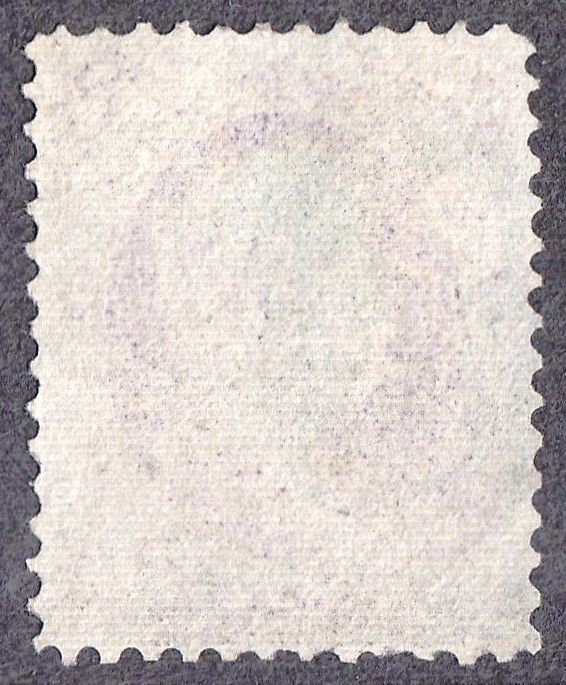 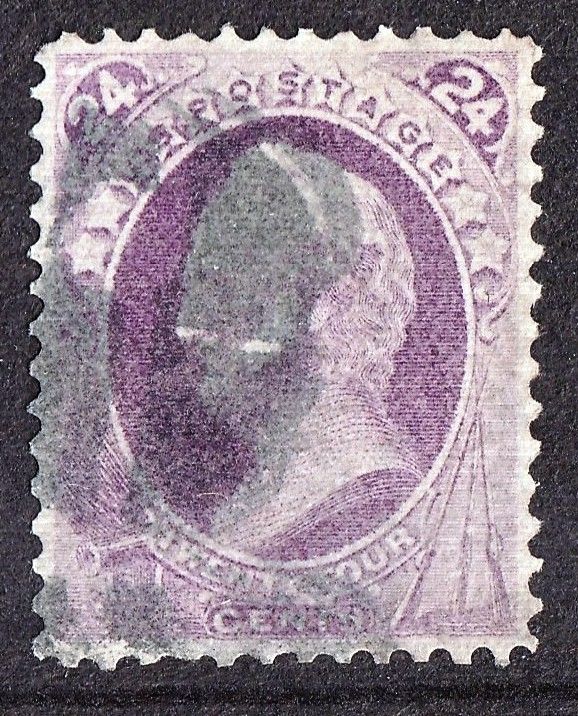 |
|
Send note to Staff
|
|
|
Pillar Of The Community
United States
3295 Posts |
|
|
I don't know if that is horizontal ribbing, but sure does look ribbed paper. Up to this point, the only photo of ribbed paper I've seen has been shot at an angle by Ken Srail. 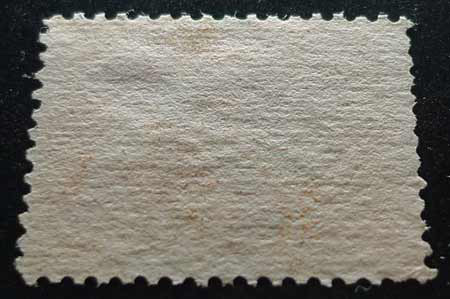 |
|
Send note to Staff
|
|
|
Pillar Of The Community
United States
1497 Posts |
|
|
I counted 71 ribs in the APS image. At 40 ribs per inch (per the Siegel description), the stamp is 1.775 inches tall. That doesn't seem right.
The "ribs" in the APS image are more densely packed than the ribs seen in the Srail image.
My observations.
Robert |
|
Send note to Staff
|
|
|
Rest in Peace
United States
763 Posts |
|
|
Wow! That is an interesting item. Wish I would have seen it, as I would have snapped it up - not because I believe it's the same ribbing as on the certified #164 ("Trainwreck" is right on with his observation about this being more ribs per inch), but because I happen to own a Newspaper stamp that has denser ribbing than the "40 per inch" and because of that, the PF will not certify it as "ribbed" paper at all, even though several experienced observers (aside from me) CAN see the denser ribbing. But because we don't (didn't) have any additional examples of this denser ribbing that we might compare with my stamp and possibly reach some conclusions about the "denser" ribbing.
Since no-one has ever definitively identified how the ribbing was made (there are serval different theories), it isn't too much of a stretch, in my opinion, that it is certainly possible that DIFFERENT "per inch" ribbing can exist. But getting identical copies to study has proven to be impossible, so my stamp is stuck in limbo! |
|
Send note to Staff
|
|
|
Valued Member
372 Posts |
|
|
I wish I had won it - I'd be sending it to you Bill to learn more about it :). One can hope maybe the buyer is on the forum, and maybe we'll learn something more about it.
Matt |
|
Send note to Staff
|
|
|
Pillar Of The Community
United States
1946 Posts |
|
|
If I had seen it, Bill would have had some serious competition for it. I hope the buyer has some sensitivity to the unusual nature of the striations on the reverse. |
|
Send note to Staff
|
|
|
Pillar Of The Community
United States
937 Posts |
|
|
I'm wondering if what we're seeing is just a very well visualized pattern from the wire mesh. I have several soft paper stamps that show a nearly identical spacing. However the lines are also clearly visible on both sides of mine which doesn't make complete sense to me. Here's a comparison: 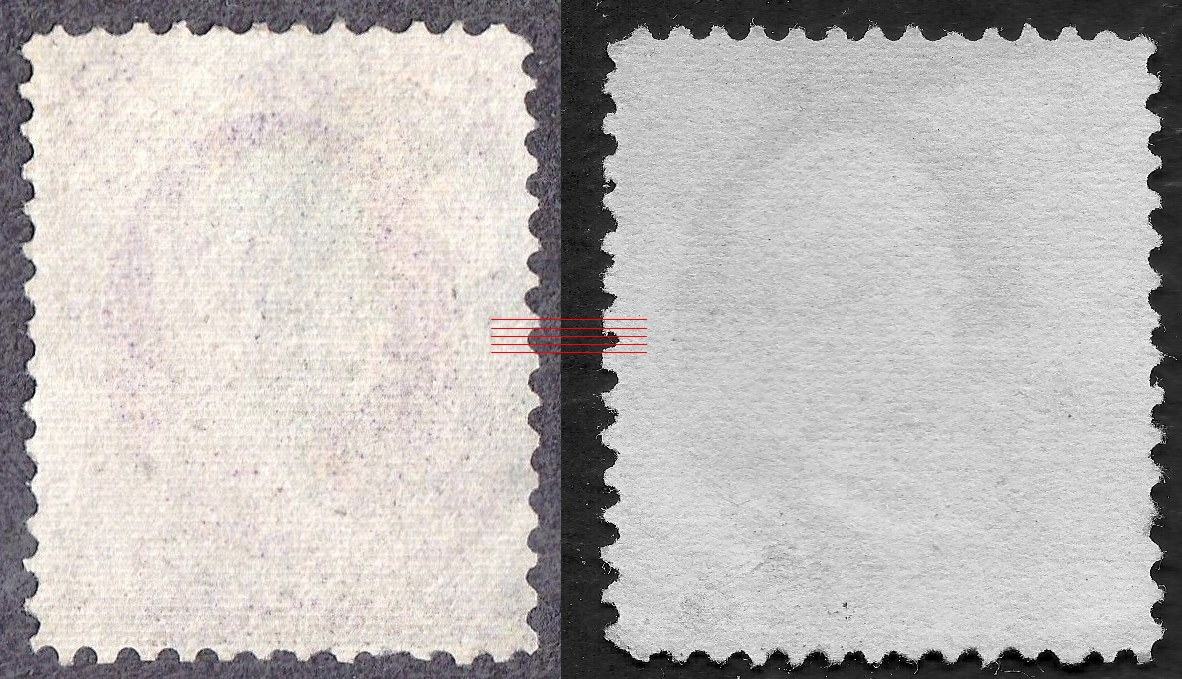 |
|
Send note to Staff
|
Ryan = HDNAC = DNA = HDC = Hysterical DNA Collector = Historical DNA Collector = me who just loves stamps :) |
|
|
Replies: 49 / Views: 14,593 |
|



 Posted 08/06/2014 05:32 am


