| Author |
 Replies: 16 / Views: 3,695 Replies: 16 / Views: 3,695 |
|
Pillar Of The Community
United States
937 Posts |
|
|
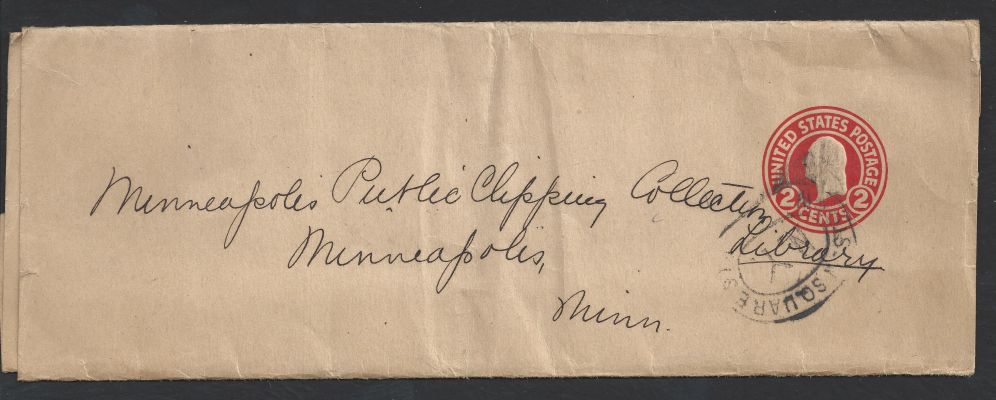  From: http://www.vfthomas.com/USstampeden...0.02.htm#Q9WIt seems to be design U93: printed in carmine, and could be Scott #s W433 (manila), W434 (brown glazed), or W435 (brown unglazed). From an ebay seller: "Glazed brown" means the front is smooth and the back is rough. Unglazed brown (W435) means both sides are rough. Manila (W433) is smooth on both sides, and a shade lighter in color." Assuming what the ebay seller says is true, I think that I can tell a slight difference in texture between front and back. Should the texture difference be subtle or easily distinguished? Also, I haven't been able to identify the donut cancel. Seems to read ...SQUARE... N.Y. |
|
Send note to Staff
|
|
|
|
|
Pillar Of The Community
United States
1125 Posts |
|
|
Only part I can help you with is the oval dcds is Madison Square Station. |
Send note to Staff 
|
|
|
Pillar Of The Community
United States
937 Posts |
|
|
That seems to fit. Thank you.
P.S. What does dcds stand for? |
|
Send note to Staff
|
| Edited by Historical DNA Collector - 09/17/2014 11:26 pm |
|
|
Pillar Of The Community
United States
1125 Posts |
|
|
Pillar Of The Community
United States
937 Posts |
|
|
Pillar Of The Community
621 Posts |
|
|
If it has a watermark, then it is a U433 (though not all U433's have watermarks).
Opinion: color looks like normal manila. Therefore, U433. |
|
Send note to Staff
|
|
|
Pillar Of The Community
United States
937 Posts |
|
|
It doesn't have a watermark, so no positive ID for me. Comparing it to examples found on the web of all 3 types, mine does seem to have the color shade of manilla. Color = the bane of philately. Probably accurate for my item though. Anyone know what the "crack" at 5 o'clock is? I've seen similar ones at the same position on other examples. From what I know, it's not a crack in the plate because of the absence in color. Doesn't seem to look like a preprinting paper fold. Almost looks like a physical break in the paper after printing. Maybe that area would sometimes stick to the plate and would break as the operator pulled it away? 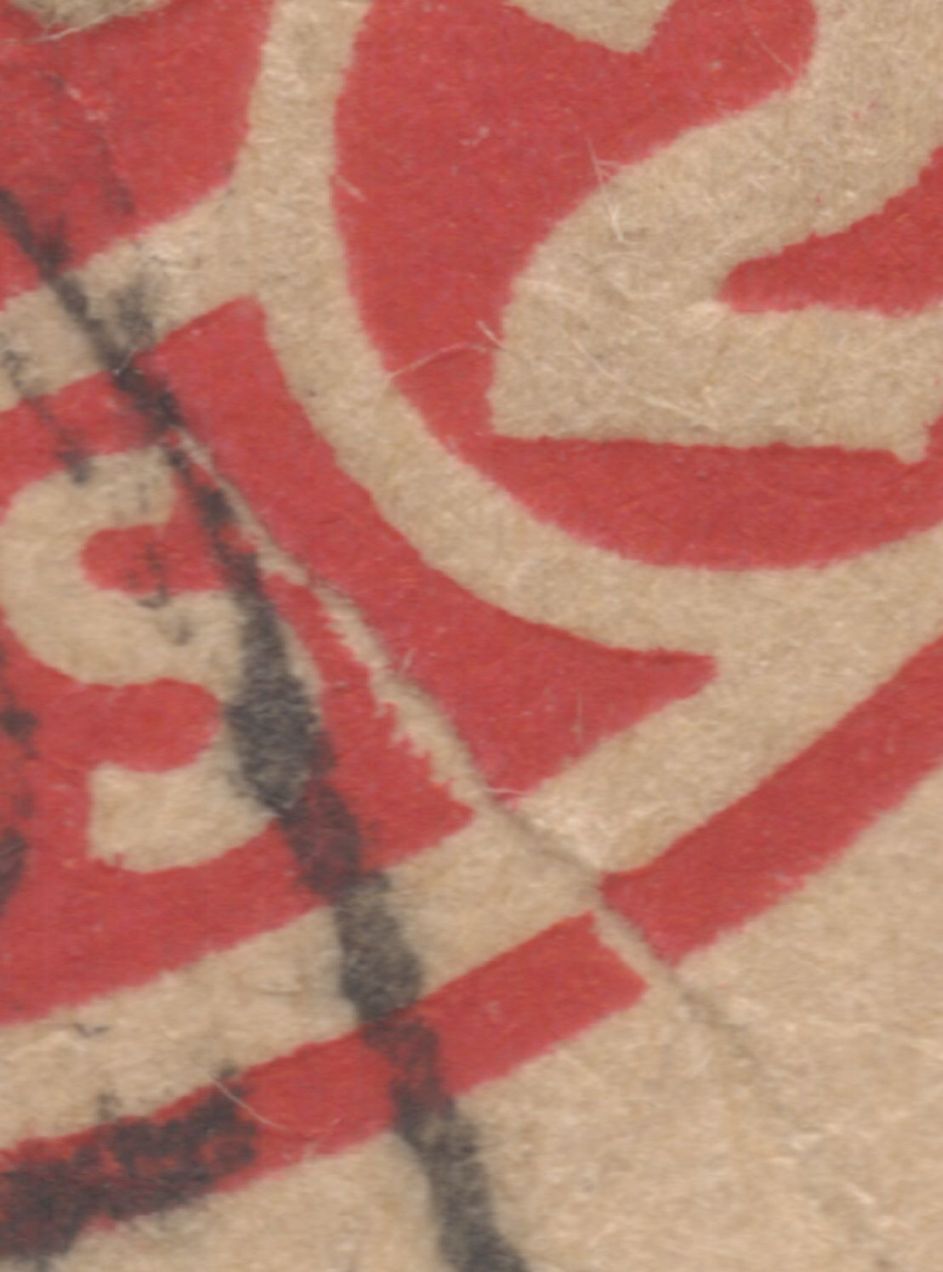 Now that I look at this enlargement, I see a lot of loose paper fibers. Would they be an indicator of manilla? |
|
Send note to Staff
|
|
|
Pillar Of The Community
621 Posts |
|
|
"Doesn't seem to look like a preprinting paper fold."
Right, but it IS a whileprinting paper fold.
Most of us call them die pinch creases. They occur on rotary presses (as opposed to flat plate plate presses) of the early 20th century. Most common on Mercantile and Circular die issues. The stamp is embossed on the envelope blank from the top down as the cylinder rotates. Because the embossing die pushes paper into the resilient platen, it pulls the paper into the center where the head and deepest engraving is. As the cylinder rotates thru the bottom of the die it has a tendency to hold the paper that has been drawn in and because there is too much paper, a fold or crease is created. |
|
Send note to Staff
|
|
|
Pillar Of The Community
United States
937 Posts |
|
|
Thank you. I forgot that this type is rotary. Your explanation makes sense.
Are these generally seen as flaw? I'm not at the point where I collect varieties yet. To me this common flaw doesn't detract from the visual appeal and kind of adds to it.
Would the abundance of loose paper fibers in my close up help with the identification of manilla paper type? |
|
Send note to Staff
|
|
|
Pillar Of The Community
621 Posts |
|
|
"Are these generally seen as flaw? I'm not at the point where I collect varieties yet. To me this common flaw doesn't detract from the visual appeal and kind of adds to it."
To an EFO collector, they can be a plus, especially large creases or multiple creases. I suspect the collector ordinaire would just as soon not have the crease.
Long fibers are consistent with manila paper. The other choices for a 2 cent circular wrappers is called brown by the catalogs. Not sure if that is a darker color manila or if it is a paper of the color brown. Remembering that manila is a grade of paper, not a color. |
|
Send note to Staff
|
|
|
Pillar Of The Community
United States
937 Posts |
|
|
Pillar Of The Community
621 Posts |
|
|
Found it. Here is brown (left) v manila (right) for 2 cent circular wrappers. 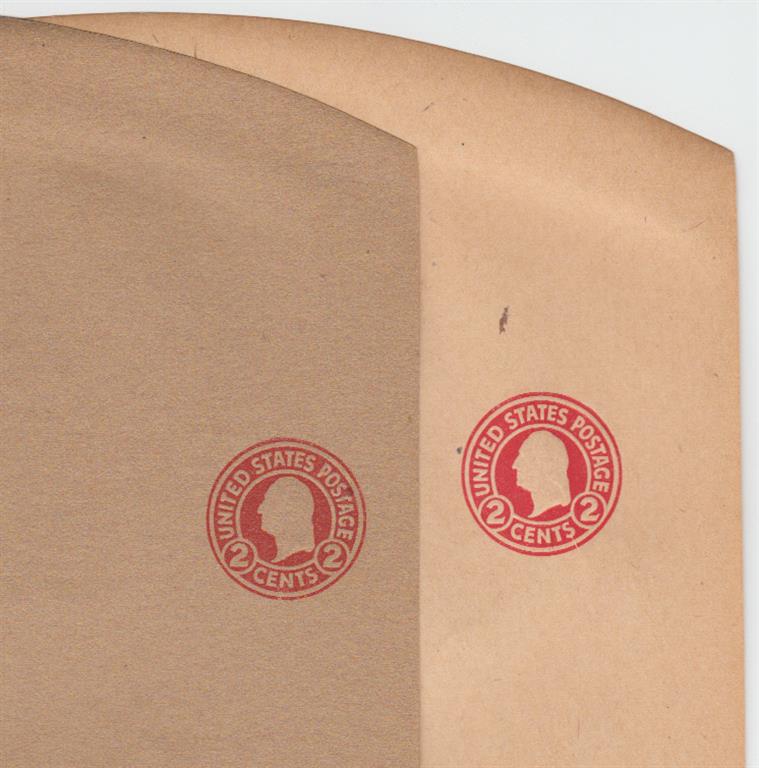 |
|
Send note to Staff
|
|
|
Bedrock Of The Community
United States
12128 Posts |
|
|
Are those two different colored wrappers using different dies? Most notably, the left numeral "2" appears different. |
|
Send note to Staff
|
|
|
Pillar Of The Community
United States
937 Posts |
|
|
Pillar Of The Community
621 Posts |
|
|
Pillar Of The Community
United States
937 Posts |
|
|
Ah, that kind of makes sense. Do things like re-entries occur when plates are touched up from repair? Is that even performed on rotary plates? |
|
Send note to Staff
|
|
|
Replies: 16 / Views: 3,695 |
|




 Posted 09/17/2014 10:53 pm


