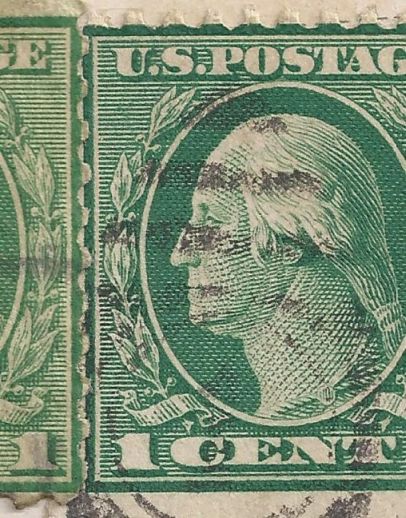
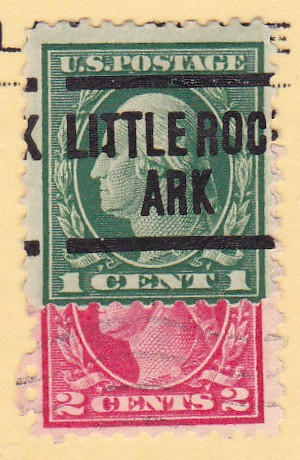
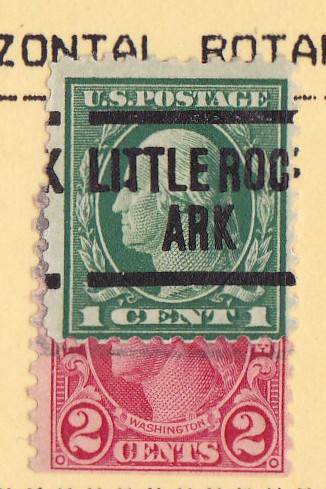
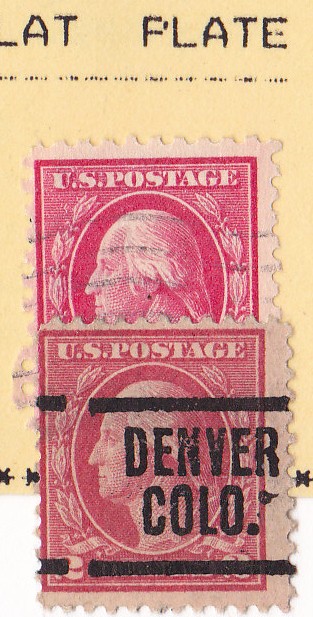
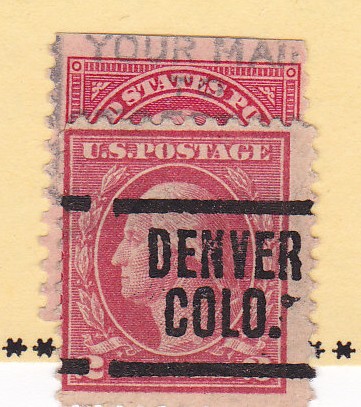
(A)1c is flat plate
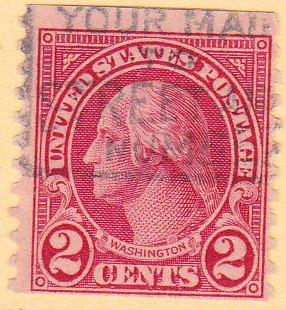
2c is flat plate
Both are flat plate because the horizontal lines are thick.
(B)Your horizontal rotary seems perfectly fine.
(C)The 1c is nearly wide enough to be a rotary, but isn't because of the line appearance.
Different sizes of both horizontal and rotary prints occur. Take a look at
http://1847usa.com/1908WashingtonIdentifier.htm and you'll see that 543 is listed as 22.5+ mm tall. 542 is listed as 22.75 mm tall.
Your "Horizontal Rotary" example is a 599 and is listed as 19.75 x 22.25. It is both wider and taller than most "horizontal" rotary types and isn't the best choice as a reference for most Scott #s.
Also, size can vary in any catalog number, comparing two stamps for size isn't always right.
I_Love_Stamps link shows how to make a cutout using a flat plate stamp. That might be a bit quicker and easier to use than your reference card.
If the suspect stamp is larger in either direction, then determine if it is flat or rotary print. Some rotary prints do have the appearance of flat prints. If the difference isn't obvious, then measure it with an accurate ruler with 0.1 mm graduations.
Compare your measurements with 1847.com for the types that it may possibly be. If it is large enough to fit one of the types and it is definitely a rotary print, then you have probably identified it correctly.
If any of those aspects make is so you don't know what it is with 99% certainty, then let out a large sigh. Breath deeply and slowly. Once relaxed, post a scan of it here on the forum and we'd be glad to help. :)
In summary you'd probably be better off making a cutout using a known, cheap, flat plate stamp.





 Posted 10/16/2014 04:08 am