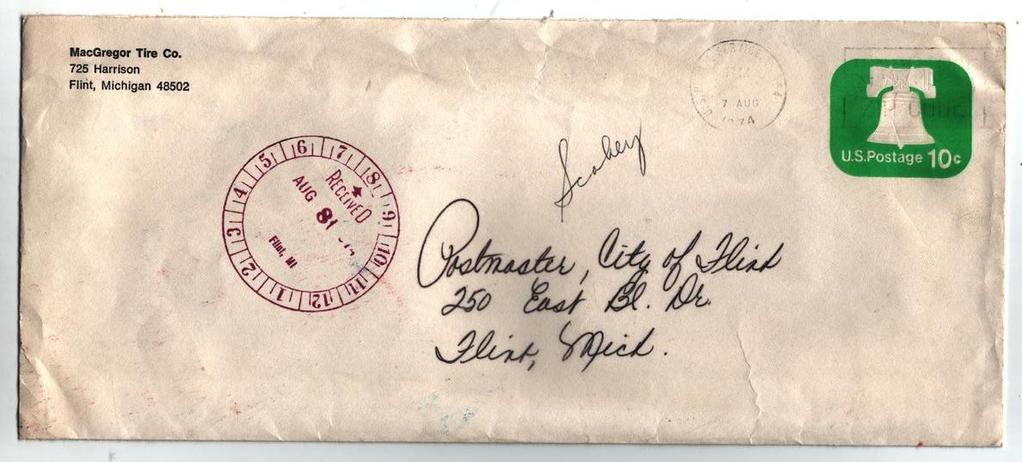
wt1, I'm guessing they wrote out East, to ensure it didn't go West. I once lived on a street that crossed over another and both sides of the street had the same house numbers on the other side, and the same street name. If you did not spell out the direction, chances are you'd be getting mail meant for the other side of the street. The postal workers weren't always attentive to a letter 'N' or 'S', or even a last name. I had to tell people who sent me mail, spell it out, so it gets the delivery person's attention, when they're putting mail in the bins to take to the truck. (And that wasn't that long ago.)
As for the rest of the address, I am assuming they were in a hurry, since it might have been a bill, as speculated and they're probably paying all the bills at one time, having to write out the address on them all, so abbreviate where they can, saving time and hand cramps. They didn't abbreviate East, like the rest of the address, but if they were sure it would go to the East, I don't doubt they might have used just the letter E. Same possible reason for the Bl instead of Blvd. Bl.. in a hurry, postal workers know where there boss can be found.... I wrote out East and signed the check didn't I? attitude. Zoom, zoom, zoom... bill paid.
As for the zip, that was possibly oversight in the rush to get the bills out, or they didn't know it. Again, it's going to the postmaster. "Postal person picking this up knows what his boss's zip is, right?"
Back then, it was an accepted practice to use zip codes, but your mail wasn't returned with nasty notes, if you didn't put a zip code on it. That started really a bit later, and when the four digits were added, you could get away with not putting those on, for a short period of time, too. The post office filled it in for you. Now, I don't know you won't get it back, with some kind of red stamp saying 'Undeliverable' since you didn't give the last four, much less no zip code at all. |





 Posted 01/12/2015 9:48 pm