| Author |
 Replies: 55 / Views: 8,378 Replies: 55 / Views: 8,378 |
|
Pillar Of The Community
United States
611 Posts |
|
|
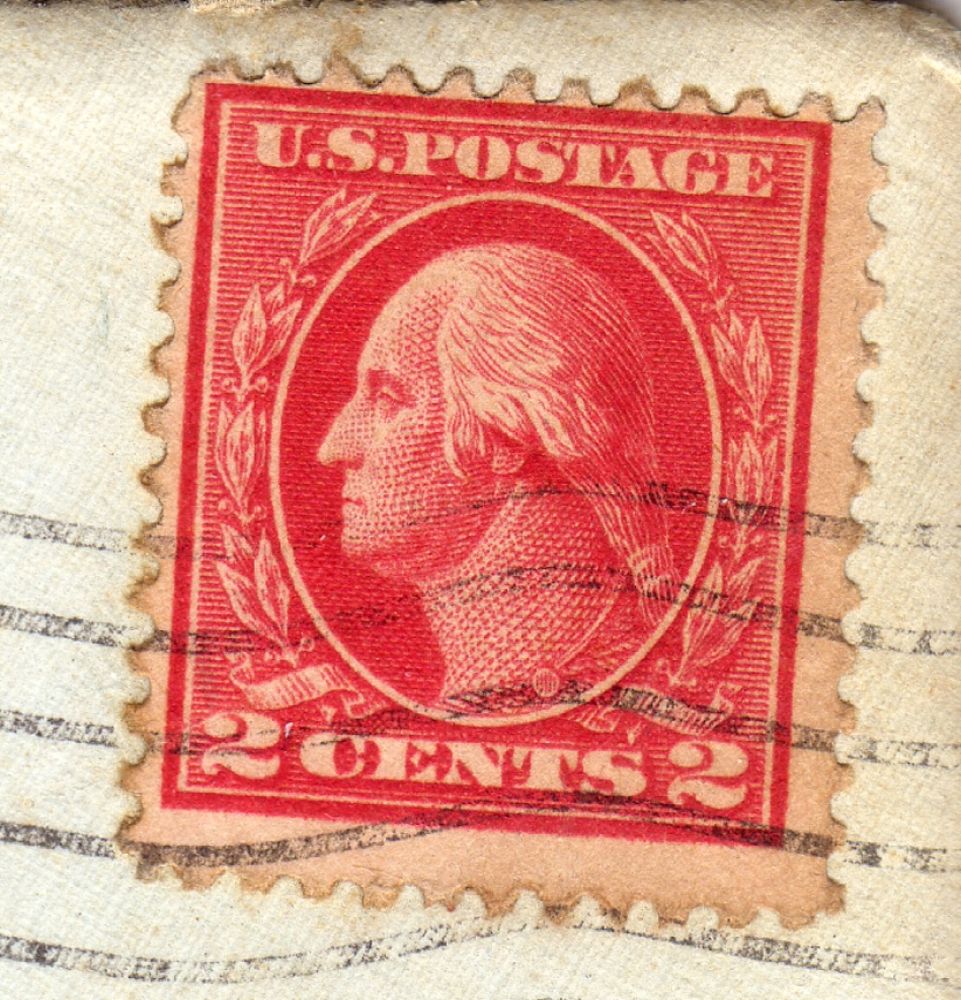
We see newbies pop the question every few days regarding whether they have a rare type of stamp. We can grow weary of it even though it was us asking the question some time back. When we see a professional selling something though it makes you wonder. I was looking at auctions and auction results and considering listing a Scott 500 I found on cover. ebay has the usual sky high prices from the usual sellers. I'm not bashing them today. I went to "Stampauctionnetwork" and was looking at the Alan Blair Sale set for April 11, 2015. There is a listing for a used Scott 500. The stamp looks like a Scott 499 type I to me. I was wondering if others thought so too or if it looks like a Scott 500 type 1a? http://stampauctionnetwork.com//AE/ae15439.cfm#194 |
|
Send note to Staff
|
|
|
|
|
Pillar Of The Community
United States
611 Posts |
|
|
Pillar Of The Community
United States
1756 Posts |
|
|
Pillar Of The Community
United States
611 Posts |
|
|
Pillar Of The Community
United States
1756 Posts |
|
|
I agree with you it's not a 500... it's a Full Type I ~ 499...
The full Type I has been discussed in previous threads on SCF,
and, I'm personally still of the opinion that it's rarer (by far)
than is the 500, but has never been recognized as such... |
Send note to Staff 
|
|
|
Pillar Of The Community
United States
611 Posts |
|
|
I'm not sure what you are referring to as a full type 1. The Scott 499 was made from 1917-1922. They made many billioos of them. The Scott 500 was only on 2 plates and just a couple of positions. |
|
Send note to Staff
|
|
|
Pillar Of The Community
United States
1756 Posts |
|
|
Quantity printed is irrelevant... Here's a Full Type I... and, a better example than the one on Stamp Auction Network, and easily mistaken for a 500... You can find numbers of 500's listed everywhere, 7 days a week, but you can search for weeks and months and not find a 499 Full Type I... they are FAR MORE RARE than 500's... end of story... 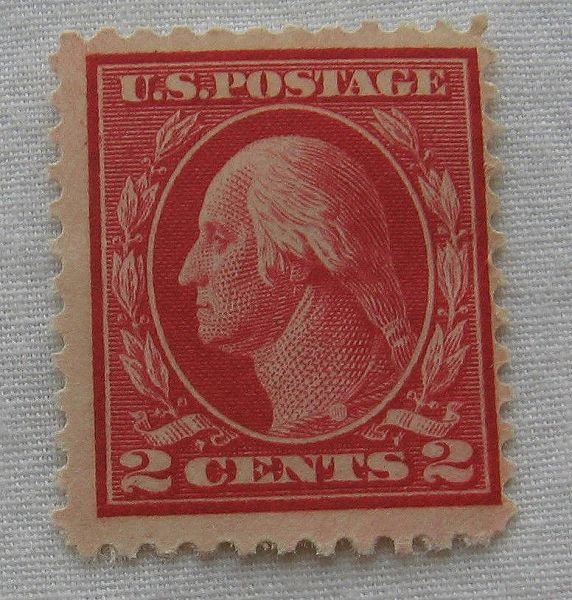 |
|
Send note to Staff
|
| Edited by disi123 - 04/09/2015 6:20 pm |
|
|
Bedrock Of The Community
United States
10864 Posts |
|
|
What exactly is "a 499 Full Type I", and how is it different from any other 499?. |
|
Send note to Staff
|
|
|
Pillar Of The Community
United States
611 Posts |
|
|
 That's the first time I've heard that. I'm waiting on something or someone to back it up. |
|
Send note to Staff
|
|
|
Bedrock Of The Community
United States
10864 Posts |
|
|
Pillar Of The Community
United States
670 Posts |
|
|
If you search here for "full ty I" you'll find several detailed discussions, all from about the same time. I had never heard this before either.
|
|
Send note to Staff
|
| Edited by raymodj - 04/09/2015 11:07 pm |
|
|
Pillar Of The Community
United States
1756 Posts |
|
|
Martin Armstrong wrote quite a bit about the Full Type I Flat Plate
found among the printings of 406, 409, 411, 413, 425, 442, 444 & 461...
Quote...
"This type is not to be confused with the experimental Type-Ia.
The basic lines forming the design are all quite present with a
sharp appearance. On early printings of the 406 and 409, the
Full Type-I is so sharp that at first glance it might be taken
for a rotary press printing. The full Type-I virtually disappeared
during the difficult years of World War I.
(1) General strong features from thick to thin lines.
(2) The toga button will be complete but the line forming the
button is not as thick as a Type Ia.
(3) Color shades are usually dark. Only #461 will be found in
a light carmine red shade."
The above is by contrast what is stated about the standard (weak)
Type I found on the majority of #499...
"Most catalogues illustrate the Type-I as being weak. This is
caused by inferior ink, paper and weak impressions as well as
worn printing plates. This Type is found during the period which
coincided with the economic difficulties of World War I.
(1) General weak features, at times even blurred.
(2) The toga button may be complete in some cases, but will be
very thin. More often found incomplete."
All of the above are strong impressions... I do not have the specific
plating information, however all were printed prior to 461 and 499.
The key (I believe) is what makes the Full Type-I rare is what's
stated... "The full Type-I virtually disappeared during the difficult
years of World War I."
Most believe most (if not all) of the 499's were printed from the
same plates, predominantly weak and blurry impressions, while the
facts bear out there were some produced with the same plates used
for 406, 409, 411, 413, 425, 442, 444 & 461, which, I'm sure most
of us can agree were strong impression stamps... with the 461 and
the 499 Full Type I's being the only Perf 11's made from these
plates... hence the rarity...
The #500 rarity, based upon being an experimental production in
limited quantity is well known... and the established market prices
over time most definitely reflect its rarity... however the number
of surviving 499 Full Type I's is miniscule by comparison to the
high numbers of other stamps produced from these very same plates...
(not the plates the billions of common 499's were produced from)...
I'm quite sure the exact number is not known, but I'd be certain
it's quite low as (it) and the 461's were the only Perf 11's made
from these earlier plates preceding even the existence of numbers
461 and 499... not from the plates later after 1917 which produced
the billions of weak impression 499's... |
|
Send note to Staff
|
| Edited by disi123 - 04/09/2015 11:48 pm |
|
|
Pillar Of The Community
United States
1414 Posts |
|
|
I am not sure I agree. I have some nicely printed examples including some 499s likely printed well after the end of World War I just before the transition to the Fourth Bureau issue. It was definitely the case that using inferior ink resulted in rapid plate wear. I have a 409 die proof, but I will not have time to image it until sometime after WESTPEX, probably May or maybe not until after Summer Seminar at the end of June. A die proof may provide a more definitive answer.
Clark |
|
Send note to Staff
|
|
|
Bedrock Of The Community
United States
10864 Posts |
|
|
The complete list of plate numbers used for 499 is in Johl, produced in 1937 from Bureau records. I'm sure Durland has them as well. Unless the specific earlier plates used to produce the so called "full type I" can be or have been identified there is no reason for anyone to list them as a separate type. |
|
Send note to Staff
|
|
|
Pillar Of The Community
United States
1756 Posts |
|
|
Rev... I'll just list one for now... 7322... 409 *and* 499
There are others... just cross reference in Durland... |
|
Send note to Staff
|
| Edited by disi123 - 04/10/2015 12:07 am |
|
|
Pillar Of The Community
United States
1947 Posts |
|
|
I have the Armstrong book and have read the full type I discussion several times. I confess that I am unable to distinguish the type I from the full type I. Who can give a fool-proof method? Or can there be a fool-proof method??
It is all very confusing. |
|
Send note to Staff
|
| Edited by rohumpy - 04/10/2015 05:09 am |
|
|
Replies: 55 / Views: 8,378 |
|



 Posted 04/09/2015 3:36 pm