| Author |
 Replies: 27 / Views: 4,886 Replies: 27 / Views: 4,886 |
|
Pillar Of The Community
United States
2963 Posts |
|
|
|
|
Pillar Of The Community
United States
3305 Posts |
|
|
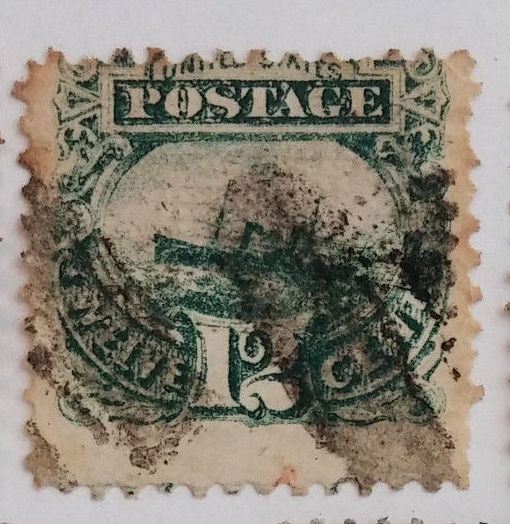
You're right. It's ugly! But I don't see any doubled lines, barely see any lines, looks underinked, or is that a dry printing? |
Send note to Staff 
|
|
|
Pillar Of The Community
United States
2963 Posts |
|
|
Quote:
You're right. It's ugly! But I don't see any doubled lines, barely see any lines, looks underinked, or is that a dry printing?
My first thought was 'Dry printing' but I'm not really sure. I thought dry printings were faint, but clear. This one is missing ink everywhere and much of the finer detail is missing altogether (IE: horizontal shading lines behind "United States" at the top, among other places). This stamp is that sort of freak I like having in my collection. I think I'll go for it. Brian |
|
Send note to Staff
|
Brian Riley
APS 223349 |
|
|
Pillar Of The Community
1151 Posts |
|
|
This is not a double transfer, most modern collectors make this mistake.
This effect is called Scooped Ink!
Dave
|
|
Send note to Staff
|
|
|
Pillar Of The Community
United States
2555 Posts |
|
|
Double transfers add ink where it shouldn't be, they never add unprinted (white) areas to the stamp.
Dry printings don't necessarily have good detail but they will always have white patches of missing ink, like this stamp. Your stamp looks like a dry print to me. I have never heard of scooped ink. Must be a very old term. |
|
Send note to Staff
|
|
|
Pillar Of The Community
1151 Posts |
|
|
sinclair2010
Yes, it is an old term, guess it's not used any more by the modern collectors. But I think it's a much better term and imparts a better understanding, but then again, I'm an old collector.
Dave |
|
Send note to Staff
|
|
|
Pillar Of The Community
Guatemala
1501 Posts |
|
|
I have fairly modern stamps that look like this and in a few cases I did it myself. Moisture caused a sheet to semi adhere to the face of another sheet. It separated easily but specks of ink from the lower sheet stuck to the gum of the top sheet. Is this what you mean by scooped ink? Or is it something different?
|
|
Send note to Staff
|
|
|
Valued Member
United States
344 Posts |
|
|
stampmaster - Please elaborate on the term "scooped ink" as I have never heard it before. And aren't most of us "old collectors" here? 'cuz I sure feel old!  Rileysan/sinclair2010 - Rileysan/sinclair2010 - When you refer to "dry printing" you mean something other than the Wet/Dry printings as in the Liberty Series, right? More a sort of under-inking than a different process? |
|
Send note to Staff
|
|
|
Pillar Of The Community
1151 Posts |
|
|
Hi All
The best description of scooped ink in this case is from Cloudy's 1979 Book "Encyclopedia of Plate Varieties on U.S. Bureau-Printed Postage Stamps". Now then even tho the 117 stamp in question was not printed by the U.S. Bureau, scooped ink can happen on most flat plate press printed stamps. Hope this answers what was request "elaborate"?
Now, if you really wanted to know what scooped ink is "from Cloudy's book, scooped ink is often mistaken for RBs, plate damage, or plate wear. (My words) scooped ink effect is the plate wiping pad might be impressed into the shallow plate and scoop out much of the printing ink".
Hope this makes it clear for everyone.
Dave |
|
Send note to Staff
|
|
|
Pillar Of The Community
6364 Posts |
|
|
dry print being an ink-starved plate (rather than the moisture content of the paper of the Liberty series) 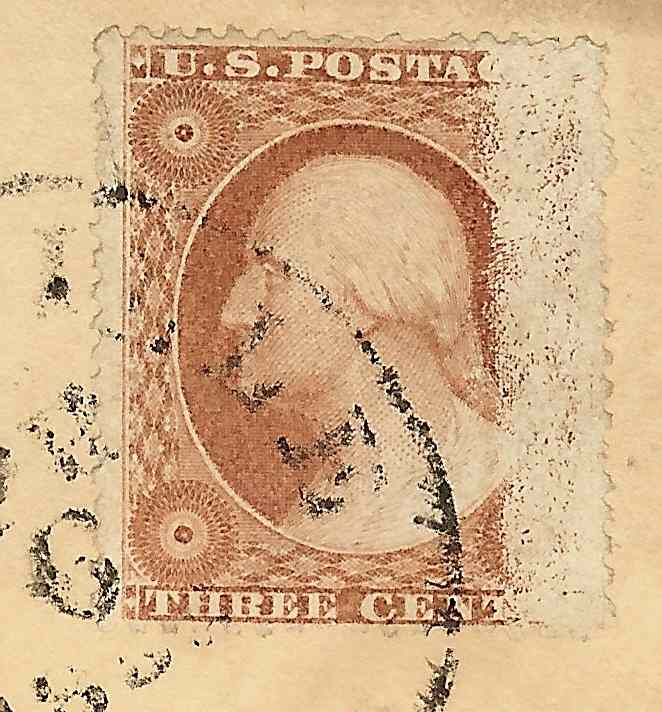 |
|
Send note to Staff
|
|
|
Pillar Of The Community
United States
5894 Posts |
|
|
My guess is that it was printed with ink that had been left out too long and was starting to dry up and clump up. This would explain the spotty coverage and the inability to fill in the tinier engraved lines. |
|
Send note to Staff
|
|
|
Pillar Of The Community
United States
8610 Posts |
|
|
To me it looks like a stamp that was soaked in hot water a little too long , try it yourself. Sometimes a chemical added to the water will do the same . |
|
Send note to Staff
|
|
|
Pillar Of The Community
6364 Posts |
|
|
Pillar Of The Community
1151 Posts |
|
|
Pillar Of The Community
United States
2963 Posts |
|
|
Good information all. I was outbid on the lot by $1. I honestly didn't expect anyone else to want it. Oh well ... |
|
Send note to Staff
|
Brian Riley
APS 223349 |
|
|
Pillar Of The Community
United States
1946 Posts |
|
|
If it's any consolation, Brian, you may have been outbid by a lot more than $1 - the trouble is, no one can tell. The buyer got the lot for one advance over your bid (that's the dollar) but who knows how high the number actually was.
As for the printing anomaly on the 1869 12c, I agree that it shows the signs of a dry print. However, a corrective on John Becker's comments: In 1869 the paper used in intaglio printing was normally dampened prior to printing to keep it pliable and that has always been normal for that kind of printing. A dry print results when the paper is too dry and does not conform to the recesses of the intaglio entry well enough to get all the ink it should. Numerous spots of missing color result. (See Williams *Fundamentals of Philately* p. 246)
What John showed us with a 3c of 1857 is not a dry print; it is "scooped color" or a "scooped print" (cf also Williams p.235) This results from improper final polish wiping of the plate which inadvertently removes ink from a cliché prior to printing. These two types of defect are very different in origin and appearance.
|
|
Send note to Staff
|
| Edited by essayk - 04/24/2015 10:10 am |
|
|
Replies: 27 / Views: 4,886 |
|




 Posted 04/22/2015 2:25 pm