| Author |
 Replies: 21 / Views: 6,595 Replies: 21 / Views: 6,595 |
|
Valued Member
Bulgaria
216 Posts |
|
|
The stamp is Scott#361 (bluish paper) As the C V of cancelled stamp is higher than the mint condition one, I would like to know if the stamp shown on the hereunder picture can be certified as used by an expertizing office ( like APS)? Please note that I do not have any experience with US stamps. I only saw flag cancellations, but not round ones like in Europe. Thanks for your answers. 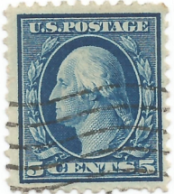 |
|
Send note to Staff
|
|
|
|
|
Rest in Peace
720 Posts |
|
|
It is not necessarily a Flag cancel. It could be an ordinary machine cancel used at 1000s of US post offices during the time period. There is nothing unusual about it from a cancellation point of view.
But are you REALLY SURE it's a bluish paper? How do you know it's Scott #361? Was it sold to you that way or have you identified it because it "looks" like a bluish (grayish) paper? |
Send note to Staff 
|
|
|
Valued Member
Bulgaria
216 Posts |
|
|
Thanks for your reply.
I supposed that it's a #361 because the seller sold it as a #361 !
I would ask the community: If someone has a stamp of that set ( Scott #357-366- bluish paper), can he place a scan on this site ?
I thank him. |
|
Send note to Staff
|
|
|
Pillar Of The Community
United States
2547 Posts |
|
|
Pillar Of The Community
United States
1414 Posts |
|
|
The stamp in the image is an unwatermarked perf 11 Scott 504. Bluish paper stamps are characterized by bluish gray paper with a double line watermark easily visible when the stamp is viewed with back lighting.
Seller identification is one of the least reliable ways of identifying stamps. A professional stamp dealer will stand behind the stamps they sell and would be very unlikely to sell a rare stamp, prone to misidentification, without a certificate from a recognized expertizing committee.
Clark
|
|
Send note to Staff
|
|
|
Pillar Of The Community
United States
798 Posts |
|
|
as a point: I am under the impression that when a cancelled stamp shows a CV greater than MNH, it is usually because there is a scarcity of 'in period' postmarks/cancels and that the postmark/cancel must show clearly the date of use. Most times this is accomplished by on cover items, but can be determined by a clear SON. The cancel depicted does not have a postmark w/date thus it could not qualify for the higher CV. (SC# aside). |
|
Send note to Staff
|
|
|
Valued Member
Bulgaria
216 Posts |
|
|
@cfrphoto
Thanks for the information about the watermark.
I will control it as soon I have the stamp in my hands. |
|
Send note to Staff
|
|
|
Valued Member
Bulgaria
216 Posts |
|
|
@eligies
Without taking in consideration the stamp shown, this was my question: If the cancellation cannot be determinated with precision ( date and place like on a round one), may it be considered as "used" or not; specially when the CV value used is higher than the mint value ?
|
|
Send note to Staff
|
|
|
Pillar Of The Community
United States
1414 Posts |
|
|
The stamp would be considered to be used. Wavy killer cancels were quite common during the period of use. Socked on the nose CDS or date cancels exist but are not as common. Fake cancels exist, but are more likely to be one of a few documented CDS cancels like White Horse Beach. Check out the Philatelic Foundation certificates: http://pfsearch.org/pfsearch/pf_grd...lledfrom=lkpClark |
|
Send note to Staff
|
| Edited by cfrphoto - 06/15/2015 2:28 pm |
|
|
Valued Member
Bulgaria
216 Posts |
|
|
@cfrphoto
The watermark in the 361 version, is it visible with the light of a torch or have I to use liquid method ?
Bruno |
|
Send note to Staff
|
|
|
Pillar Of The Community
United States
1026 Posts |
|
|
Valued Member
Bulgaria
216 Posts |
|
|
Valued Member
Bulgaria
216 Posts |
|
|
Another example: The upper stamp is a genuine 544 ( copied from PF results) The Lower one is a 543 ( copied from PF results) The stamp in the middle is the stamp I would like to know which is the perforation; 10 or 11 ? The upper one has 14 teeth The lower one has 12 teeth The stamps in the middle looks like to have 13 perforations. What is your opinion ? Thank you 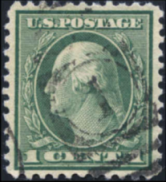 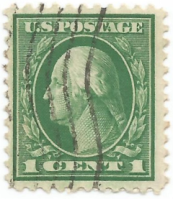 |
|
Send note to Staff
|
|
|
Moderator

United States
12330 Posts |
|
|
'Blue' (grey) paper can be subtle although once you have a reference copy in hand it is fairly easy to determine. Working from images on a computer is of dubious value when it comes to color determinations.
If you do not have a certified reference copy, the next best way to determine the 'blue' paper stamp varieties is to find a orange book or orange color paper and place the stamp on it. Place a number of stamps face down on it including the you suspect might be a blue paper variety. The orange background will quickly help you spot any paper which looks quite 'grey' (not really blue).
Don
|
|
Send note to Staff
|
| Edited by 51studebaker - 06/16/2015 08:18 am |
|
|
Pillar Of The Community
United States
1026 Posts |
|
|
Sorry for the slow response, I've been in the dark ages this week, without internet. :(
Of the stamps I showed, the top one, the middle one and the rightmost stamp in the bottom image are all 'blue' paper. As you can see, the color is subtle and not very blue, more of a gray. The blue 5c stamp at the beginning of this thread is obviously not a blue paper, rather a surface tinting from the printing process. |
|
Send note to Staff
|
|
|
Valued Member
Bulgaria
216 Posts |
|
|
@Billsey
OK!
Could you post the back sides (bluish/not bluish) of your stamps, so I can see the real difference between bluish and the other ones.
@cfrphoto
You wrote that the bluish paper has a watermark double-lined (Wk 191).
Then, How to make the difference between Scott#361 and 335 ?
They have both perf.12 and wk 191.
Only by the paper color, right?
Thanks |
|
Send note to Staff
|
|
|
Replies: 21 / Views: 6,595 |
|




 Posted 06/15/2015 03:05 am


