| Author |
 Replies: 55 / Views: 19,313 Replies: 55 / Views: 19,313 |
|
|
|
Pillar Of The Community
United States
1946 Posts |
|
|
Ray,
I took your comment as a recommendation to buy the cover, which I did. If I misunderstood and you were actually after the cover, we can put that right.
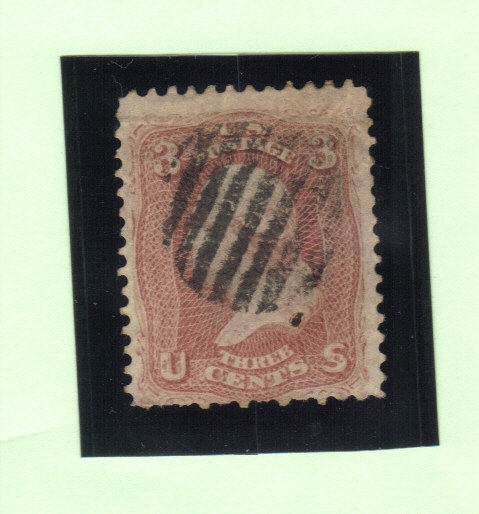
But I must confess to another bit of confusion about this usage from Nashville. I thought the rose shade came along in 1862. By April 11, 1862 Tennessee had been a secessionist state for 10 months. Somewhere I recall a notion that certain Southern cities exchanged mail with the North. Does that explain how this could be?
Civil War is not my field, so I need a little help understanding this. |
Send note to Staff 
|
|
|
Pillar Of The Community

United States
1273 Posts |
|
|
Nashville was occupied from February 1862 until the end of the civil war. Occupying union troop would have used this issue to mail letters out of Nashville to home or other locations.  |
|
Send note to Staff
|
|
|
Pillar Of The Community
6366 Posts |
|
|
To briefly run off on a tangent about dating the Nashville cover just mentioned. Here is the picture of the cover from ebay: 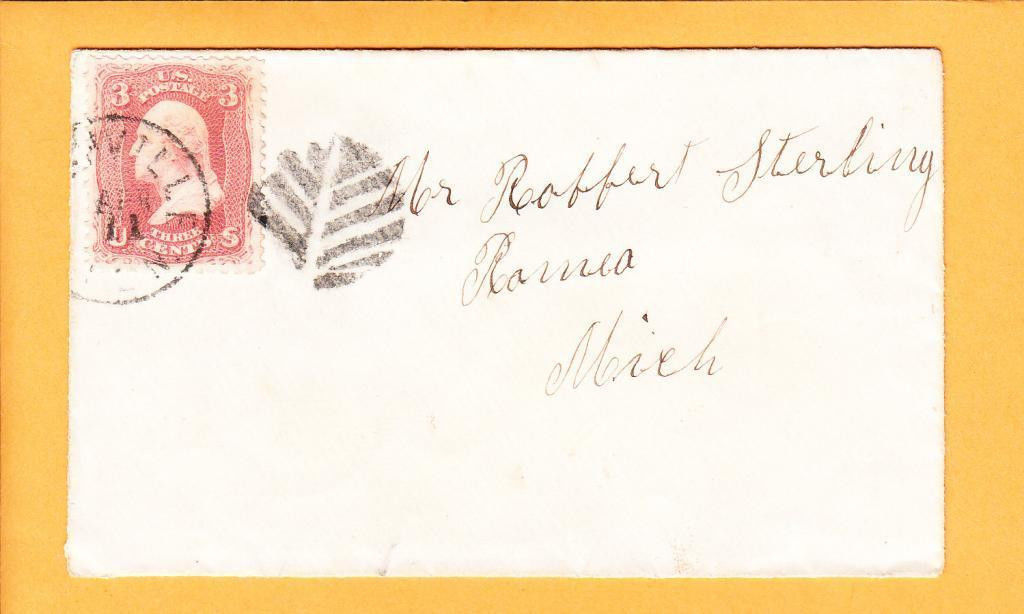 And here is a scan of portions of two May 1865 covers in civil war postal historian Richard B. Graham's exhibit "Civil War Mails of The Union Armed Forces in Tennessee" from 2005 in which he provides a detailed chronology of the postmarks used in Nashville and in which he states "The Nashville 23mm duplex with replaceable cork cancels: A new duplex cancel appeared at Nashville in the spring of 1865 as the war was coming to a close. This handstamp had a socket for cancels, into which corks or soft wood inserts, carved with designs such as leafs, could be inserted and replaced readily as they wore down or crumbled. These continued into the postwar period." The last use he shows of the previous device is April 4, 1865, so the Nashville cover would be from 1865 at the earliest, based on the postmark in use. 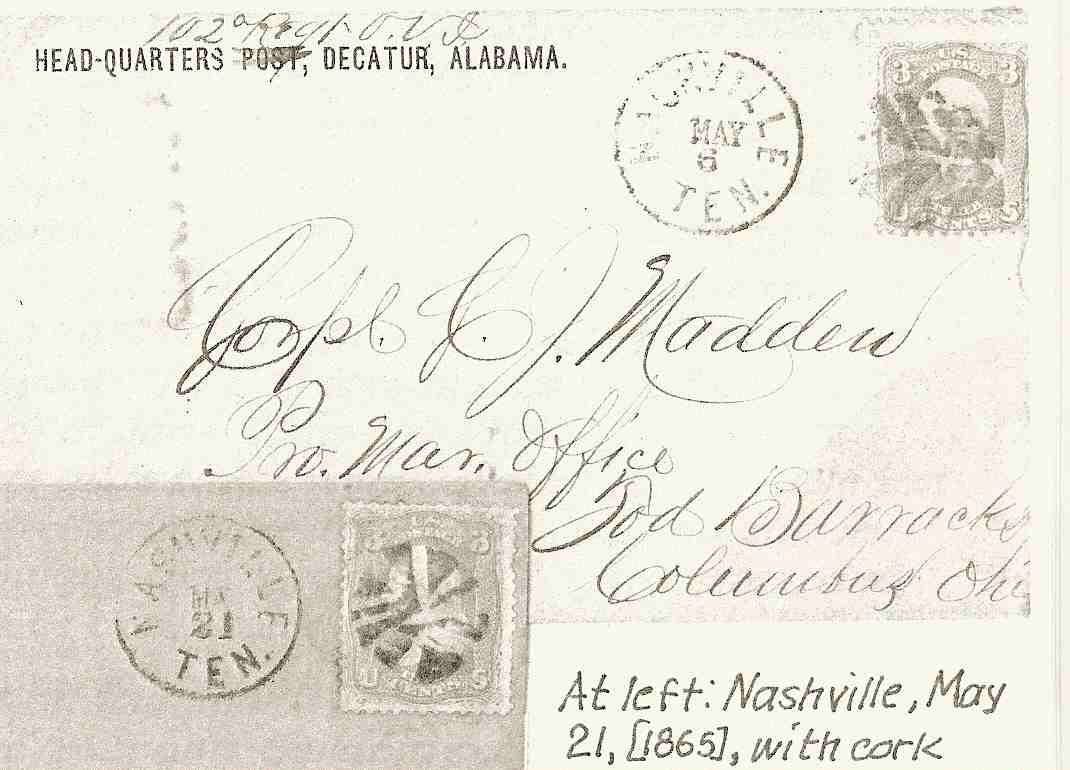 |
|
Send note to Staff
|
|
|
Valued Member
92 Posts |
|
|
No doubt about it, the 1861 Washington 3¢ issue encompasses a great deal and offers those interested an enormous challenge, but that challenge is, after all, what makes this stamp and many other issues of the 19th Century, so compelling! |
|
Send note to Staff
|
| Edited by Mizar - 07/16/2015 1:47 pm |
|
|
Valued Member
235 Posts |
|
|
Pillar Of The Community
United States
8624 Posts |
|
|
Pillar Of The Community
United States
8624 Posts |
|
|
Moderator
United States
5109 Posts |
|
|
I thought I had posted this before, but could not find it. The R.H. White Encyclopedia of The Colors of US Postage Stamps has a nice illustration (Plate I-14) that attempts to show the different shades of this illusive issue. I scanned it all at once, and have shown it below: 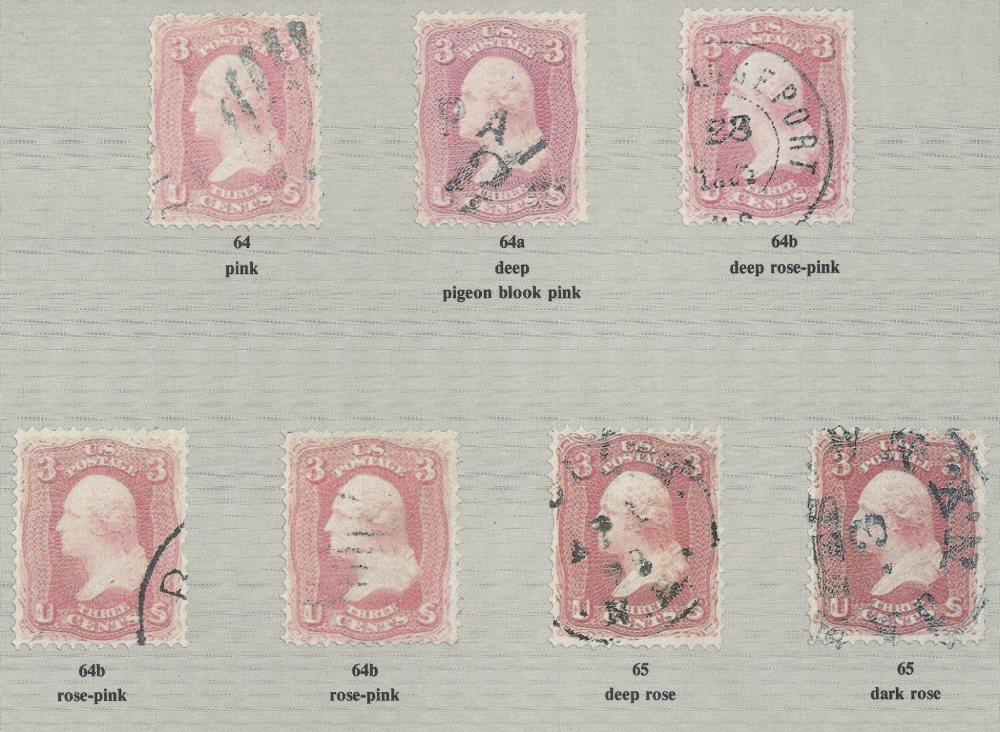 The Pigeon Blood is shown in the top, middle (64a) and has a shade that is unique. The author took care to make sure that the underlying paper would not affect the color. If anyone can get the R.H. White issue, I highly recommend it. |
|
Send note to Staff
|
|
|
Pillar Of The Community
3865 Posts |
|
|
I think that this referred to the Passenger Pigeon which is now extinct but was not extinct back then. |
|
Send note to Staff
|
|
|
Pillar Of The Community
United States
1360 Posts |
|
|
Trader...it isn't lake by a long shot. May have some lake in the shade, but it doesn't look like the typical lake roses or lake browns from '63 or '64. I posted my certed copy of the former #66, "The Lake" last year in this thread: https://goscf.com/t/39515, if anyone is interested. Hope this helps, Ray |
|
Send note to Staff
|
| Edited by ray.mac - 06/17/2016 3:52 pm |
|
|
Replies: 55 / Views: 19,313 |
|




 Posted 07/15/2015 10:41 pm