| Author |
 Replies: 14 / Views: 2,702 Replies: 14 / Views: 2,702 |
|
|
Valued Member
Germany
67 Posts |
|
|
Hello, after my first question here in the forum yesterday (thank you for the answers) I read a lot and search in my (little!) collection for US stamps (normally I have more from Europe). And I learned that this paper thing is really complicated. Well, I know I am not the first one the ask this here and I read other threads and the links to introductions. but for me as non-english speaker they are difficult. So I really hope to have answers to my beginner's questions: 1) are the most rare stamps those with bluish paper and the continental hard paper? 2) the stamps in the photos here: are they always rare or is there a paper variant which is not rare? 3) I read that there is hard (white) and soft (newspaper) paper for them and that the hard one is more rare. but is the soft one also rare or is there a 3rd paper variant for them? 4) Is this soft and hard paper only relevant for these "bigger" stamps or also for some smaller ones? I don't want to be an expert in 5 minutes after your answers. I just want to know if I could check in my little collection if there are stamps where I should spend more time in research. kind regards, joker 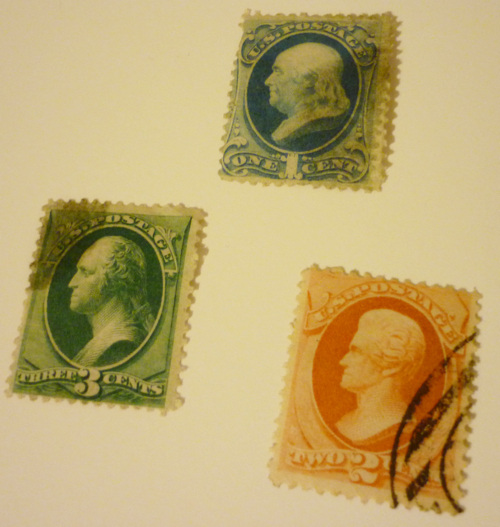 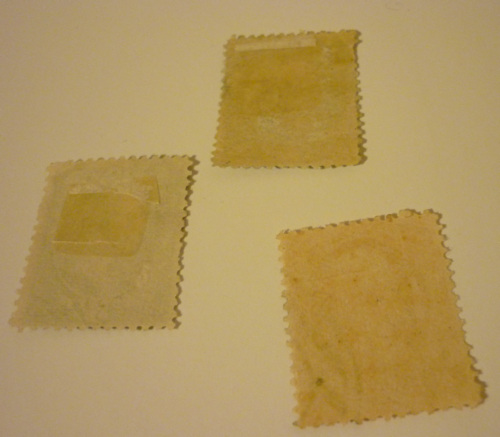 |
|
Send note to Staff
|
|
|
|
|
Moderator

United States
12330 Posts |
|
|
Valued Member
Germany
67 Posts |
|
|
thank you Don, especially the "Visual Finder" of the bank notes is useful as the no. issued is listed. So I have 2 new questions:
- the lower the no. of issues the more rare also today, right?
- the continental special printing is only to proove for unused stamps, right? (my ones are all used, so I can't show that they didn't had a gum?) |
Send note to Staff 
|
|
|
Pillar Of The Community
United States
3306 Posts |
|
|
Moderator
United States
12330 Posts |
|
|
Quote:
- the lower the no. of issues the more rare also today, right? The lower Scott numbers generally means they issued earlier. rarity is more based upon the quantity issued, quantity survived, and demand. Quote:
- the continental special printing is only to proove for unused stamps, right? (my ones are all used, so I can't show that they didn't had a gum?) The 1875 Continental Special printings are very rare and are usually only found unused. They are on very white paper. Any stamp you think might be a Special printing would need to be sent for a certification. I recommend that folks always start with the assumption that they have the most common stamp variety. This is logical since rare stamps are just that, rare. Many of us learned the hard way; getting hopes up, spending money of certification fees, etc. Extraordinary stamps require extraordinary evidence and assurance that it is indeed a rare variety. Don |
|
Send note to Staff
|
|
|
Valued Member
Germany
67 Posts |
|
|
hi Don, thank you again,
I meant the no. of issues listed in one of the links, not the Scott number. in the table for the special printings the no. of issues is always below 1000.
Yes, I know that rare is rare :), and I don't think mine are rare. I just want to figure out where I should spend my time in doing research. with the table in your link I know much more, still there the only difference to see if it is a rare continental is the unused without gum. So my question still is, if there exist any ones used (continental special)? if not then in the future I could just sort them all out...
|
|
Send note to Staff
|
|
|
Pillar Of The Community
United States
8956 Posts |
|
|
Joker, best thing to do is read. The Brookman book mentioned above is very good if you go into early US stamps. Another thing would also be helpful - get a subscription to a stamp magazine. The more you read the more you learn. And of course ask questions - everyone here is trying to be helpful.
Also, don't get too hung up on the Continentals. Running into one of those is almost as scarce as Christmas and New Year falling on the same day!
Peter |
|
Send note to Staff
|
|
|
Valued Member
Germany
67 Posts |
|
|
Hi Peter,
unfortunately I have (beside my European ones) only a World catalogue showing the most valuable ones :). Son I will buy a US catalogue soon.
Well, I am not fixed to the continental ones, that's why I asked if there are also other valuable stamps from the bank notes except continental. in the table there are other ones but no explanation. so I will have to learn much about this. indeed.
(yes reading is always the best but as mentioned it's not easy for me as a non native speaker) |
|
Send note to Staff
|
|
|
Valued Member
Germany
67 Posts |
|
|
hello again, I just made some photos :). I think I can learn a lot by showing my stamp here and getting to know something about it. Don't worry, I don't have any more stamps until now. I just bought all of them for about 10 dollards some days ago. For me when I touch it, the paper of the 2 cents is thicker and brighter. perhaps it's just because it's not that damaged... Is the hard paper much more smooth than this? and is this a secret sign? but the paper looks not so smooth before the light?   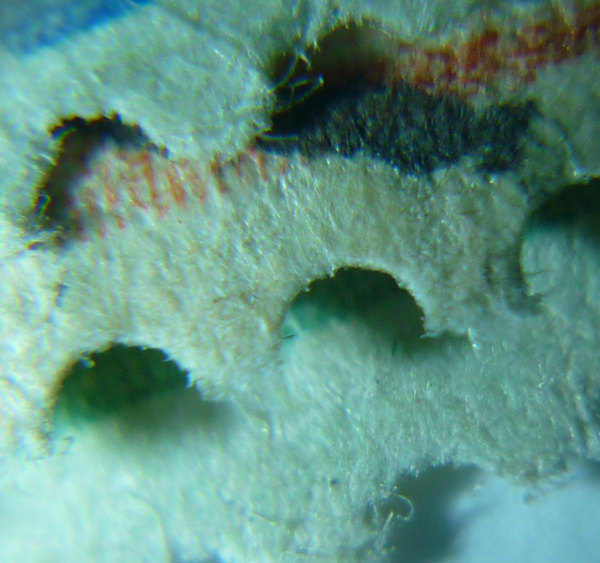 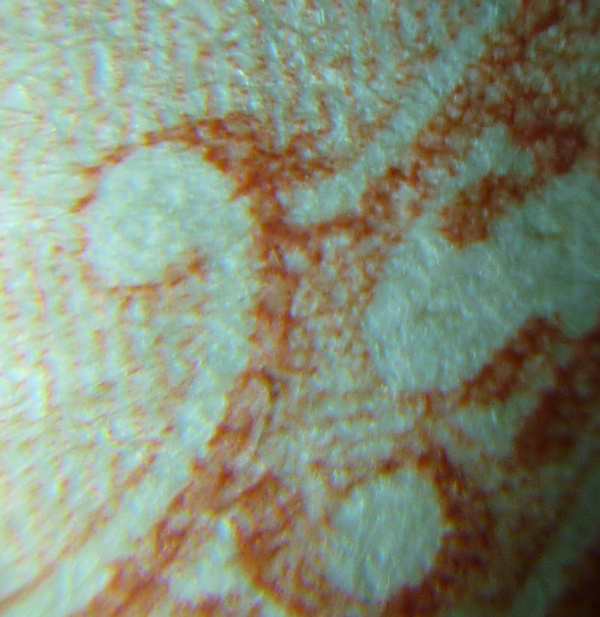 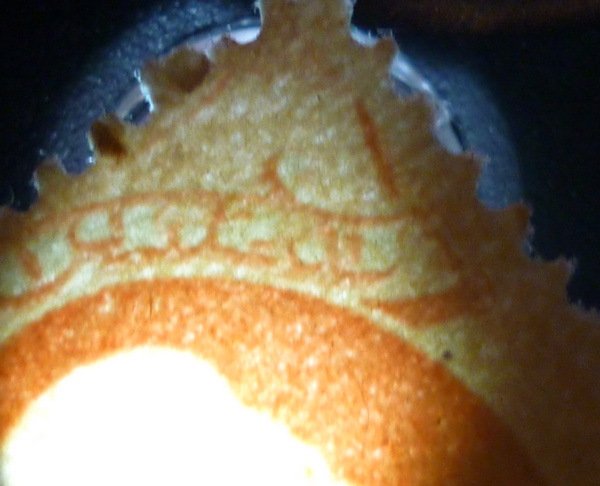 |
|
Send note to Staff
|
|
|
Pillar Of The Community
United States
1946 Posts |
|
|
From what I am seeing Joker, all three of the stamps you are showing in closeup are on hard paper.
Both the 1c and 3c show the secret mark => Continental (Scott #156 and #158)
Because the 2c is vermilion in color, and on hard paper, it is also a Continental; 2c of 1875 (Scott #178).
|
|
Send note to Staff
|
|
|
Valued Member
Germany
67 Posts |
|
|
hi essayk,
thank you - that's interesting. So at least my 10 dollars weren't too much :).
Well about the paper, if your expert's eye sees this - but when I touch the stamps, the 1c and 3c really feels very thin. but perhaps "hard paper" doesn't mean "thick paper"? |
|
Send note to Staff
|
|
|
Pillar Of The Community
United States
1946 Posts |
|
|
Many soft paper stamps are thicker than hard paper examples, but the "hardness" of the paper is due to the kind of "sizing agent" they added to it in manufacture. Early hard paper is made of rag stock and a gelatin based sizing agent. Early soft paper is made mostly of cotton rag pulp but with a starch sizing agent. |
|
Send note to Staff
|
|
|
Valued Member
Germany
67 Posts |
|
|
ok thank you again, essayk! It is often just easier to learn from an example. I just made another photo under daylight and with some color examples. I read that there is a difference about the grid around the head and for 178 there was one, but I don't see one. May I ask you some additional questions perhaps? 1) How did you see that mine are hard paper? (beside your last material explanations, just which elements on the photos show it) 2) But how can I see that the stamp is not a 180 or 183 then? (same for 158 vs. 169) 3) And still: are there any special printing known that are USED? If not, it would make defining much easier. THANK you ! 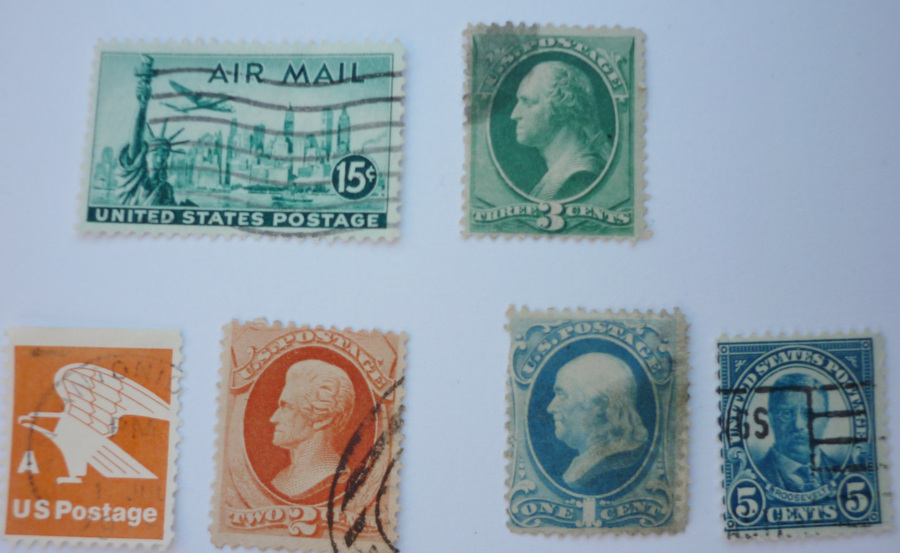 |
|
Send note to Staff
|
| Edited by joker - 01/06/2017 06:47 am |
|
|
Pillar Of The Community
United States
1946 Posts |
|
|
It is a common mistake to try to compare the colors of stamps whose production was widely separated by time. The catalog naming is not definitive. Meaningful color comparisons are pretty much limited to what one observes within an issue.
To your questions:
#1) My primary basis of recognition is derived from years of experience knowing what these papers, colors, and printing look like. I am not sure I can put all that into words for someone who is not already deep in the study of this material. However, you should regard my identifications as preliminary to doing real tests on these stamps. I have told you what I would expect - but that may not be the same thing as what I would find out from real examination. That said, what I saw of paper texture and cleanness of perforation, as well as the quality of impression, makes me lean toward hard paper.
#2) Your stamps are used. Since the Special Printings had to be specially ordered from the Post Office in Washington to get them, and they were issued without gum, there is almost no chance that any were "accidentally" used by someone ignorant of their potential value. For usage in the period when they were current the stamp would have to have been mounted with glue onto its envelope, and removing one without damage to the paper (as staining or tearing/thinning) would be impossible. So as a practical matter in handling used material we should just forget about the Special Printings. (Note that the term "Special Printings" is applied to the Banknote Issues as distinct from the reprints and reissues of earlier stamp types also produced in 1875 - some of which WERE used on normal mail.)
#3: The listings in the Scott US Specialized pretty much tell the story. None of the soft paper special printings are listed in used condition, so you may effectively cross 192-204 off your list. The same is true for the 2c and 5c hard paper listings (180-181). The only hard paper special printing with a value entry for used is the 24c (valued at about 5 1/2 times the value unused). The three cent has dashes for the entries in used condition (on and off cover). Since one exists used on cover, both entries refer to that stamp. That item was specially used and cancelled at the US Centenary celebration in Philadelphia in 1876. I have not checked the records of the Philatelic Foundation to see if any others have been certified down through the years, but if so they are few in number and very particular items.
|
|
Send note to Staff
|
| Edited by essayk - 01/06/2017 12:33 pm |
|
|
Valued Member
Germany
67 Posts |
|
|
Hello essayk,
this is really helpful and I thank you. it's nice that you take your time to answer such general beginner's questions. I will certainly read more about this, but as a start it's great to have this forum here. I understood all your points, especially about the "used" thing. Fortunately there are also other (used) variants of old US stamps which are worth collecting except the special printing. Ok, I really learned a lot here about special printing, and I will surely start looking more into that collection area, as it is not so known in Europe. |
|
Send note to Staff
|
|
| |
Replies: 14 / Views: 2,702 |
|



 Posted 01/05/2017 11:51 am


