| Author |
 Replies: 25 / Views: 6,841 Replies: 25 / Views: 6,841 |
|
|
|
Valued Member
United States
181 Posts |
|
|
Stallzer. Thank you for your statement too. This is the color of the stamp, no color scan problem experiencing here. That is why I questioned it as well. If you place my stamp next to a deep claret, there is a big difference from it's color. This is a perforated 12 in used condition. It was not color of a deep claret. |
Send note to Staff 
|
|
|
Pillar Of The Community
United States
1414 Posts |
|
|
Quote:
I thought this is what a vermillion color is suppose to look like with a perforated 12 in used condition. J29. The stamp pictured is badly faded. The color is uneven, but some of the original deep claret color is still visible on the left side by the left end of the cancel. In any case, the test for J29 and J30 is to view the stamp under short or long wave UV light. The ink will fluoresce orange while deep claret will not. |
|
Send note to Staff
|
|
|
Valued Member
United States
181 Posts |
|
|
Yes. Stallzer and CFPhoto It does look faded. I always thought Vermillion means a striking red, but the first one looks a pinkish color, so faded. Night and day comparison. It is goes into my used postage dues stamps. I have one that is similar to the gentleman's post as well. So , I definitely understand what he is experiencing with the different variations. This one below is as 12 perforated, used. 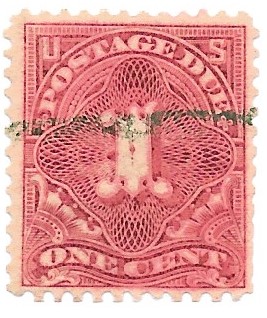 |
|
Send note to Staff
|
|
|
Valued Member
United States
181 Posts |
|
|
It an excellent way to check on them, CF Photo. I like postage dues, especially with the pre cancels on them. |
|
Send note to Staff
|
|
|
Valued Member
235 Posts |
|
|
i ruled out J32 because it is not deep claret ,my wonder color gauge identifier shows pale vermillion tint..making the subject stamp J29.. |
|
Send note to Staff
|
| Edited by edw_kim - 05/14/2017 8:18 pm |
|
|
Pillar Of The Community
United States
2948 Posts |
|
|
Pillar Of The Community
United States
1414 Posts |
|
|
Quote:
i ruled out J32 because it is not deep claret ,my wonder color gauge identifier shows pale vermillion tint making the subject stamp J29. Please read my previous post. Color alone is not sufficient. The UV test and checking for a watermark is necessary. It is possible that a J45 or J46 could be confused with a J29 or J30 if the single line watermark is overlooked. Some of the shades are similar. Soaking a J31 or J32 could lighten the color enough to cause confusion. Not claret is not equal to vermilion. |
|
Send note to Staff
|
|
|
Valued Member
235 Posts |
|
|
cfrphoto..yes I will do that soon as I get my UV light from staorage.check it out in the same lot of postage due (just today) I located a similar stamp with the same issue. it's a 5 cent postage due perf 12 ,no watermark.please reply with feedback..?? 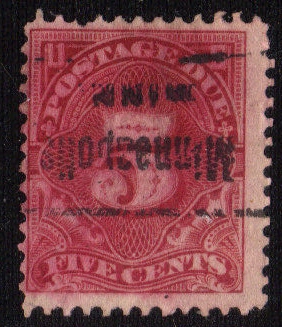 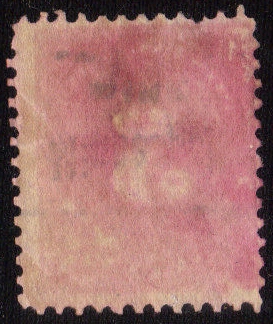 |
|
Send note to Staff
|
|
|
Pillar Of The Community
United States
1414 Posts |
|
|
It is printed on vertical mesh paper with some indications of a watermark, probably single line at the top of the stamp. All of the unwatermarked J31 - J38 stamps I have seen are on horizontal mesh paper making the design slightly wider and shorter giving the stamp more of a square appearance. I haven't seen a formal study of the early Bureau Issue watermarks or the first plates used to print first series of small postage due stamps to confirm this observation.
Also, ink soaked into the paper from this or other stamps would make finding watermarks more difficult. |
|
Send note to Staff
|
|
|
Valued Member
235 Posts |
|
|
Replies: 25 / Views: 6,841 |
|



 Posted 05/14/2017 2:35 pm


