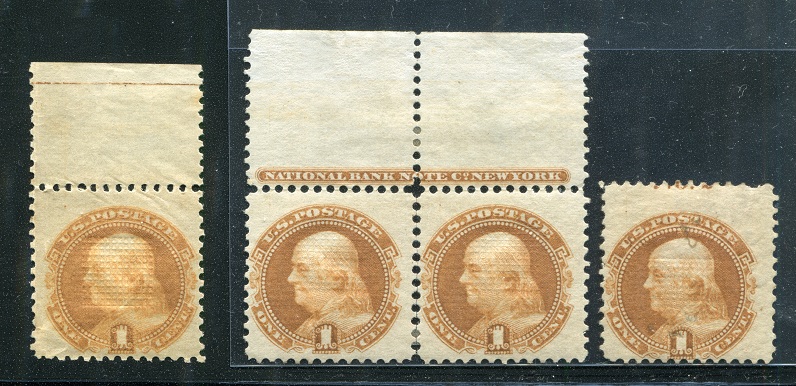
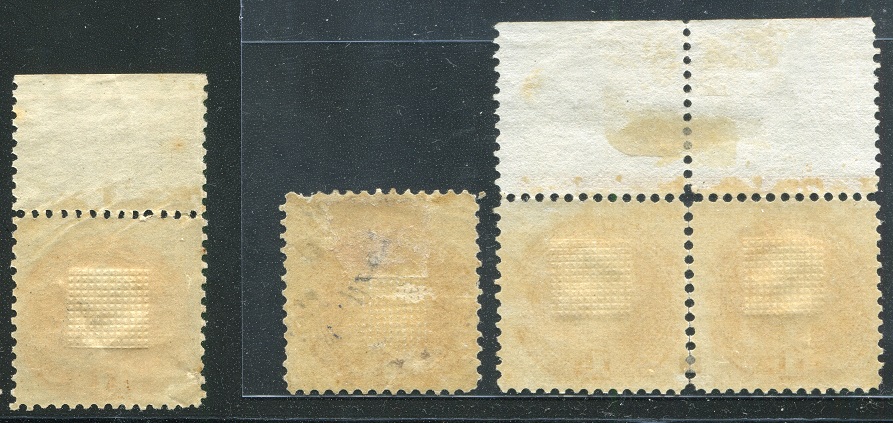
In your picture, the gum on the margin single is lighter and appears less dense than the gum on the other stamps. This kind of difference is reflective of the fact that the formula for the gum on these stamps varied by weather season: lighter for summer, more viscous for winter. That subject came up here not long ago. However, trying to estimate density from an online image is beyond my capability and patience. Nonetheless, there are very real differences. The variance was intentional, the subject of much correspondence between the government and the stamp producers, is can be recognized for its diversity. However, I know of no study that has attempted to arrange issues by the seasonal gum. That might have been easier to do in the 1920s than today.
To my eye the selvage single appears to have denser gum then the pair. I saw the thread mention about the matter of seasonal gum, and believe that explains the differences from different production runs, and IMHO the shade. I do not believe the single is toned, though would defer to those with greater experience, and offer these scans in the study of the fascinating 1869 issue. I believe these are all OG though I have no certs for any of these examples. However the gum differs from a 10cent (116) that I purchased years ago that I believe is a regum owing to its tendency to curl.
I wonder if any of the certificate authorities could identify different printings. I assume that each printing was gummed with that printing, rather than sitting face down in a stack to be gummed weeks or months later?
Disclaimer: While a tremendous amount of effort goes into ensuring the accuracy of the information contained in this site, Stamp Community assumes no liability for errors. Copyright 2005 - 2026 Stamp Community Family - All rights reserved worldwide. Use of any images or content on this website without prior written permission of Stamp Community or the original lender is strictly prohibited. Privacy Policy / Terms of UseAdvertise Here





 Posted 06/29/2017 11:56 pm