| Author |
 Replies: 12 / Views: 1,318 Replies: 12 / Views: 1,318 |
|
|
Valued Member
United States
79 Posts |
|
|
As we continue to rummage thru the collection we inherited we are finding envelopes with stamps on them from all over the world dating 1940's to early 1960's some earlier. They have some pretty neat looking stamps on them, should we remove the stamps from the evelopes to place in our albums or leave them as is and figure out a way to add them to the albums. Thanks Steve 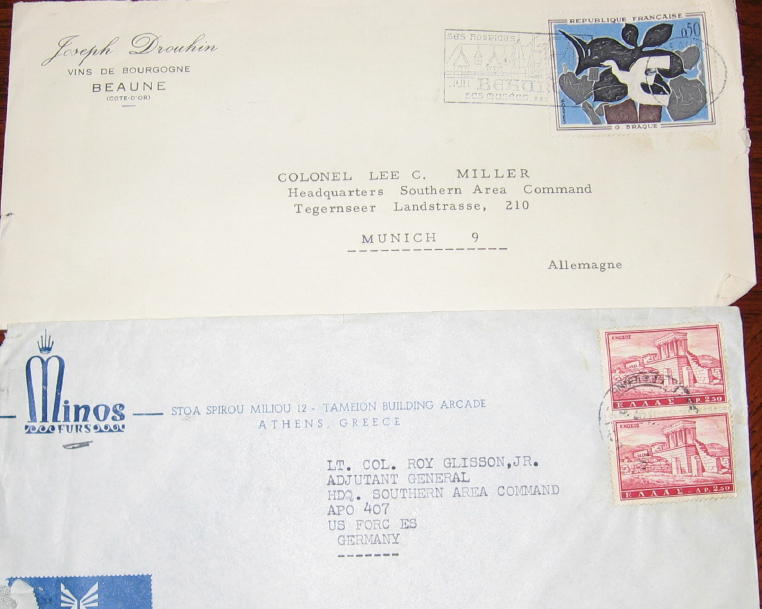 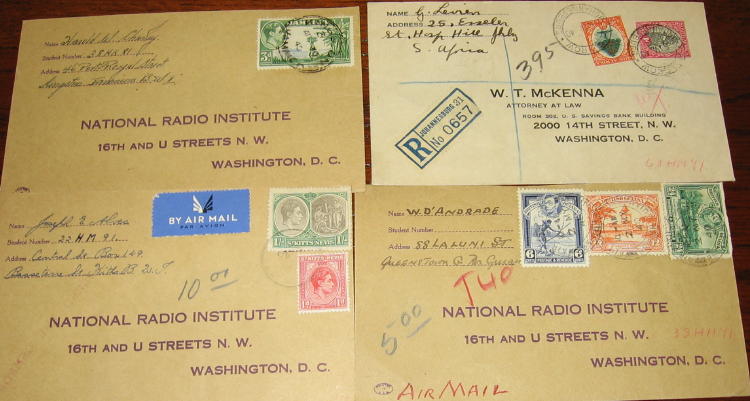 |
|
Send note to Staff
|
|
|
|
|
Valued Member
United States
79 Posts |
|
|
I am a pilot and love all of the early airmail envelopes and stamps we have. Here is one that flew by Trans-Pacific Clipper from the phillipines in April of 1940 before WWII and the Japanese invasion. T 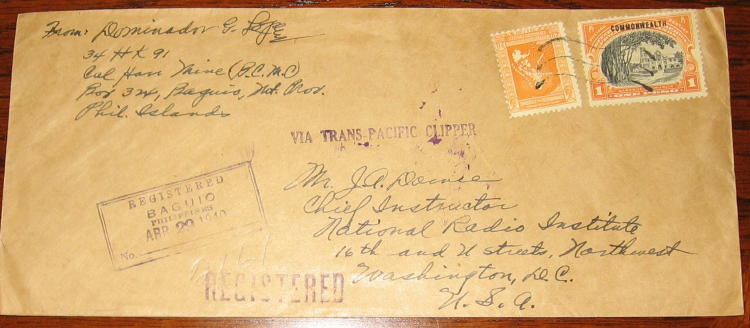 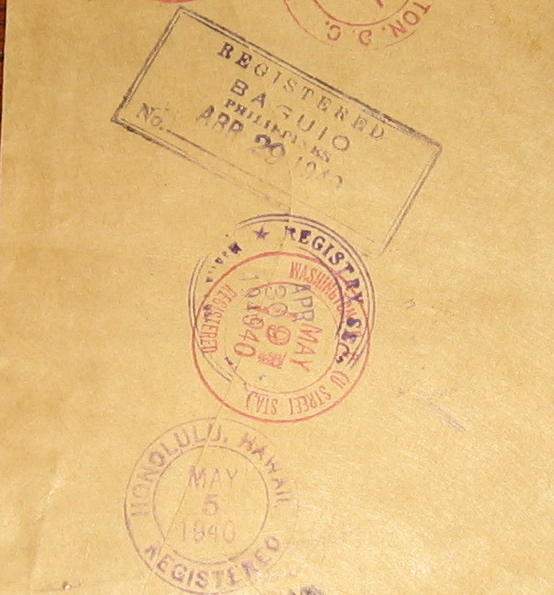 here is a lot of history in stamp collecting and it is really neat to hold some of these things in your hand after so many years. Steve |
Send note to Staff 
|
|
|
Pillar Of The Community
Canada
907 Posts |
|
|
Wow, what beautiful covers!
I would leave them as is -- they are much more impressive as they are, although the crayoned on prices stop them from being truly perfect. |
|
Send note to Staff
|
|
|
Pillar Of The Community
USA
867 Posts |
|
|
Don't soak off the stamp. They are called "covers" and are collectible in their own right. They sell pages made to put your covers in. If you aren't interested in collecting there are people who will buy them.
Butch |
|
Send note to Staff
|
|
|
Valued Member
United States
79 Posts |
|
|
------------------------------------------------------- Quote Wow, what beautiful covers! I would leave them as is -- they are much more impressive as they are, although the crayoned on prices stop them from being truly perfect." Thanks, only a few of them have the crayon on them, most like the Last one I posted do not. the crayon prices look bad. These were in the collection we inherited and I am not sure when My Wifes Mom may have purchased them. It must have been years ago. |
|
Send note to Staff
|
|
|
Valued Member
United States
79 Posts |
|
|
My wife Donna and I got the collection from her Mother and intend to keep it an add to it. She was a WWII Army nurse in the Philippines,North Africa, and the Canal. Her Dad was a career Army Officer and was all over the world back before WWII, then Korea and Europe later. Lots of great stamps and mail from their travels overseas. My wife and I are sixty and just retired and now have time to spend on this wonderful collection.
Steve |
|
Send note to Staff
|
| Edited by War Eagle - 08/21/2009 6:33 pm |
|
|
Pillar Of The Community
Australia
1658 Posts |
|
|
G'Day Steve,with the covers "beauty is in the eye of the beholder" and there will be people who collect covers that won't care to to much if it's been crossed with crayon or not as if it's a desirable cover they will want it  . regards harry  |
|
Send note to Staff
|
|
|
Pillar Of The Community
United States
2972 Posts |
|
|
Those are some nice postal history covers. I would keep them as is, sometimes a stamp on cover is worth more than the soaked off used stamp. There are a lot of areas. I do like Airmail First Flight, Highway post office, and Railroad post office covers. |
|
Send note to Staff
|
|
|
Pillar Of The Community
USA
1881 Posts |
|
|
Hi Steve.....
Nice group of covers.......The crayon cross marks are a postal marking, fairly certain it's in connection with the registered label.......it should be left as is.....the penciled prices could be erased without any loss of value to the cover, just be careful and use a soft eraser like a pink pearl. |
|
Send note to Staff
|
|
|
Pillar Of The Community
USA
3315 Posts |
|
|
You have a fantastic start on a nice eclectic postal history collection. Keep at it and you'll have no end to the fun! |
|
Send note to Staff
|
|
|
Pillar Of The Community
Canada
1755 Posts |
|
|
War Eagle:
The blue cross on the front of the cover indicates that the cover is a Registered mail letter, in the same way you would see red & blue lozenges around the edge of an airmail cover (for quick identification for the purposes of the postal clerk sorting the mail to be despatched).
The blue cross, with crayon was used in our Empire & Commonwealth, through to the 1950's. Registered mail postal stationery of the era has the blue cross printed on the front of the envelope, along with the indicia. The blue cross is to represent a blue string, from the early days of the Royal Mail, when Registered letters were bundled together with blue-coloured string.
Those National Radio Institute covers are are really nice... real commercial mail of the KGVI-era of our Empire & Commonwealth that I specialise in. Very Nice!!
Hope this helps,
David
|
|
Send note to Staff
|
|
|
Pillar Of The Community
Canada
907 Posts |
|
|
Yep, the blue crosses are for denoting Registered mail. I believe the "blue cross" for Registered Mail is still in use -- I know they still use it in Ireland, anyway... It's the numbers I was talking about, everyone -- they look to be crayon to me, but maybe I'm wrong. They appear to be some sort of price, and definitely aren't postage notations. 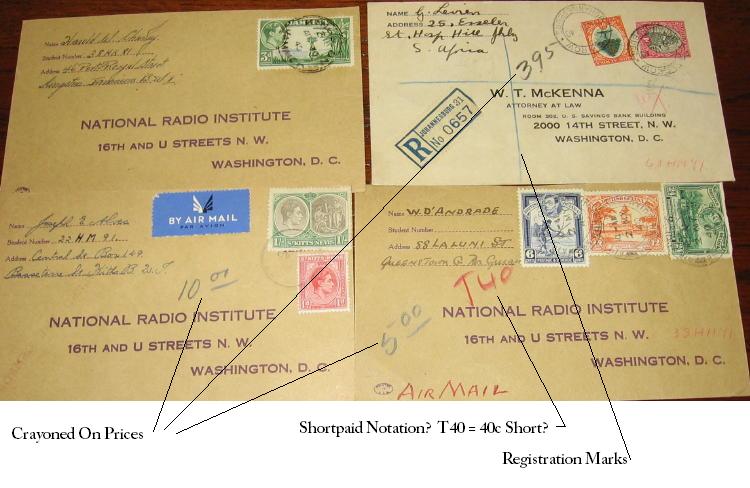 |
|
Send note to Staff
|
|
|
Pillar Of The Community
Guatemala
1500 Posts |
|
|
I'll chime in on the recommendation to keep them on the envelope. You are wise to ask before deciding. I wish I had kept some of my envelopes with stamps intact. Once You soak the stamp off the cover, you can't go back. |
|
Send note to Staff
|
|
| |
Replies: 12 / Views: 1,318 |
|



 Posted 08/21/2009 5:56 pm


