When I applied for my aviator Marty asked what the "Universal Postage" meant and then David asked for some more informastion / images etc. This stamp is one of my specilties so I thought I'd do a little series.
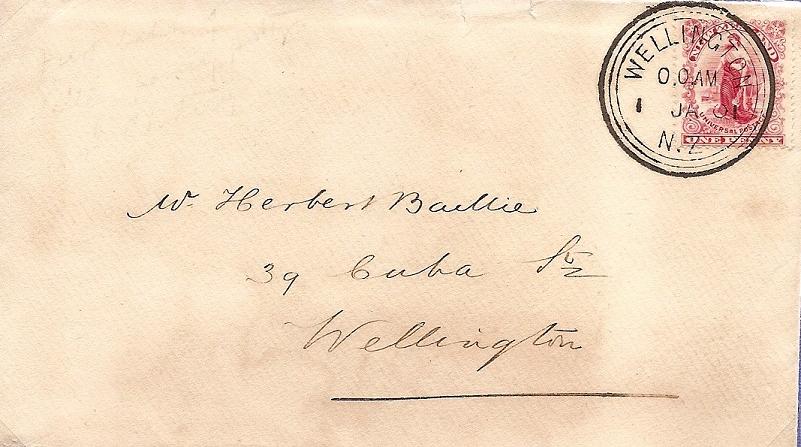
First day cover
On 1st January 1901 New Zealand, having gained reciprocal recognition throughout most of the British Empire and many other countries adopted the penny universal postage rate. Mail that was previously 2 ½ pence per ounce to England and 2 pence internally both now were only 1 penny. The design, commissioned by the London printers Waterlow & Sons, was by Guido Bach. A symbolic figure given the name "Zealandia" is standing beside a globe. In the distance a steamer mail ship is passing Mt. Taranaki.
From the 1st January 1901 to 1st December 1908 sixteen different plates and 5 papers were used to print the Penny Universal.
The stamp was requested on the 30th August 1900 giving less than 4 months for the plates to be laid down, one million stamps to be printed and shipped to New Zealand. Initially four plates were made by Waterlow & Sons, but one of them (the London plate) became badly buckled on its journey to New Zealand. The government printers asked Waterlow & Sons to lay down a fifth plate. The three undamaged plates were used extensively from 1901 to 1904; they have been given the name "Local Plates." The new fifth plate, received in New Zealand April 1902, was kept in reserve and only used when necessary; it has been given the name of the "Reserve" plate.
The first batch of one million stamps was printed in London using the first plate that was completed. They were shipped to New Zealand in batches of 40,000, 60,000 and then 900,000 via three different ships getting to New Zealand early and mid December 1900. A second million was printed and shipped with the now four completed plates arriving January 1901. The paper used had no watermark and the perforations varied from 12 to 16.
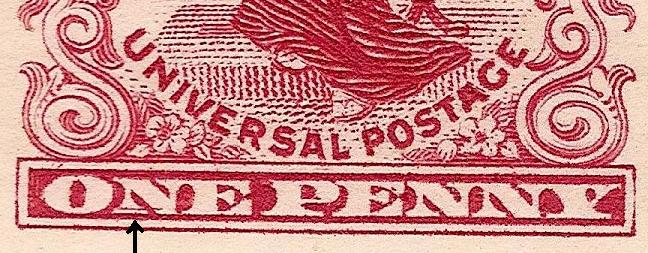
Here is a small re-entry from Row 3 number 22
Until next time
Bruce





 Posted 11/03/2009 4:23 pm


