Quote:
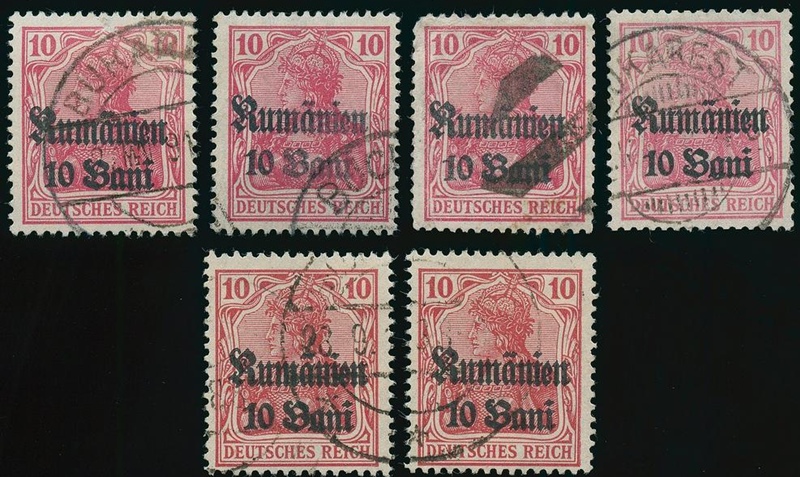
My primary concern is properly identifying Michels # 86(I)d, 86(II)e, and 86(II)g. for obvious reasons.
Considering the CV of those issues (€3,000 - €11,000 for used), it's highly unlikely that's what you have.
Quote:
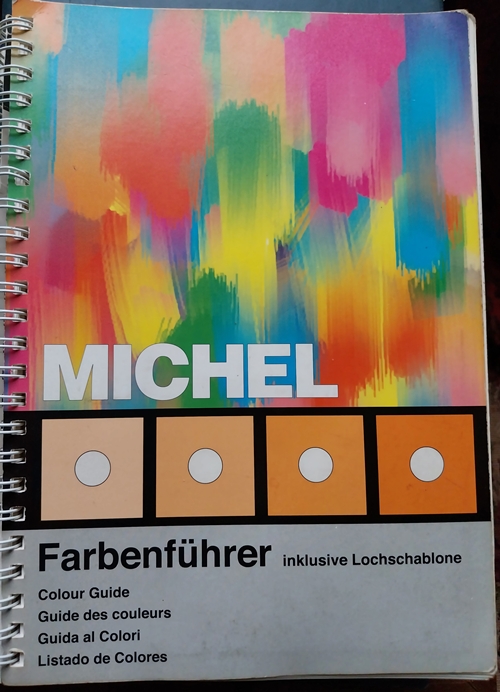
I have a copy of Michels Farbenfuhrer color guide.
How old is your color guide? They changed the color names and reference numbers at some point, so older color guides won't match the current color names.
Quote:
*Minr# 86(I)d blackish rose to to dark rose red (June 25,1913)
-Michels color guide does not list the above stated colors.
Same question as above, because those are in the current color guide at p. 41.
Quote:
I have the same issue for 86(II)g. where red vermillion is not listed
In the current color guide, it's at p. 35.
Quote:
Is it safe to say that any cancel on the 10pf Germania that dates from (15.10.18) and onward are guaranteed to identify as either 86(II)e or a 86(II)g as a result of a 3 to 4 year gap from the other 10 pf varieties in the series?
No. Still far more likely to be the common varieties.
Quote:
*Minr # 86(II)g using an UV light is claimed to identify this variety. Exactly how or what am I supposed to see?
With these issues, it's very difficult to ID a single stamp without being able to place it next to known exemplars, since there are so many closely-related varieties. And I certainly wouldn't believe I had an 86 II g unless an expert was willing to certify it.
To give you an example from another red issue – MiNr. 47 has 11 shades, all of which fluoresce differently under UV light. With multiples, it's easy to see they're different.
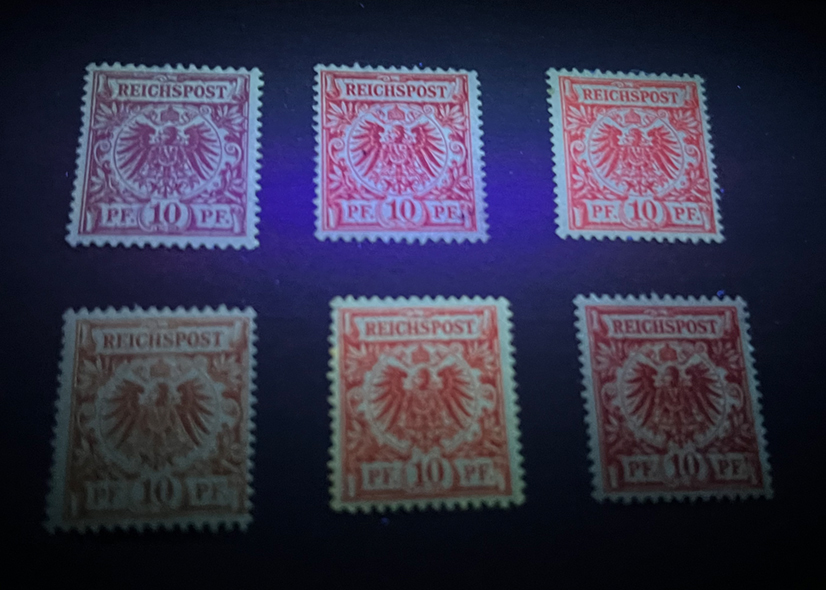
But it's still very difficult to ID which is which without sending them to an expert who has exemplars of all the shades and experience in IDing them.





 Posted 11/16/2023 3:42 pm