Quote:
Stamps may have different watermarks, perforations, and / or have been printed by different techniques.
Fortunately, for ease of identification, your stamp is simple to identify because there are no watermarks, no complicated perforation rate differences, and all are printed by the same method.
This issue came in sheets, booklets and coils. The booklets are coils are easily differentiated by the straight edge arrangements. (Yes, the coils were perforated at a different rate before any yahoo corrects me, but they are visually diferent with their edges.) Your stamp being perforated on all four sides, can
only be Scott 720, without any need for closer study.
As for commonness, here are approxmately 1600 used copies from one of my junk boxes - identical to yours. These *might* be worth the cost of postage to ship them to a specialist looking for oscurce plate varieties, but barely.
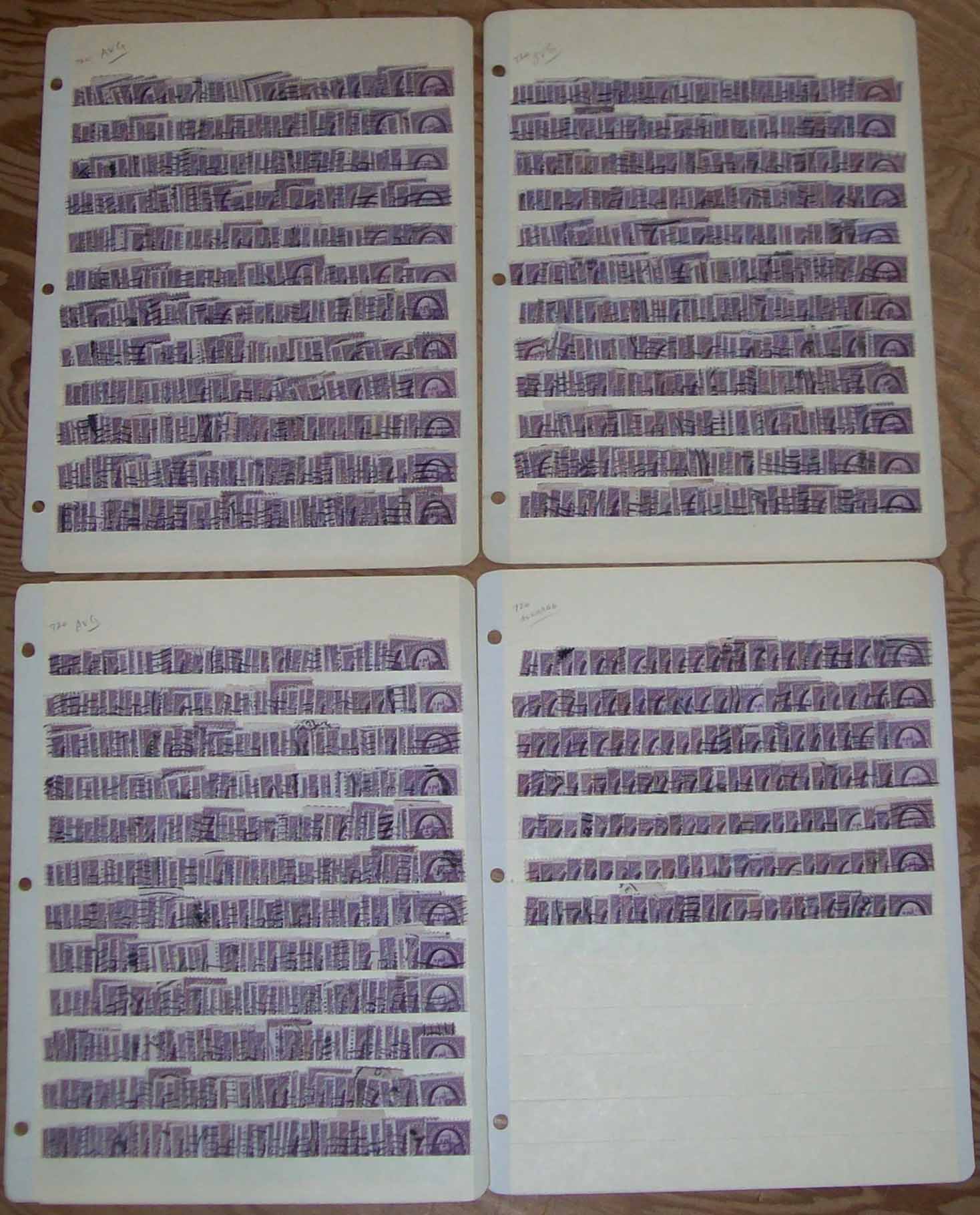
The U.S. being a large and literate country, it produced most of her stamps in large quantities. Those stamps paying the basic single letter and postcard rates were often printed in the billions, yes, with a B. Yes, there are rarities, but they are just that, rare.





 Posted 12/26/2023 07:21 am


