| Author |
 Replies: 60 / Views: 24,388 Replies: 60 / Views: 24,388 |
|
|
|
Valued Member
Greece
233 Posts |
|
|
Well, here is the 7k of the same 1884 issue as your original stamp with the background INVERTED ("groundwork inverted" as per Scott). 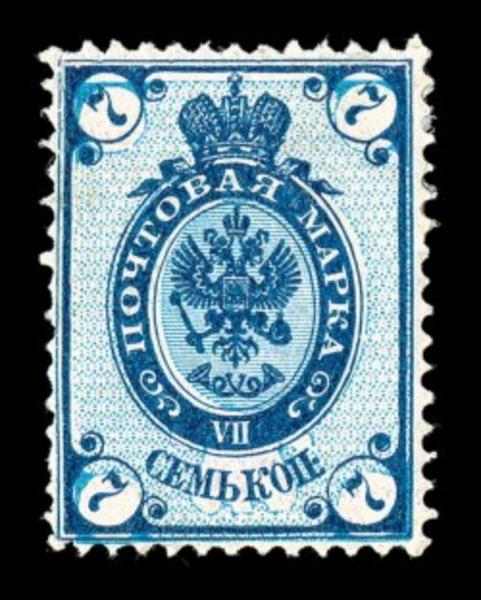 The example of this rarity is from a Cherrystone auction and I think it is quite evident how to distinguish it! |
Send note to Staff 
|
| Edited by vasia - 09/09/2017 01:32 am |
|
|
Pillar Of The Community
United States
3568 Posts |
|
|
Took me a minute but I finally saw the crown outline on the bottom. Going to my stamps to check, thanks so much! Jeff |
|
Send note to Staff
|
|
|
Bedrock Of The Community
Australia
38679 Posts |
|
|
 Welcome to the SCF family, vasia. Finally we have an example, great work  Thanks for posting, and I agree it looks fairly obvious. |
|
Send note to Staff
|
|
|
Valued Member
Greece
233 Posts |
|
|
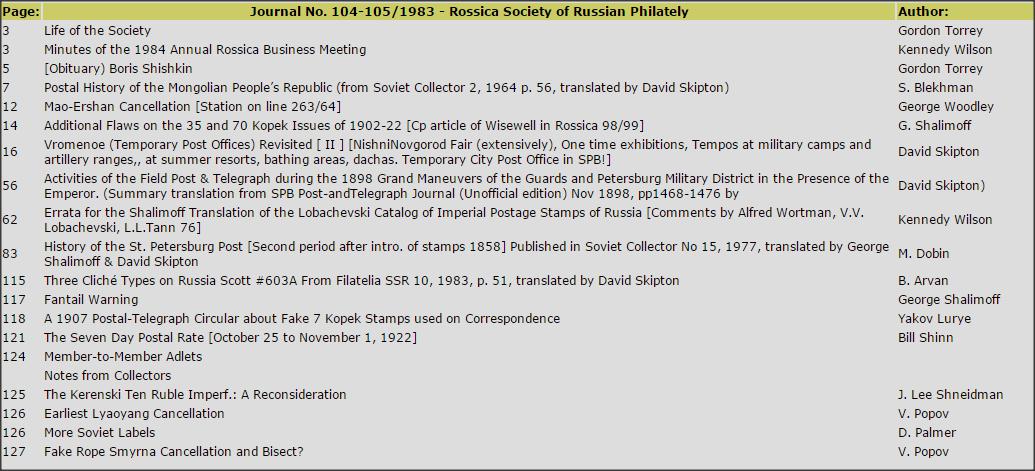
Thank you, Rodney! There is another type of inverted groundwork on Imperial Arms which poses problems of identification. It exists on the 4k and the 10k values of the 1902-05 issue on vertically laid paper (Scott 57Cg and 60a). This is actually the variety discussed in the excerpt you provided from the Rossica Journal. Unfortunately, the method suggested therein is not the easiest (see the subsequent article by R. Sklarevski). Below is the way to distinguish normal from inverted background: First the normal background: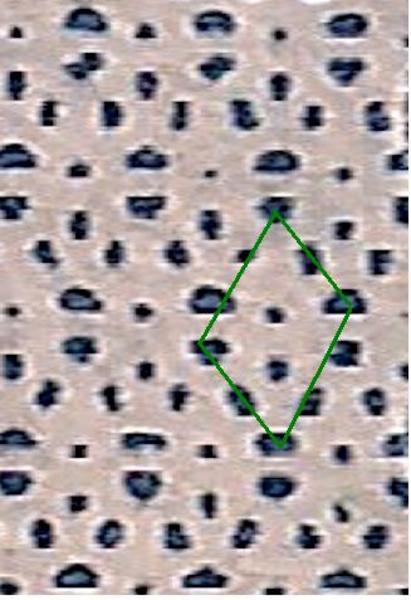 The 2 dots inside the rhombus are in the middle and below the median. Inverted background: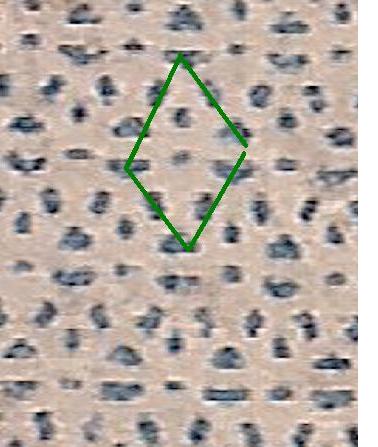 The 2 dots are in the middle and above the median. The 10k stamp with inverted background is relatively common, while the 4k is scarce ($4.000 in Scott 2009). Please note that this method CANNOT be used to identify inverted background/groundwork stamps of other issues.I hope this sheds some light.  |
|
Send note to Staff
|
| Edited by vasia - 09/11/2017 11:59 am |
|
|
Bedrock Of The Community
Australia
38679 Posts |
|
|
Yep! I got you,
thanks Vasia,
that has to be one extreme fly speck indication,
although it points to a bigger issue.
I was a bit troubled that the verbal explanation
and the image of the inverted background
did not seem to fit, but was too lazy to chase it up.
I'll drag out my russian and check for the
"dots above the median"
Thanks for illuminating a tricky but fascinating trick.
|
|
Send note to Staff
|
| Edited by rod222 - 02/19/2011 07:28 am |
|
|
Bedrock Of The Community
Australia
38679 Posts |
|
|
Actually, Vasia whilst we have your attention,
there are a number of curiosities in early russian,
perhaps we can test your knowledge :)
The background design being discussed here
is rather quite fine when taking into consideration typography
one has to really wonder how they achieved that.
There was a lack of aniline colours during 1915-1917
one who was curious may ponder that one.
The watermark in the 1858 issue is directly opposite normal
watermark methods and is created by thickening the paper.
hence the wmk is not apparent under ronsonol.
One has to also wonder how they did that .
|
|
Send note to Staff
|
|
|
Valued Member
Greece
233 Posts |
|
|
You caught my weak spot there, Rod: papers and their methods of manufacture. I am afraid I cannot be of much help here.  As for the aniline colors, Russia (as well as England and others) imported most of their supplies from Germany. So the onset of World War I in 1914 brought there supplies to a halt. |
|
Send note to Staff
|
|
|
New Member
Bahamas
2 Posts |
|
|
Vasia
can you show me of an example of inverted groundwork in the orange 1 KOP and the redbrown 5 Kop?
There seems to be 2 Dots inside the Rhombus One large at one end and one small at the other end. If the large dot is at the top end is this the regular issue?
Thanks |
|
Send note to Staff
|
|
|
Bedrock Of The Community
Australia
38679 Posts |
|
|
Quote:
As for the aniline colors, Russia (as well as England and others) imported most of their supplies from Germany. So the onset of World War I in 1914 brought there supplies to a halt.
That is surprising, I have lost my notes on aniline, but as I recall, it was discovered in England from Coal tar, so I wouldn't have thought England would have imported the colour. |
|
Send note to Staff
|
|
|
Bedrock Of The Community
Australia
38679 Posts |
|
|
Pillar Of The Community
France, Metropolitan
3756 Posts |
|
|
Bedrock Of The Community
Australia
38679 Posts |
|
|
Whoa! Nice work Perf12.
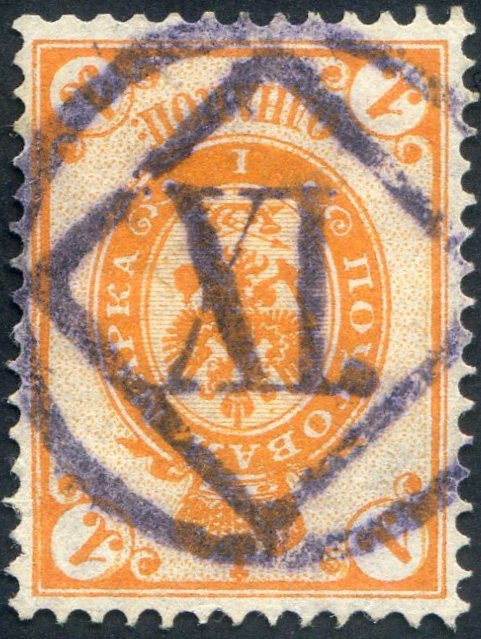
Mine: A screaming FORGERY Postmark. (That forger was a real fustilarian)
It looked dodgy from the start, colour ink...too well centred etc.
see below.
Thanks for your efforts.
|
|
Send note to Staff
|
| Edited by rod222 - 04/07/2017 9:53 pm |
|
|
Bedrock Of The Community
Australia
38679 Posts |
|
|
Pillar Of The Community
United Kingdom
3218 Posts |
|
|
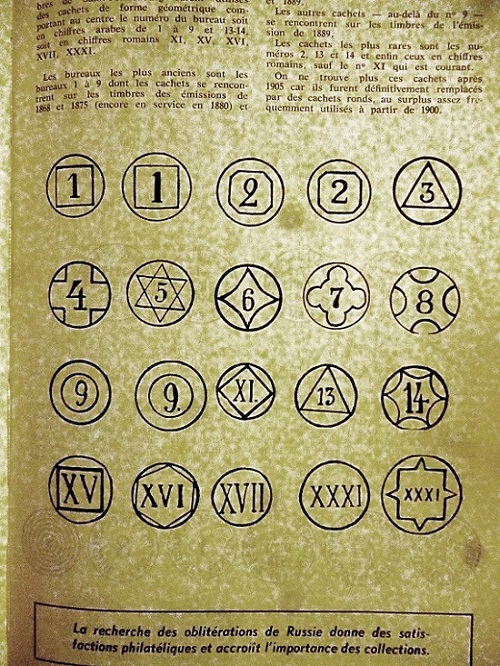
Hi Rod, I see no strong reason why your St Petersburg "XI" postmark isn't genuine.  I have two "XI" postmarks that aren't all that different to yours. The clearer of the two is shown in a previous post of mine on page one of this topic. The French text shown by perf12 notes that the numbers in Roman numerals are rarer except for XI which is common. References such as the one above and also Russian Postmarks are drawings that not correct in all details. There were also multiple handstamps which differed in minor details. |
|
Send note to Staff
|
Nigel |
| Edited by nigelc - 04/07/2017 6:56 pm |
|
|
Bedrock Of The Community
Australia
38679 Posts |
|
|
G'day Nigel, right, thank you very much. I'll amend my previous post, and mount my stamp, that increases my collection, up to 2 items. |
|
Send note to Staff
|
|
|
Replies: 60 / Views: 24,388 |
|



 Posted 02/18/2011 11:33 am