| Author |
 Replies: 10 / Views: 1,851 Replies: 10 / Views: 1,851 |
|
|
Pillar Of The Community
Australia
2156 Posts |
|
|
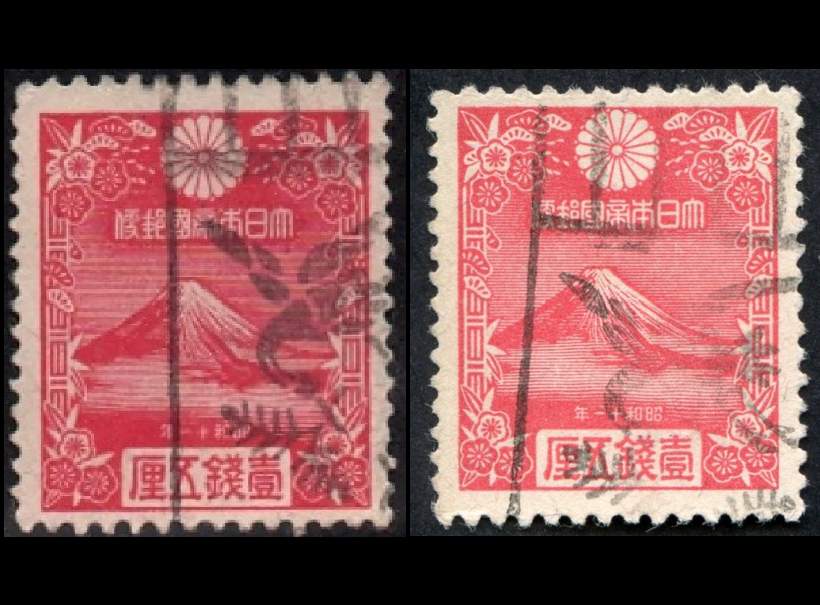
Because this doesn't have a numeral on it, I'm assuming it's not a regular postage stamp. Does anyone know what it is? It also has an interesting cancel. It seems to be a roller cancel with a depiction of some kind of vegetation on it. Information on this would also be appreciated!  |
|
Send note to Staff
|
|
|
|
|
Pillar Of The Community
United Kingdom
3220 Posts |
|
|
Pillar Of The Community
Australia
2156 Posts |
|
|
Bedrock Of The Community
Australia
38679 Posts |
|
|
Pillar Of The Community
Australia
2156 Posts |
|
|
Apparently, this was a special New Years issue. I guess, then, rod222, that there was also a spccial New Years cancel in use at the same time. |
Send note to Staff 
|
| Edited by jimjamtwo - 02/26/2011 5:49 pm |
|
|
Pillar Of The Community
Australia
2156 Posts |
|
|
While on things Japanese, does anybody know why a Japanese stamp issued in 1949 would have a cancel that reads 25.3.20? Is there a second calendar in use in Japan that appears on cancels? 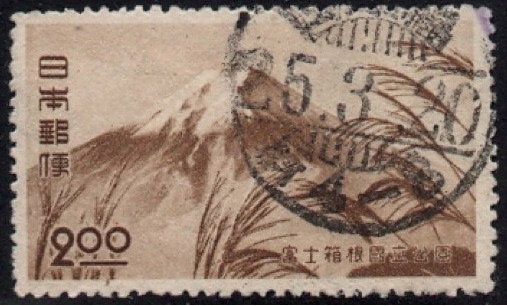 |
|
Send note to Staff
|
|
|
Bedrock Of The Community
Australia
38679 Posts |
|
|
Japanese dates are based on eras,
each representing the reign of an emperor.
Yours will probably be the "showa" era. |
|
Send note to Staff
|
|
|
Pillar Of The Community
Australia
2156 Posts |
|
|
Well, I thought that something like that would be a possibility. But this seems to be a 1939 cancel on a 1939 stamp! 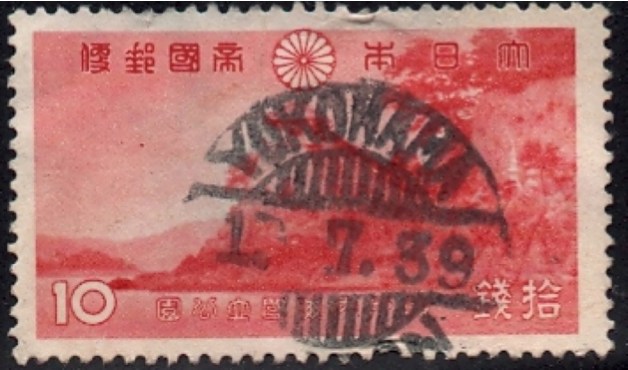 It would seem, then, that two systems are used concurrently. |
|
Send note to Staff
|
|
|
Pillar Of The Community
United States
7106 Posts |
|
|
1939 is year 14 in the Japanese Showa calendar. Reading dates on Japanese cancels can be tricky, because there is variability between the formats used. International mail, especially, is commonly found with Western date formats. A comb cancel with "Yokohama" and "Japan" would have to be international. (I assume...) |
|
Send note to Staff
|
|
|
Pillar Of The Community
Australia
3547 Posts |
|
|
The Japanese eras, as they affect stamps, anyway are:
Meiji 1868-1912 (Meiji actually came to the throne in 1866, but for historical reasons, the count begins in 1868.)
Taisho 1912-1926
Showa 1926-1989
Heisei 1989-
As the Japanese count inclusively, to simplify the calculations, I always start counting one year earlier. So, I count Showa years from 1925, and Heisei years from 1988.
You will find overlap: 1989 was Showa 64 until the Emperor died, when it became Heisei 1. (And for the historically minded, Showa acted as regent for his father Taisho for some years before Taisho died, because the poor man was completely mentally unbalanced.) |
|
Send note to Staff
|
|
|
Pillar Of The Community
Australia
2156 Posts |
|
|
Thanks for helping to clear up the confusion, guys.
A follow-up question, if I may: do any general considersations make cancels more attractive to collectors? Are there are years of particular reigns that are sought after, for example?
|
|
Send note to Staff
|
|
| |
Replies: 10 / Views: 1,851 |
|




 Posted 02/26/2011 08:17 am