Old thread. Last Post 2012.
Update:
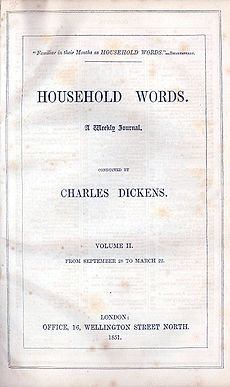
Query the article as by Charles Dickens,

I found the Ireland fire occurred in 1921
Mr. Dickens had well left us.
http://ljs.academicdirect.org/A07/g...hp?htm=09_16THE GREAT BRITISH GUM SECRET.
IN the course of inquiries, by which we were enabled to draw up the article on Queen's
Heads (vol. iv., p. 510), we were shown, in the " adhesive " department of Messrs.
Perkins and Company's establishment, several large barrels filled with a fine powder, of a
dark straw colour.
This powder is, we were told, the basis of the adhesive paste with which the backs of
postage labels are coated. "It is composed of 1" we asked, helping the tip of the tongue
with a taste of it. " That," said our cicerone, "was a secret." We have since learnt the
mighty secret. In journeying from Dublin westward, by the banks of the Liffey, we pass
the village of Chapelizod, and hamlet of Palmerstown. The water power of the Liffey has
attracted ma nufacturers at different times, who, with less or greater success, but,
unfortunately, with a general ill success, have established works there.
Papermaking, starchmaking, cottonspinning and weaving, bleaching and printing of
calicoes, have been attempted. But all have been in turn abandoned, though occasionally
renewed by some new firm or private adventurer. Into the supposed causes of failure it is
not here necessary to inquire. The manufacture of starch has survived several disasters.
The article British gum, which is now so extensively used by calicoprinters, by makers up
of stationery, by the Government in pos tagestamp making, and in various industrial arts,
was first made at Chapelizod. Its origin and history are somewhat curious. The use of
potatoes in the starch factories excited the vehement opposition of the people, whose
chief article of food was thus consumed and enhanced in price.
These factories were several times assailed by angry multitudes, and on more than one
occasion set on fire by means never discovered. The fires were not believed to have been
always accidental. On the fifth of September, 1821, George the Fourth, on his return to
England from visiting Ireland, embarked at Dunleary har bour, near Dublin. On that
occasion the ancient Irish name of Dunleary was blotted out, and in honour of the royal
visit that of Kingston was substituted.
In the evening the citizens of Dublin sat late m taverns and at supper parties. Loyalty and
punch abounded. In the midst of their revelry a cry of " fire " was heard. They ran to the
streets, and some, following the glare and the cries, found the fire at a starch manufactory
near Chapelizod. The stores not being of a nature to burn rapidly, were in great part saved
from the fire, but they were so freely deluged with water, that the starch was washed away
in streams ankledeep over the roadways and lanes into the Liffey. Next morning, one of
the journeymen blockprinters whose employment was at the Palmerstowu printworks, but
who lodged at Chapelizod woke with a parched throat and headache.
He asked himself where he had been. He had been seeing the King away ; drinking, with
thousands more, Dunleary out of, and Kingston into, the map of Ireland. Presently, his
confused memory brought him a vision of a fire : he had a thirsty sense of having been
carrying buckets of water ; of hearing the hissing of water on hot iron floors ; of the
clanking of engines, and shouts of people working the pumps ; and of himself tumbling
about with the rest of the mob, and rolling over one another in streams of liquefied wreck,
running from the burning starch stores.
He would rise, dress, go out, inquire about the fire, find his shopmates, and see if it was
to be a working day, or once again a drinking day. He tried to dress ; but a hoo ! his
clothes were gummed together. His coat had no entrance for his arms until the sleeves
were picked open, bit by bit ; what money he had left was glued into his pockets ; his
waistcoat was tightly buttoned up with what 1 Had he been bathing with his clothes on, in
a sea of gumarabic that costly article used in the printworks 1
This man was not the only one whose clothes were saturated with gum. He and four of his
shopmates held a consultation, and visited the wreck of the starch factory. In the roadway,
the starch, which, in a hot, calcined state, had been watered by the fire engines the night
before, was now found by them lying in soft, gummy lumps. They, took some of it home ;
they tested it in their trade ; they bought starch at a chandler's shop, put it in a fryingpan,
burned it to a lighter or darker brown, added water, and at last dis covered themselves
masters of an article, which, if not gum itself, seemed as suitable for their trade as
gumarabic, and at a fraction of the cost.
It was their own secret ; and, could they have conducted their future proceedings as
discreetly as they made their experiments, they might have realised fortunes, and had the
merit of practically introducing an article of great utility one which has assisted in the
fortunemaking of some of the wealthiest firms in Lancashire (so long as they held it as a
secret), and which now the Govern ment of the British empire manufacture for
themselves. Its subsequent history is not less curious than that just related. Unfortunately
for the operative blockprinters, who discovered it, their share in its history is soon told. It
is said that six of them subscribed money to send one of their number to Manchester





 Posted 07/05/2011 4:27 pm