| Author |
 Replies: 22 / Views: 20,237 Replies: 22 / Views: 20,237 |
|
Pillar Of The Community
Canada
617 Posts |
|
|
Hey Gang, Wow the small queens issue can be frustrating to sort out  . With the 3,5,6 and 10 it's so tough telling apart the 36-40's apart from the 41-45's. I must be getting old, but man it's getting hard to tell the shades of colour apart. You put it under my SG color guide, and first I'll swear it's one shade, but then when I compare to the other shades it might be, it looks like them. Time to give up for the night, and look at them again tomorrow  This batch is certainly nice enough though  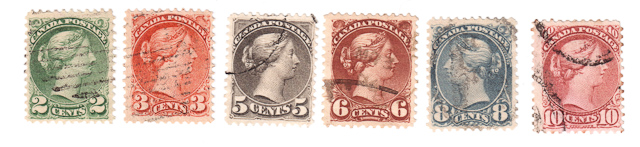 |
|
Send note to Staff
|
|
|
|
|
Pillar Of The Community
United States
7104 Posts |
|
|
Quote:
This batch is certainly nice enough though You can say that again. Quote:
This batch is certainly nice enough though  |
Send note to Staff 
|
|
|
Rest in Peace
Canada
6750 Posts |
|
|
Nice group of stamps indeed. I think the best way to judge colour is to have multiple copies of a stamp in some of it's varying shades of colour at hand. That makes it much easier to see differences or variations. Look at the solid colour above and behind the Queen's head. Even then, I have saved some samples from ebay from the same seller, and flipping through them it seems like the same colour is called different names at times. A list of colour guide books or charts on the Royal Philatelic Society of Canada's web site: http://www.rpsc.org/reference/lit/lit_colour.htmThey attribute the pictures for the books / pamphlets to Saskatoon Stamp Centre so: http://www.saskatoonstamp.com/ |
|
Send note to Staff
|
|
|
Pillar Of The Community
Canada
2277 Posts |
|
|
I'll second the GRRRRRRRRRRRR with these beauties. The 3 cent value is by far the most hair pulling shade variance probably in all philatelic circles. I guess it could be argued but with the pigments used they lean heavily to oxidization so even when you make a match it may not be what was originally printed. Plus the printings bounced from Ottawa to Montreal and back again . Here is one so oxidized its hard to believe it was at one time a shade of orange. I agree with Puzzler that just above vics head and the background of the upper text frame is best for comparison.  |
|
Send note to Staff
|
|
|
Pillar Of The Community
Canada
669 Posts |
|
|
Just a small range of shades I had prepared and readily available. This is a very tough and frustrating subject, not only on the Canadian Queens, but many other issues as well!  Good Luck and have fun! Skilo54 |
|
Send note to Staff
|
|
|
Rest in Peace
Canada
5701 Posts |
|
|
If the Small Queen's were issued today, #41, 42, 43 and 45 would not be given major numbers by Scott Catalog, they would be minor numbers. The stamps really are minor varieties for most collectors but are of great specialist interest. The Montreal printings came about after a fire damaged the British American Banknote Co. plant in Ottawa in 1870. Here is my take on Small Queen identification, excluding shades: 1) First Ottawa Printings: (1870-1873) 1c, 2c, 3c 6c - Perforation: 11.75 to 11.85 all around
- Paper: Thin to thick white wove paper, smooth and usually with a fine horizontal or vertical grain. Smooth to the touch.
- Plate dot in lower left margin on all stamps except those in the first vertical column.
2) Montreal Printings: (1873-1889) 1/2c, 1c, 2c, 3c, 5c, 6c, 10c - Perforation: 11.5 x 11.75 to 12, 11.75 x 12, 12 all round, and 12 x 12.25
- Paper: Thin to thick wove paper, creamy or yellowish in colour with a coarse grain.
- Plate dot in lower left margin on all stamps except those in the first vertical column, on the early printings up to the early 1980's. No dot afterwards.
3) Second Ottawa Printings: (1889-1997) 1/2c, 1c, 2c, 3c, 5c, 6c, 8c, 10c - Perforation: Usually 12 all round, occasionally 12 x 12.5
- Paper: Poor thin quality paper with an indeterminate grain, it resembles rag stock, and stamps often show an embossing effect on the back. Rough to the touch.
- No Plate dots
Any perforations common to more than one type should be destinguishable by the paper. Then you can get into shades which have many even within each printing... It is up to the collector to draw the line. This information came from John Hillson's RPSC pages, http://www.rpsc.org/Library/SmallQu...l_Queens.htm and information I have gathered over the past year. I will see what I can find for scanning. Update: Jan 25, 2012: Plate dot info added correction: perf in first Ottawa printing, I had 12.85  Update: first vertical row changed to column. |
|
Send note to Staff
|
|
| Edited by BeeSee - 02/08/2012 01:17 am |
|
|
Pillar Of The Community
United States
6756 Posts |
|
|
This thread will come in very handy when I dare to do the final ID on my Canadian Queens! Special thanks to BeeSee for the 1-2-3 steps and the link! k |
|
Send note to Staff
|
|
|
Pillar Of The Community
United States
7104 Posts |
|
|
Yes, I agree. Are the First Ottawas potentially compound? Or is the measurement expected to be consistent all 'round? If I should go look this up, just say so.  Thanks, Bee. |
|
Send note to Staff
|
|
|
Rest in Peace
Canada
5701 Posts |
|
|
I do not think the perfs are compound, but it does need further investigation! |
|
Send note to Staff
|
|
| Edited by BeeSee - 08/24/2011 12:55 am |
|
|
Rest in Peace
Canada
5701 Posts |
|
|
I have pulled two examples of the 3c small queens from my collection, and for the first time ever attempted to identify them. I took two that the paper appeared different. I wanted to get an accurate measurement of perforations as possible, so I scanned the stamps 600dpi and inserted them into AutoCAD. I used the AutoCAD dimension tool to select points on the center of the perforations that were not damaged. Then I counted the amount of full holes in the distance, (horizontal and vertical) and did the math. Perforations are measured by the number of holes per 20mm, so (for example) I took 9 perfs over 15.07 then multiplied by 20mm to get 11.94 for the horizontal perfs in stamp No. 1. Stamp 1, front and back. 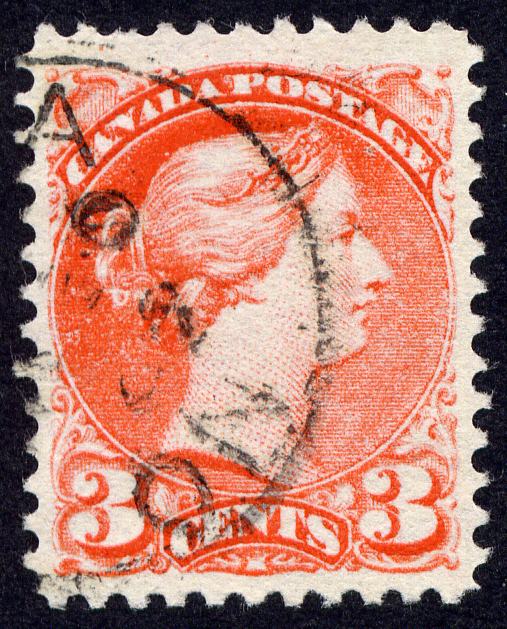 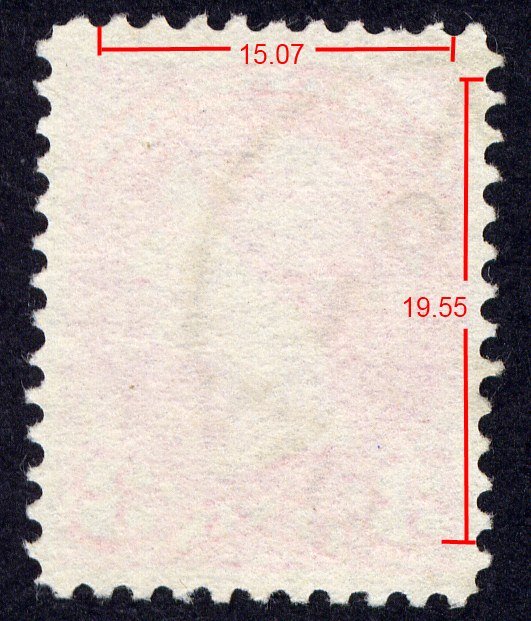 Perforated 11.94 x 12.27 (round to 12 x 12.25) Paper: seems white (or creamy)and smooth Stamp 2, front and back 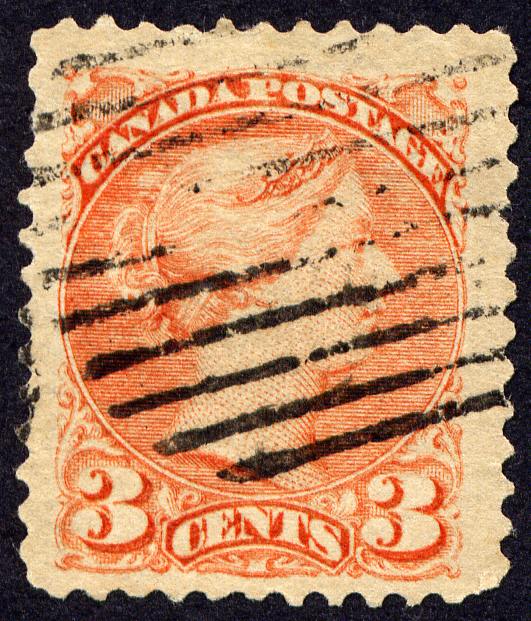 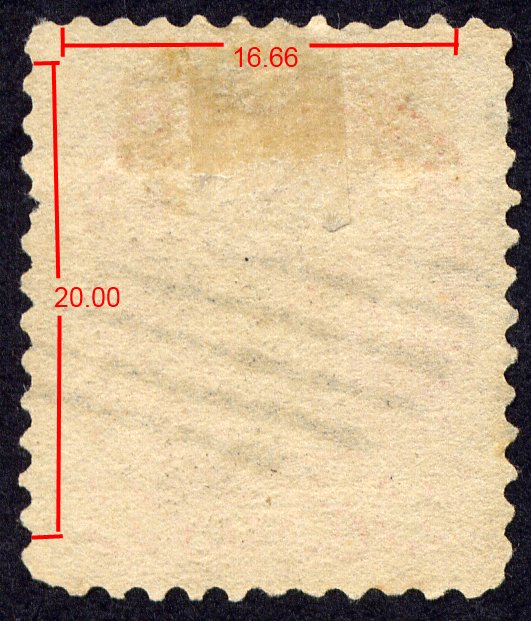 Perforated 12.00 x 12.00 (Almost exactly, no rounding) Paper: seems coarse and yellowish So what stamps do I have? Well at first I thought stamp no. 1 was the first Ottawa print, being on white (medium thickness) paper, but it should not be perf 12 x 12.25. So perhaps it SEEMS white compared to the 2nd stamp, which is more yellowish. So is No 1 on creamy paper? If so, and with the perforation, it would be a Montreal printing. Stamp No. 2 does appear to be on poor yellowish paper, and being perf 12, I would say it is a second Ottawa printing. Thoughts anyone? |
|
Send note to Staff
|
|
| Edited by BeeSee - 08/30/2011 3:16 pm |
|
|
Pillar Of The Community
Canada
617 Posts |
|
|
Pillar Of The Community
Canada
1084 Posts |
|
|
BeeSee: nice bright images! Would love to see someone more knowledgeable than me take a stab at the id. |
|
Send note to Staff
|
|
|
Rest in Peace
Canada
6750 Posts |
|
|
When there is a red dot under the left hand side numeral 3 that means it is a certain printing which forget now. DJD mentioned in a while ago now. |
|
Send note to Staff
|
|
|
Pillar Of The Community
Canada
2277 Posts |
|
|
Not that this will help much but I took all my 3 centers that leaned towards the copper/ Indian red shades and ironically found most to be 12x 12.25 which definatly puts them into either Montreal or later ottawa's . I know from an image perspective the first printings are far cleaner crisper and the later gets pretty messy with little quality control. Not sure if many other stamps have been picked apart and scrutinized as these yet the more we know the harder it gets. |
|
Send note to Staff
|
|
|
Rest in Peace
Canada
5701 Posts |
|
|
You are right Puzzler, it is either a first Ottawa or Montreal printing. Here is an example I have with a dot, you can see it at the bottom of the first perf on the left. The stamp is perf 12 x 12.25, but I am still having trouble identifying paper types.  .........  But it must be a Montreal printing. 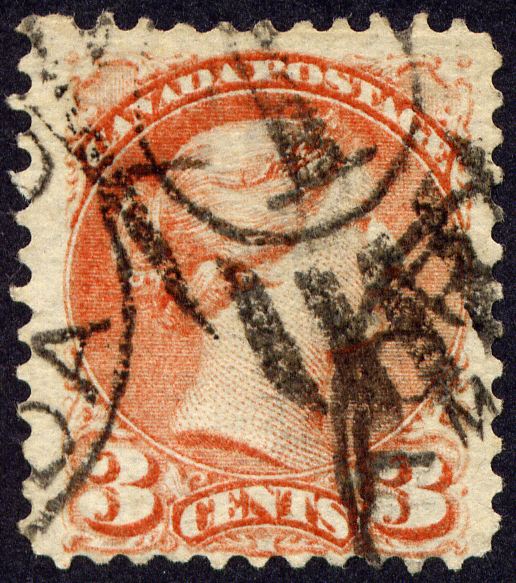 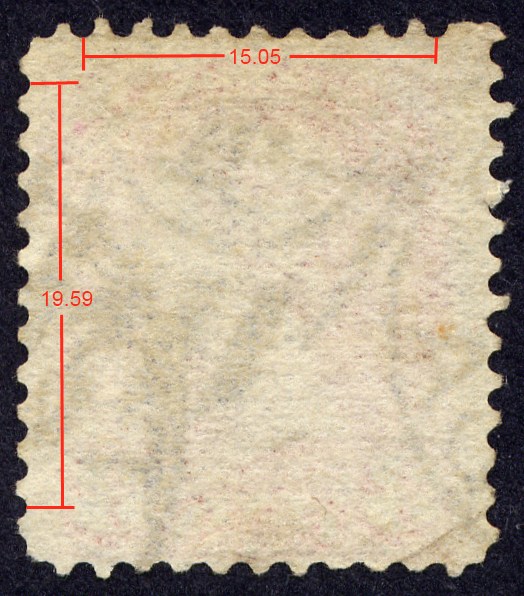 |
|
Send note to Staff
|
|
| Edited by BeeSee - 08/31/2011 4:54 pm |
|
|
Pillar Of The Community
Canada
1084 Posts |
|
|
BeeSee: do I take it, based on your info, that Boggs' (1945) dates for the printings (First Ottawa:1870-1874, Montreal:1874-1887, Second Ottawa: 1888-1897)are now somewhat super-ceded or dare I say "dated". |
|
Send note to Staff
|
|
|
Replies: 22 / Views: 20,237 |
|




 Posted 08/17/2011 10:51 pm


