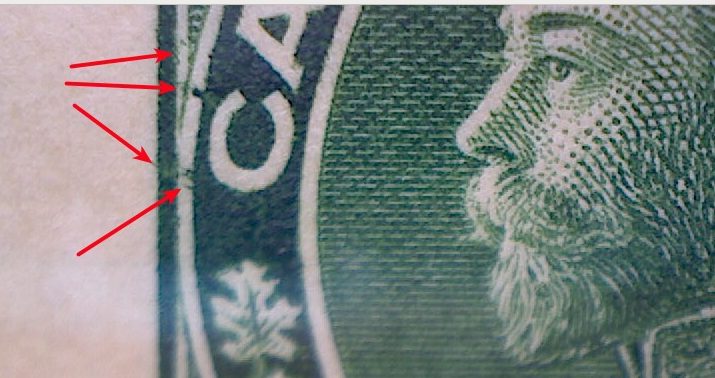
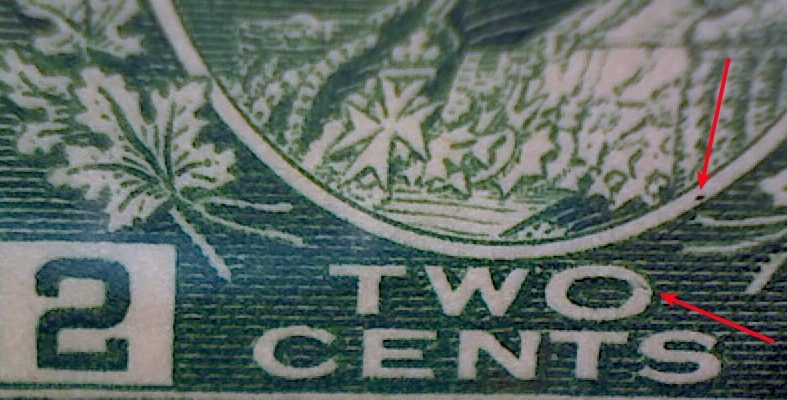
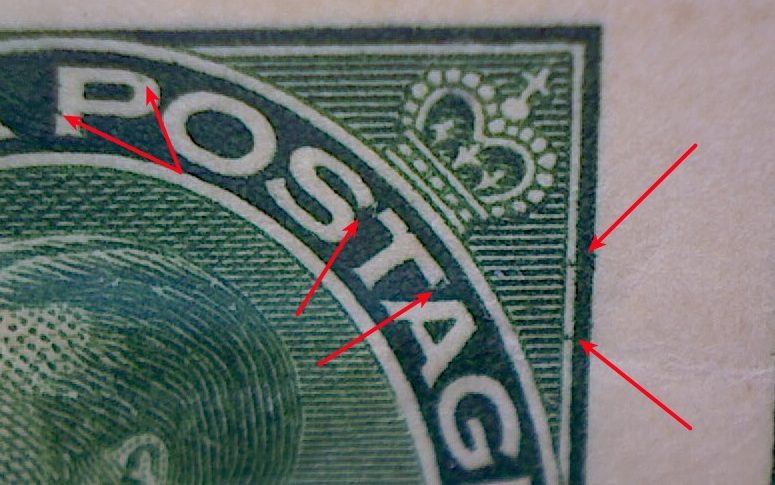
Wert you amaze me with the details you find. I know re entries are a tough subject and even the ones you can see issues with that are not normal and would assume to be a re entri are generally common printing flaws. For true re entries the are calculated changes in a plate that can be identified continuously on a specific plate position. One of the biggest mistakes that I made myself a couple times is confusing a kiss print which also shows doubling as a re entry. I think the word doubbling is confusing and also since most noted re entries are noticed with lettering it is misleading. The admiral issues are a prime example where I believe its a 2 cent issue that has slight doubling in lower right number 2 but the vast majority of the stamp is perfect. It shows that something intentional was done to the plate and every sheet has the same mark in that position. However there are many slight general printing flaws that are probably more dramatic yet not listed . I just confused myself more but I'm not editing.
Sorry some things are like trying to explain in words how to tie a shoe. Yes werts example would be ink splatters -- You could probably check the next 500-1000 of same stamp and not see any splatters. Its not listed but none the less there could be less ink splatters than re entries. I did the same thing for months checking for varieties and sent dozens to Ralph at re entries.com . He explaines alot and now if I suspect I look at the site as he pretty well has most known examples. Wert keep looking and posting as your keen eye will help educte others long into the future.
Disclaimer: While a tremendous amount of effort goes into ensuring the accuracy of the information contained in this site, Stamp Community assumes no liability for errors. Copyright 2005 - 2026 Stamp Community Family - All rights reserved worldwide. Use of any images or content on this website without prior written permission of Stamp Community or the original lender is strictly prohibited. Privacy Policy / Terms of UseAdvertise Here





 Posted 01/24/2012 7:17 pm