No matter what forum I visit, someone always has a question about the bar canceled remainders on early Spanish stamps. Since they are listed even in the Scott catalog, most people identify them readily. However, there are "bar" type cancels that are constantly being misidentified as bar cancelled remainders.
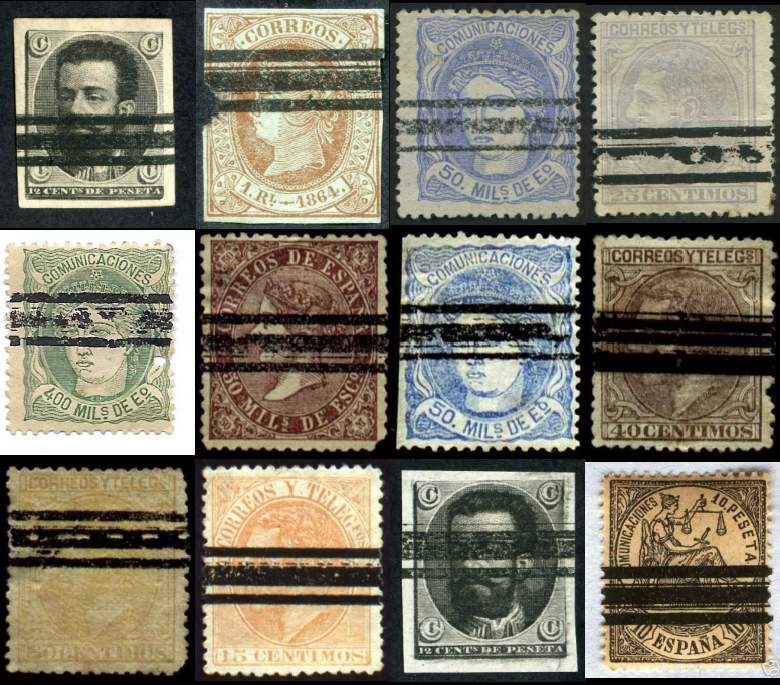
All the examples in the scan below, I've seen described as such, especially in online auctions like
ebay. Only 1 however is actually a bar cancelled remainder.
A - This is the bar cancelled remainder. You can find them on most of the issues from 1854-1882. As unsightly as they are, they do represent a genuine copy of the stamp. If you want to fill that empty space in your album, they are perfectly acceptable in my opinion. Also, if you have these in your collection and want to upgrade to a postally used copy at some point in time, these bar cancels can be used as reference copies to compare to, because they are genuine stamps.
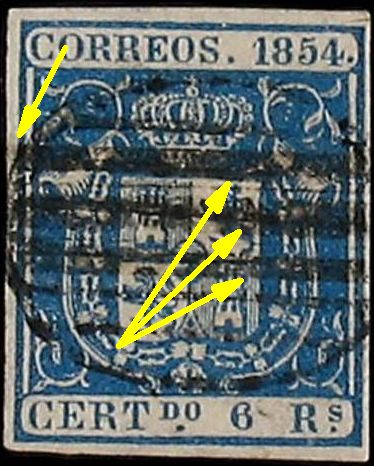
B & C - These are forgeries. These particular forgeries can be distinguished by the poorly formed letters, including the first "C" in "CORREOS", which only has a serif at the top of the letter and not the bottom. Also, most of the copies I've seen have some sort of outer frame line, or registration line in the stamps border. Originals did not have such extra lines. I have seen all the values in the set, as well as the officials of 1854, forged like this. Some have 2 bars printed on them, some have 1 and the officials I've seen have none. But nonetheless they have been mistaken as bar cancelled remainders.
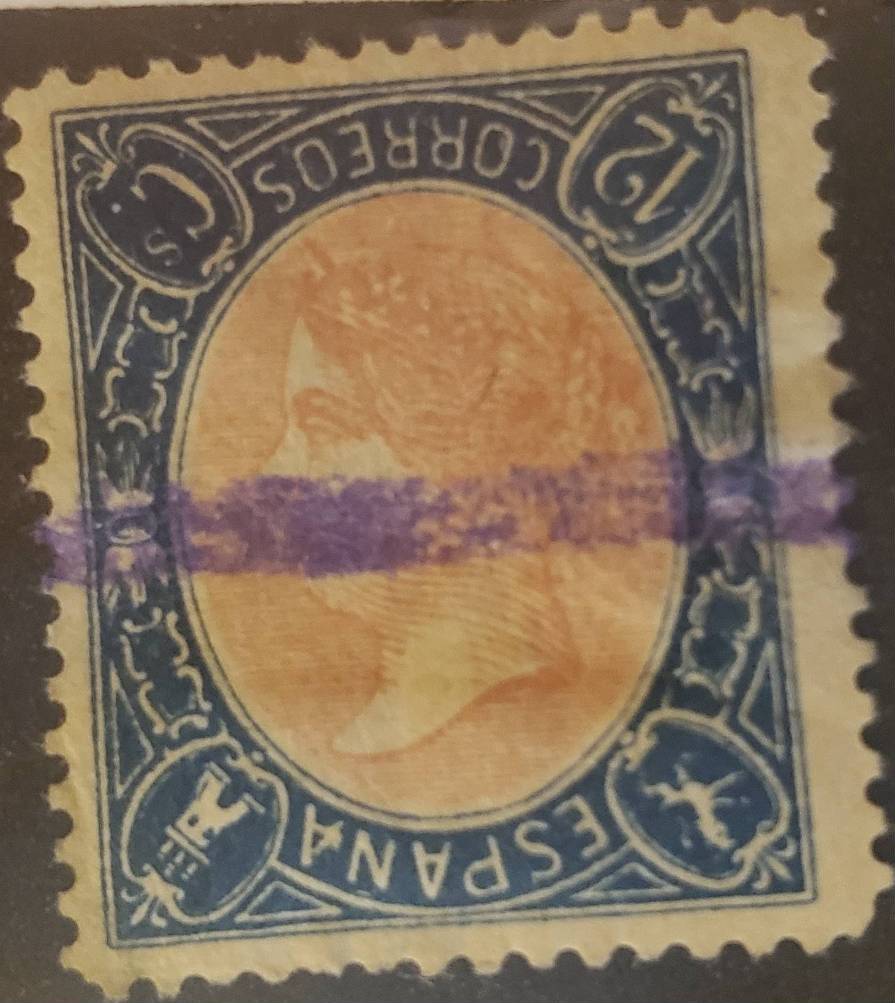
D - This is a genuine stamp with a printed bar, but it's not a bar cancelled remainder. Copies like this, with a single printed bar, are generally referred to as "muestras" (specimens). They can be found on various values in the 1854 and 1855 sets
All of these are commonly found in small collections of classic Spanish stamps that are routinely found on places like
ebay.





 Posted 09/25/2012 02:13 am