Moritz von Schwind (1804-1871) was an Austrian painter who was inspired by chivalry, folklore, and the songs of the people. Here is an image of a stamp featuring a portrait of Schwind, designed and engraved by Austrian artist Ferdinand Lorber (1883-1957), and issued by Austria on January 21, 1954 to commemorate the 150th anniversary of the painter's birth, Scott No. 591, plus an image of a detail from a photographic portrait of Moritz von Schwind, c. 1860.
Eemil Nestor Setälä (1864-1935) was a prominent Finnish politician, linguist, and professor of Finnish language. Here is an image of a stamp featuring a portrait of E. N. Setälä, designed by Finnish artist Olavi Vepsäläinen (1927-1993), engraved by Reijo Achrén, and issued by Finland on February 27, 1964 to commemorate the politician's birth centenary, Scott No. 425, Facit No. 590, plus an image of a photograph of Eemil Nestor Setälä.
Here is an image of a stamp featuring a portrait of Albert I (1875-1934), King of the Belgians from 1909 to 1934, designed and combined engraved by Belgian artist Charles Leclercqz (1922-2013), and issued by Belgium on April 5, 1975 to commemorate the king's birth centenary, Scott No. 918, plus a photograph of King Albert I in military uniform.
Pierre-Paul-Henri-Gaston Doumergue (1863-1937) was a French politician who served as the 13th President of France. Here is an image of a stamp featuring a portrait of Doumergue, designed and engraved by French artist Claude Andréotto (1949- ), and issued by France on August 1, 2013 to commemorate the 150th anniversary of the politician's birth, Y&T No. 4793, plus a 1924 photo of Gaston Doumergue as the Grand Master of the Legion of Honor which may well have been the model for this stamp's design (sans the shifty eyes!).
Johan Castberg (1862-1926) was a Norwegian jurist and politician best known for representing the Radical People's Party (Labour Democrats). Here is an image of a stamp depicting Castberg and a group of factory workers, designed and engraved by Norwegian artist Arild Yttri (1958- ), and issued by Norway on September 24, 1993 as one of a set of two stamps commemorating the centenary of industrial safety, Scott No., Facit No. 1177, plus an image of a photograph of Johan Castberg in 1900 which may have been a model for this stamp's design.
Pavel Petrovich Postyshev (1887-1939) was a Soviet politician who is considered to be one of the principal architects of the Holodomor ("Hunger-extermination"), the man-made famine of 1932-33 in Ukraine. During the Great Purge of 1936-38, Postyshev was a leader in the hunt for "enemies of the people," but he himself was ultimately denounced as a Trotskyist and was executed on February 26, 1939. Here is an image of a stamp featuring a portrait of Pavel Petrovich Postyshev, designed by V. Ermakov, engraved by Tatiana Mihailovna Nikitina, and issued by Russia (USSR) on September 30, 1968, Scott No. 3514, Zagorski No. 3588, plus an image of a comradely photo of Postyshev alongside his (former) good pal Joseph Stalin in 1934. Note: I do not know why the inscription on this stamp shows Postyshev's year of death as 1940.
Ahn Chang-ho (also known by his pen name "Dosan," 1878-1938) was a Korean independence activist and one of the early leaders of the Korean-American immigrant community in the United States. Here is an image of an engraved stamp featuring a portrait of the activist, designed by Kim sung-sil, and issued by (South) Korea on November 25, 1983, Scott No. 1265, plus an image of a photograph of Ahn Chang-ho in the 1920s which was probably the model for this stamp's design.
Ferdinand Porsche (1875-1951) was a German automotive engineer (born in what is now Czech Republic) and the founder of the Porsche A.G. car company. Here is an image of a stamp featuring a portrait of Porsche, designed by Otto Stefferl (1931- ), combined engraved by Alfred Fischer (1926- ) and photogravure, and issued by Austria on September 3, 1975 to commemorate the engineer's birth centenary, Scott No. 1020, plus an image of a photograph of Ferdinand Porsche peering through a steering wheel.
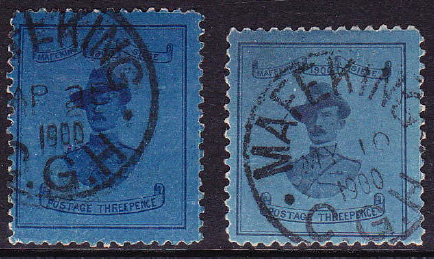
General Robert Baden-Powell, founder of the Scout movement, had been sent to South Africa in 1899 to raise two regiments of Mounted Rifles in order to resist the expected Boer invasion of Natal, draw the Boers away from the coasts to facilitate the landing of British troops, and deter locals from joining the Boer forces. He secretly stocked the town of Mafeking (in Bechuanaland) and militarised the population; the siege began on 19 September 1899. The Boer attack itself began on 12 May 1900 and was repulsed. British relieving forces fought their way into the town on 17 May 1900. He became a British national hero as a result of some hyperbolic and jingoistic newspaper reporting.
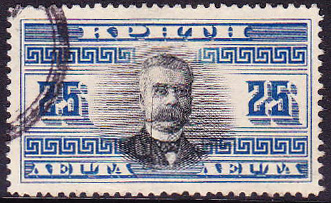
Alexandros Zaimis (1855 - 1936) was a Greek politician, and was elected Prime Minister of Greece twice in his career. In 1906, he was appointed as High Commissioner of Crete, as shown on this Crete stamp from 1907, and replaced Prince George in this position. He suceeded in seeing Crete through to eventual union with Greece.
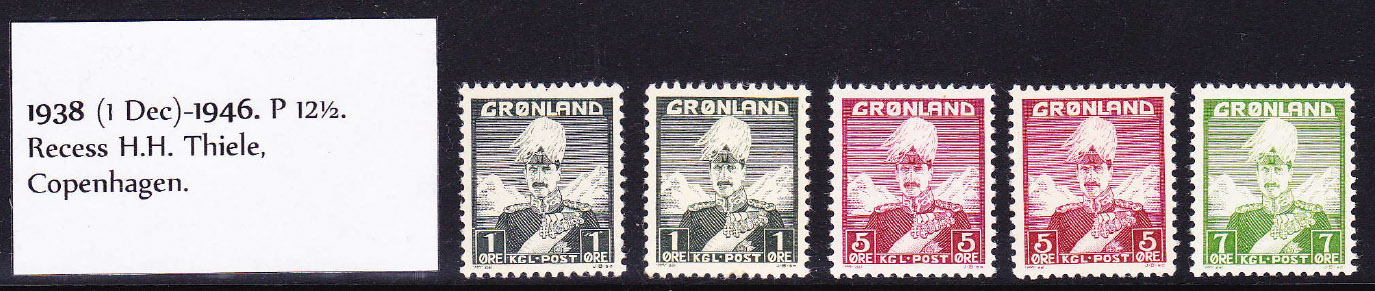
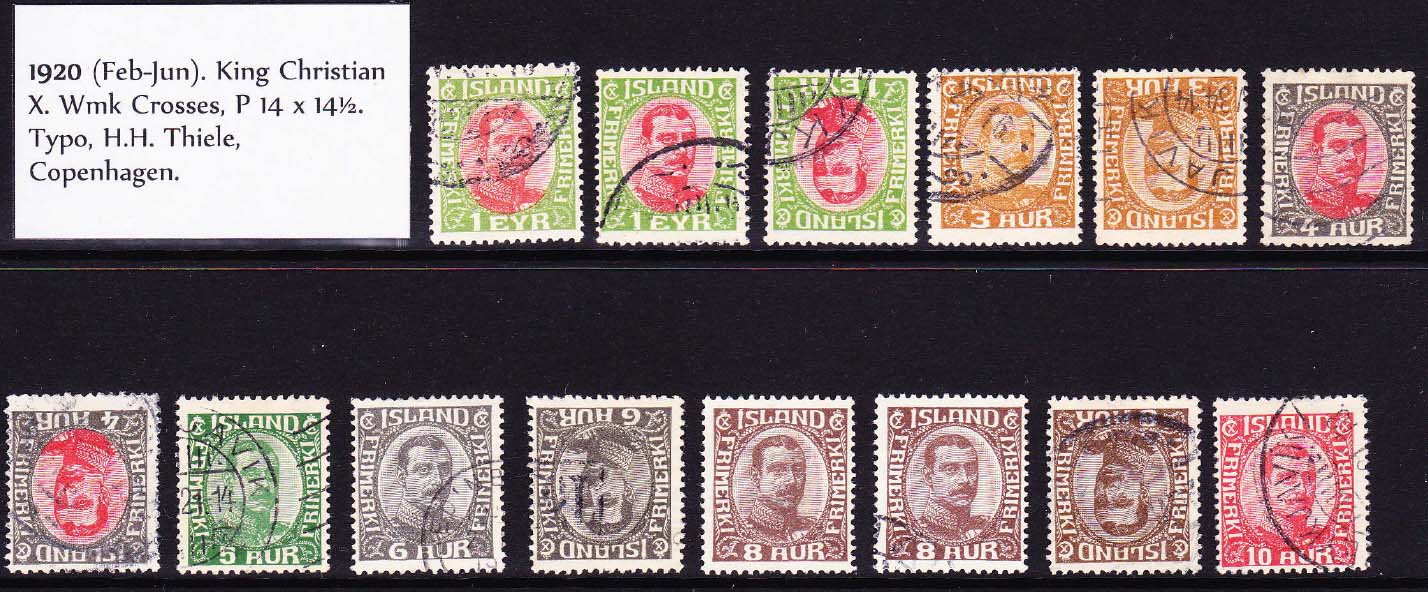
King Christian X of Denmark (1870-1947) appeared on both Greenland stamps and Icelandic stamps, and was in fact the only king of Iceland, until it declared independence in 1944. The Greenland stamps show the re-entry varieties in the die. The Iceland stamps show a shade or two, and inverted watermark varieties.
He has a rather timid, restrained moustache compared with other luxuriant examples elsewhere in this thread.
Here is an image of a stamp depicting a bust of Yugoslavian journalist and labor movement leader Edvard Kardelj (1910-1979) created by Slovenian sculptor Zdenko Kalin (1911-1990), printed by lithography, and issued by Yugoslavia on January 26, 1980, Scott No. 1458, plus an image of a photograph of Edvard Kardelj.
Here is a image of an engraved stamp featuring a portrait of Soviet military commissar Aleksandr Iakovlevich Parkhomenko (1886-1921), designed by A. Adashev, and issued by Russia (USSR) on December 24, 1986 to commemorate the Red Army hero's birth centenary, Scott No. 5521, Zagorski No. 5722, plus a YouTube link to a clip from the 1942 Soviet war movie Alexander Parkhomenko, featuring the song of the Red Army's 14th cavalry division (Parkhomenko's unit).
Disclaimer: While a tremendous amount of effort goes into ensuring the accuracy of the information contained in this site, Stamp Community assumes no liability for errors. Copyright 2005 - 2026 Stamp Community Family - All rights reserved worldwide. Use of any images or content on this website without prior written permission of Stamp Community or the original lender is strictly prohibited. Privacy Policy / Terms of UseAdvertise Here





 Posted 10/16/2015 08:26 am