jamesw
An interesting question. In most cases there are regulations that deal with such matters. I love finding them. In the case of postage dues, here is Section 398 from the Canada Official Postal Guide (1959).
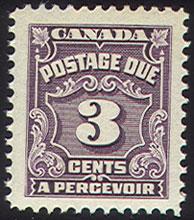
398. POSTAGE DUE STAMPS of the 1c, 2c, 4c, 5c, 6c, and 10c denominations are issued to postmasters on requisition in the usual way. These stamps are to be affixed to short paid mail and cancelled by postmasters when such mail is delivered, and are not to be used for any other purpose whatsoever. In no circumstances are they to be used for the PREPAYMENT (emphasis is original) of postage and must not be sold to the public.
Of course, collectors could purchase dues from the philatelic bureau.
According to s. 398, dues were to be cancelled only when the mail was delivered. Dues were usually handstamped when the mail was picked up at a post office (box holders, general delivery mail).


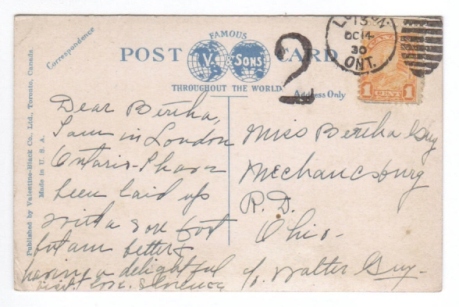
Addressed to P.O. Box 143. Postage due paid at the Shawinigan post office and handstamped.
A lot of dues however received pen or pencil cancellations. These were applied by letter carriers upon delivery.


Letter carrier delivery and pen obliteration.
This was not the case in Britain, France, Switzerland and other countries. Dues were affixed and cancelled
before delivery. If the recipient refused to pay the amount due, the dues received a handstamp indicating that they were void. This resulted in interesting covers such as the Netherlands cover below.


A Canadian cover like this does not exist because the dues were only cancelled when the letter was delivered and the postage due paid.
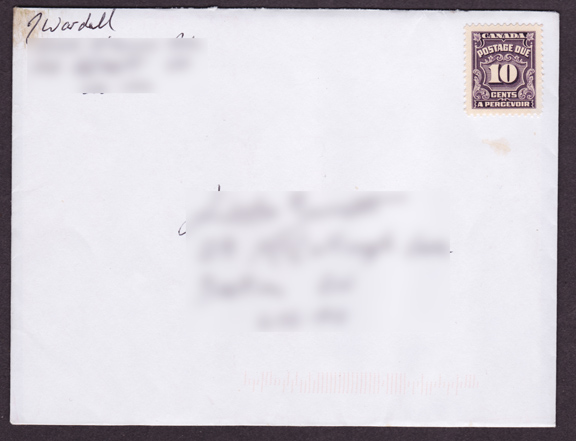
To save time, letter carriers sometimes affixed the dues to the envelopes BEFORE they delivered the mail but with selvage attached to the stamp. The selvage and not the stamp was stuck on the letter. If the due was not paid, the due stamp could be detached from the selvage.





 Posted 12/06/2012 11:00 pm