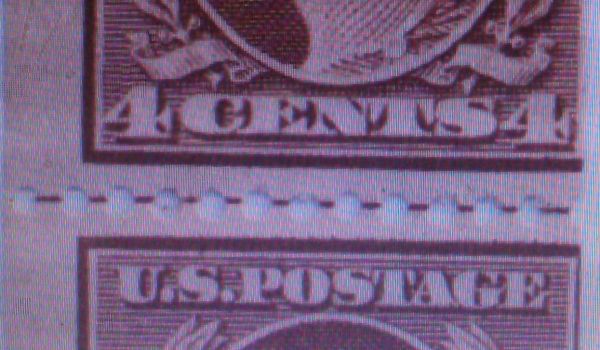
The 2 types of coil line pairs are the guide line and joint line.
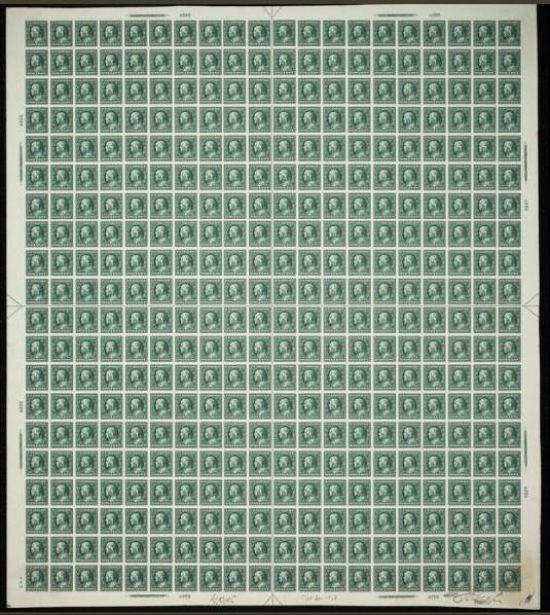
The guide line pairs are from flat plate printings. The flat plate coils were normally printed from the same plates that were used for the sheet stamps. These plates were 400 subjects with vertical and horizontal guide lines. These guidelines were to assist in the cutting of the sheets into panes of 100 for post office distribution.
The flat plate coils were made by cutting the sheets into 20 strips of 20 stamps each. The strips were paste together to make the coils. These coils would have a guide line every 20 stamps (and also a paste-up every 20 stamps)
An example of a flat plate sheet is shown below showing the guide lines.
Joint lines were from the rotary press coils. They were made by the ink that was captured in the gap between the 2 plates. The rotary press used curved semi-circular plate and a continuous web of paper so there was no need for paste-ups.
The early rotary press used 2 types of plates; 150 subject for horizntally perforated and 170 subject for vertically perforated.
Examples are shown below
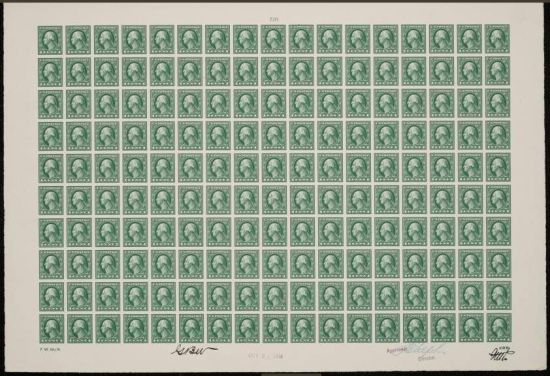
170 subject
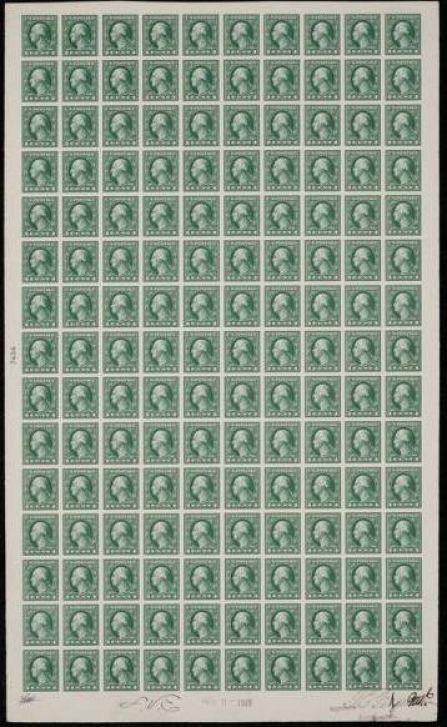
150 subject
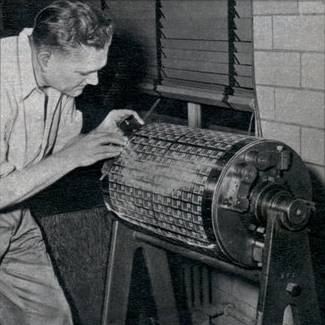
The plates were made flat and the proofs verified. The plates were then rolled into the curved shape, trimmed and mounted on the rotary drum.
The pic below show plates being fitted. The area that is being worked on is the joint fit up area.
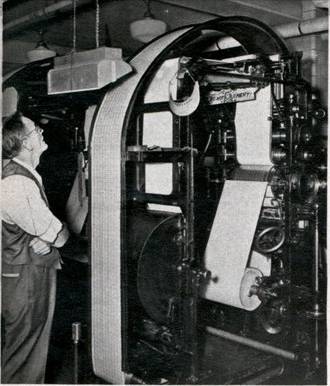
Below is the rotary press. The rotary drub with the plates can be seen with the paper web going around abou 3/4 of the drum.
I hope this helps.





 Posted 01/22/2013 04:50 am