Stamp Community Family of Web Sites
Thousands of stamps, consistently graded, competitively priced and hundreds of in-depth blog posts to read


Stamp Community Forum
 
Username:
Password:
Save Password
Forgot your Password?

This page may contain links that result in small commissions to keep this free site up and running.

Welcome Guest! Registering and/or logging in will remove the anchor (bottom) ads. It's Free!

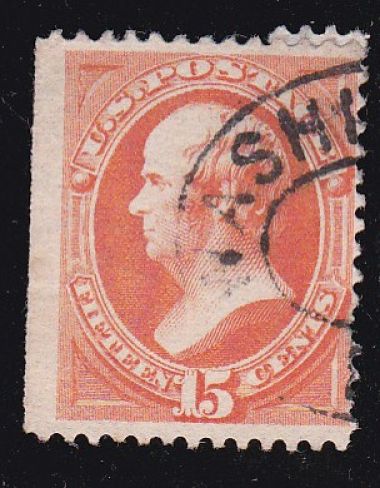
Webster 15 Cents.1870-1875.

 
To participate in the forum you must log in or register.
Author Previous TopicReplies: 1 / Views: 1,451Next Topic  
Valued Member
Malaysia
420 Posts
Posted 01/29/2013   09:53 am  Show Profile Bookmark this topic Add Selva to your friends list Get a Link to this Message
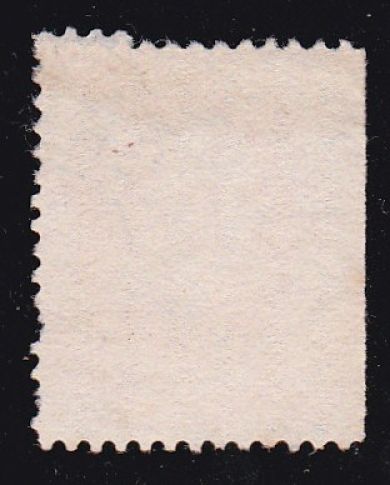
First look at these stamps with the longer perfs on the right,thought it was a repaired stamp. At the back there is no signs of extra paper sticked neither sign of damage and repaired. Any opinions feed backs will be much appreciated.Am also trying to determine the scott# of this stamp.Seem difficult as it is based on colors of bright orange,yellow an red orange.Would be helpfull if someone could give me a guideline as to enable me to assertain the scott#. Its a perf 12.Thanks.


Send note to Staff

Pillar Of The Community
United States
1179 Posts
Posted 01/29/2013   10:29 am  Show Profile Bookmark this reply Add Hal to your friends list  Get a Link to this Reply
This is a double-paper variety Sc#163c

The following is an extract from http://www.1847usa.com/1870identifier.htm#double paper

"Double Paper: The double paper was described by John Luff as being composed of two parts: a "very thin paper, backed by a thicker and firmer one". In theory, the "impressions were to be made on the thin paper which, it was expected, would be destroyed by any attempt to remove a cancellation." (Burns, U.S. Specialist March 1999). This was not always the case, however, since impressions were at least sometimes made on the thicker paper. The collector should bear in mind that the Bank Note double papers are composed of one thick paper and one very thin paper.

The thirty-cent stamp is also interesting. In 1989 Jack Rosenthal published an article in Linn's that showed a clear alteration in the triangular protrusions in the "S" of "CENTS" on some of the American printings, that is Scott 190 and Scott 217. Not all American printings show this alteration, or "secret mark" if you choose, however if the alteration is present the stamp must be an American printing. The American printings were on a soft porous paper making them easily identifiable in any case, but it may help in weeding out Continentals printed on the soft, "transitional" paper. The Micarelli guide lists the Continentals on "soft white" paper, but it is not listed here to prevent confusion."
Send note to Staff  Go to Top of Page
  Previous TopicReplies: 1 / Views: 1,451Next Topic  
 
To participate in the forum you must log in or register.

Go to Top of Page

Disclaimer: While a tremendous amount of effort goes into ensuring the accuracy of the information contained in this site, Stamp Community assumes no liability for errors. Copyright 2005 - 2026 Stamp Community Family - All rights reserved worldwide. Use of any images or content on this website without prior written permission of Stamp Community or the original lender is strictly prohibited.
Privacy Policy / Terms of Use    Advertise Here
Stamp Community Forum © 2007 - 2026 Stamp Community Forums
It took 0.1 seconds to lick this stamp. Powered By: Snitz Forums 2000 Version 3.4.05