A little background on the double paper issues. The double paper issue was a re-use prevention by Charles Steel. The process is describe in his patent for the process (pat 86,952 Feb 16, 1869). The process was to bond a thin unsized water-leaf type face paper to a wove paper backing prior to printing the stamp.
This process would deter re-use in 3 ways; first the unsized face wuold allow greater penetration of the cancellation ink, second the soft printed face was easily damage from the application of friction in attempts to remove the cancellation and third the 2 layers would have a tendency to delaminate when soaked.
Although the double paper is most commonly known on the Continental printings it was also used on the National 3 cent 1861, 3 and 30 cent 1869 and the 6 and 30 cent National banknotes. It is also known on some American printings.
In 1875, about 28 million double paper issues were sent by Continental to the POD for issue, most were the 2 and 3 cent values. A large quantity of these were returned due to delamination problems.
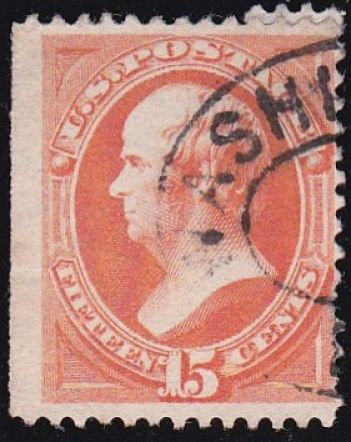
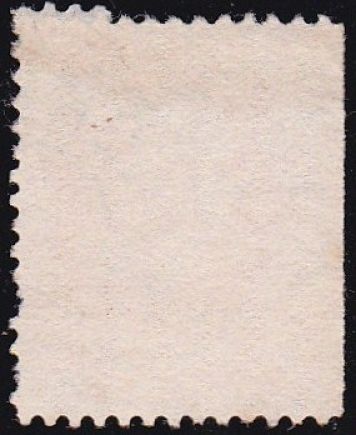
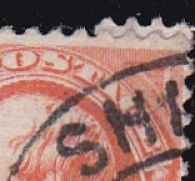
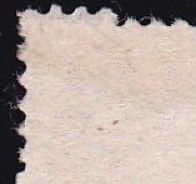
You stamp shows a offset of the perfs in the upper right corner with the back paper appearing very thin. Both of these attributes are very inconsistent with the double paper process. Additionally, the printed image is normally slightly fuzzy due to the printing ink being absorbed into the unsized paper. The printing on your example looks too well defined for the unsized paper.
Is it possible that the is a paper adherance on the back? There is also a slight discoloration on the top portion of the back and a slight offset on the straight edge. Have you dipped it to see if there a a possible rebacking?
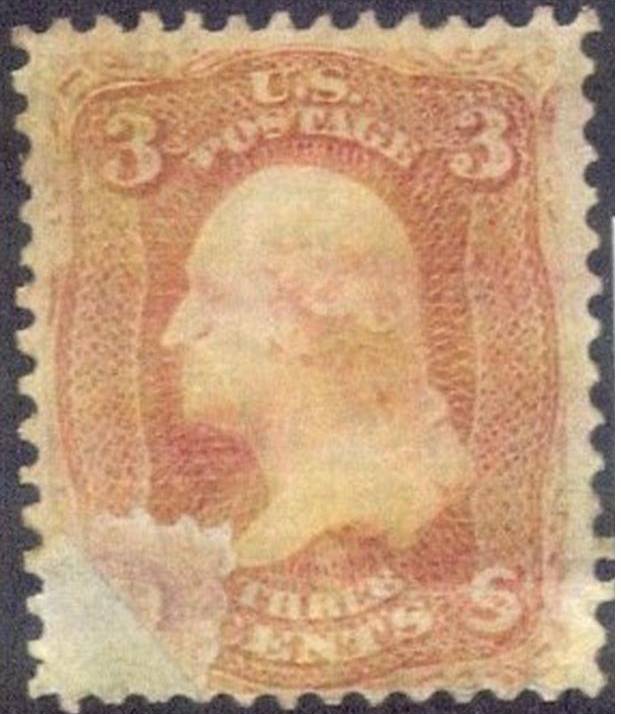
Below are 2 examples of the double paper with partial delamination. The first in the National 3 cent of the 1861 series. You will note the thin paper printed face
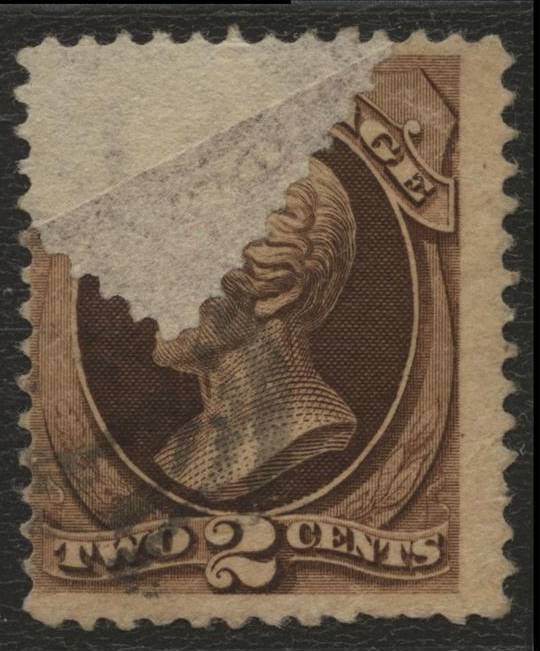
The next image is the Continental 2 cent. You will note the same type of thin printed face paper.
I hope this will help to explain the process an also why I do dot believe that your example is a regular double paper.





 Posted 02/09/2013 07:45 am