| Author |
 Replies: 11 / Views: 2,529 Replies: 11 / Views: 2,529 |
|
|
Valued Member
United States
252 Posts |
|
|
Going through "junk" piles, I found this badly damaged and "reconstructed" cover , franked with one 3c #65 and addressed to England. It was mailed at New Orleans, LA on April 2?, 1863. A large circular postmark with a large "21" on top and the date, MAY 2. What I am really interested to know is what is the rest of that postmark. It looks like "N. YORK, NY PKT." I hope somebody can find about this packet marking in the literature in your library. What does that large numeral 21 mean? Postage due to be charged to the consignee? I really like to know. THANKS. 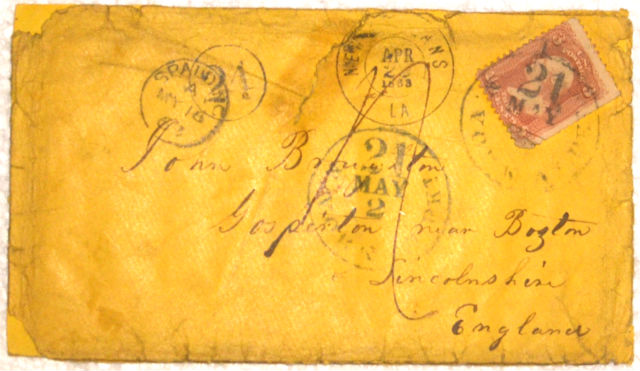 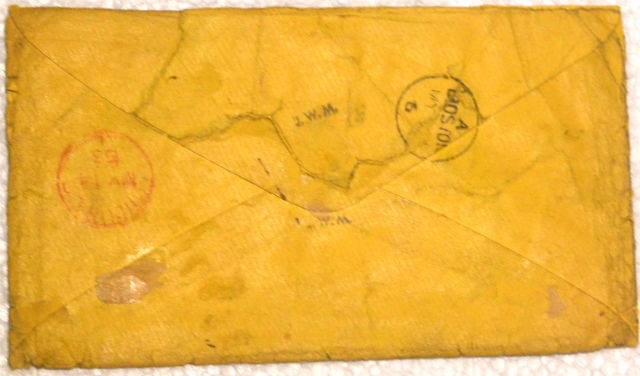 |
|
Send note to Staff
|
| Edited by fotofila - 05/12/2013 03:45 am |
|
|
|
|
Pillar Of The Community
United States
611 Posts |
|
|
During this period trans-Atlantic mail could use either stamps or the large CDS you have. The 3 cent stamp would have carried it to New York and there an additional 21 cents was paid for the rate to England. I'm not up on the postal rates to verify the 21 cents was correct but it sounds right. New Orleans fell to the union navy early in the war. It is still a prized possession to have a cover from there even in its current state. |
Send note to Staff 
|
|
|
Pillar Of The Community
United Kingdom
3220 Posts |
|
|
It's an interesting cover. Gosberton is a village in Lincolnshire near both Spalding and Boston and its good to see postmarks from both towns. |
|
Send note to Staff
|
Nigel |
|
|
Valued Member
United States
252 Posts |
|
|
Wow! This mail was mis-sent to England. There is a London arriving postmark on reverse. There is no indication that this mail was returned back to the US. So, this mail was address to Lincolnshire near both Spalding and Boston, (New) England, was mis-handle as a mail with a foreign destination because the word "New" was missing in the address. Thanks to nigelc to point this out. |
|
Send note to Staff
|
|
|
Pillar Of The Community
United States
611 Posts |
|
|
Valued Member
United States
252 Posts |
|
|
Bill, read the address carefully, it says "Gosperton (Gosberton) near Boston, Lincolnshire, England. |
|
Send note to Staff
|
|
|
Pillar Of The Community
United States
700 Posts |
|
|
Pillar Of The Community
United States
1125 Posts |
|
|
The rate to Great Britain was 24c per 1/2 ounce. Partial payments were not counted at all, so you can ignore the stamp - it did nothing.
The datestamp was applied at the NY Exchange Office (where they did the accounting of debits and credits and the routing of the letters onto the proper ships).
The 24c rate was composed of: 5c US domestic postage, 16c transatlantic carriage, and 3c GB domestic postage.
Mail was sent across the ocean on steamers under contract to the GB government (such as the Cunard line), or steamers under contract to the US government (such as the HAPAG line). There were others, but the bulk of US/GB mail was on GB or US contract steamers.
The number (21, in this case), represent debits or credits on account for the two governments - basically, who owes whom for the different pieces of that 24c rate.
Another thing - red denotes "credit to" and black denotes "debit to" in the color of the CDS.
So, let's look at this.
Since it was unpaid, the letter was sent collect to Great Britain. The British government owes the US for the part of the postage that covers their services. Rather than having to assume that the letter was carried on a US contract steamer (and therefore GB owes the US 5c + 16c), the datestamp nicely says "AM PKT" - American Packet. Great Britain would be responsible for delivery and collecting the entire postage due. They would keep the 3c for their local services.
Looking at the dates, you can tell that it actually was sent from NY on the May 2 sailing of the HAPAG Hammonia, arriving in Southampton on May 14. There are British transit datestamps for London, Spalding, and Boston.
There is a 24 in a circle that was placed on the envelope to denote the rate due. The pen squiggle in the center is actually for 1 Shilling due (the equivalent of 24c) that would need to be collected from the recipient.
To correct some comments:
The three cent stamp was useless, it did not pay the domestic postage. During an earlier period, you could pay the postage to the port of embarkation (usually 5c) and then send the letter abroad to some locations in "open mail," with the international component collect. Not to GB during this period.
It was not missent to England. It was sent to England, but underpaid.
|
|
Send note to Staff
|
|
|
Pillar Of The Community
United States
1125 Posts |
|
|
I don't want to hijack this thread, but here are some other examples of mail to GB that illustrate some of the rate/routing choices and how to figure them out. Note that the prepaid letters had red markings ("GB gets a credit of..." and the unpaid letters had black markings (GB owes us...") American and British Packets: 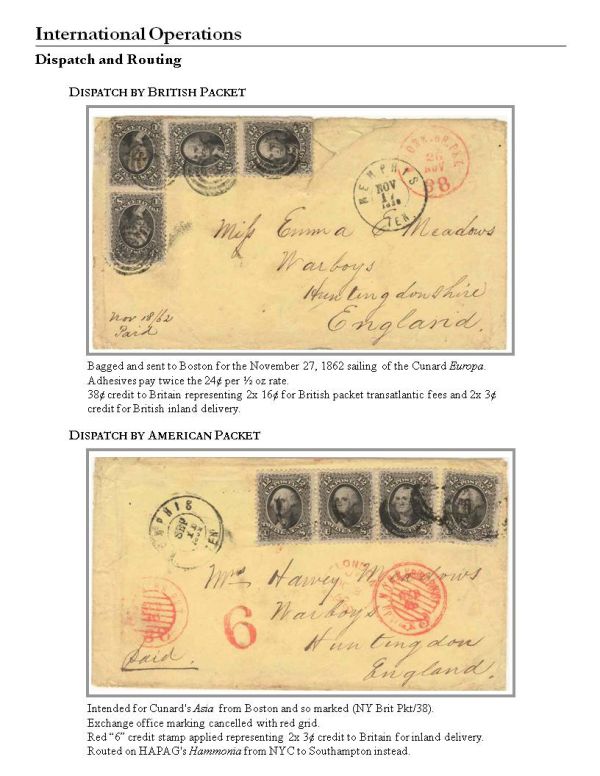 Underpaid mail - on the lower cover, since it was underpaid at the 2 oz rate (there was no 1.5 oz rate), NONE of the postage counted - 72c wasted - and the recipient had to pay 4 Shillings (96c equivalent) for the letter. A lot of money in those days. 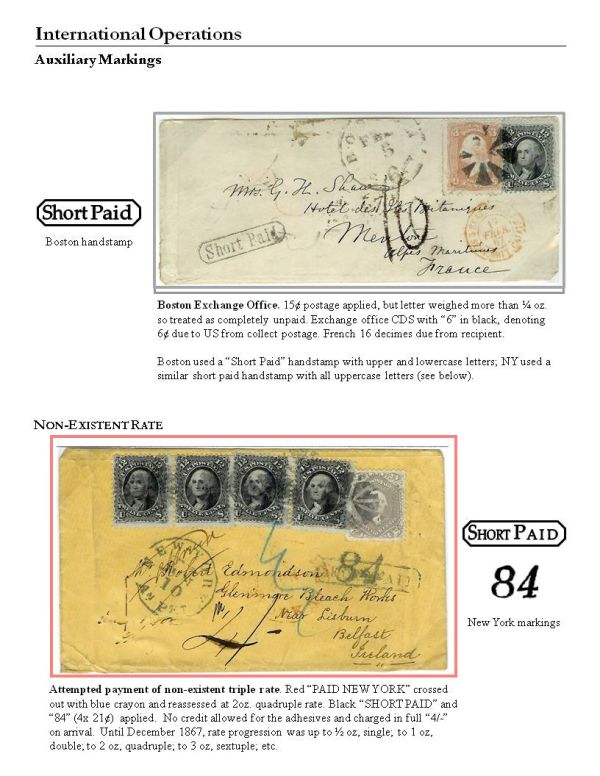 The top is a similar example, except it was paid at the 1/2 oz rate, but weighed more than 1/2 oz, so it was all postage due at the 1 oz rate (48c which equaled 2 Shillings) 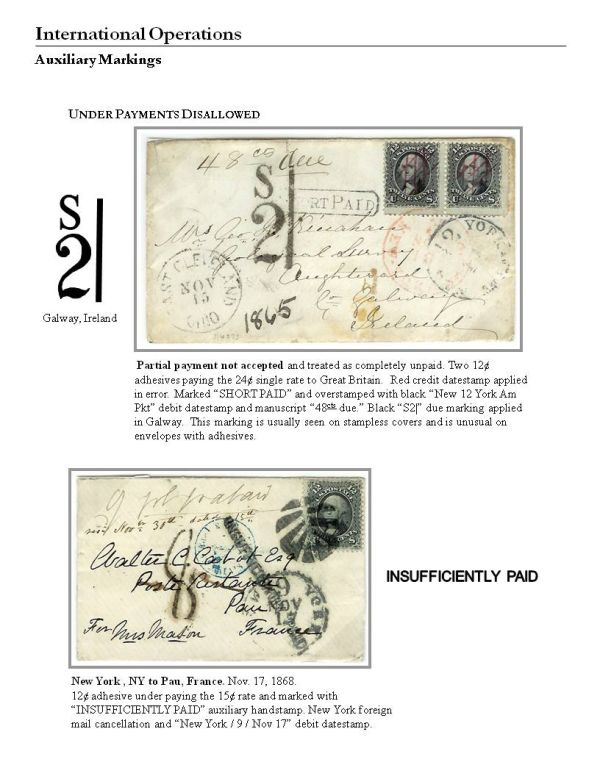 |
|
Send note to Staff
|
| Edited by chipg - 05/13/2013 11:34 am |
|
|
Pillar Of The Community
United States
7108 Posts |
|
|
Valued Member
United States
252 Posts |
|
|
Thanks for the excellent explanations, chipg. I also learnt that there is a small town "Boston" in England, which I did not know, which mislead me to "missent" ideas.
Thanks to all who contributed to better understanding of this cover. |
|
Send note to Staff
|
|
|
Rest in Peace
United States
7097 Posts |
|
| |
Replies: 11 / Views: 2,529 |
|




 Posted 05/11/2013 11:03 pm


 Very informative.

