| Author |
 Replies: 21 / Views: 5,058 Replies: 21 / Views: 5,058 |
|
Pillar Of The Community
923 Posts |
|
|
Just got the Canadian Stamp News today in the mail. In Michael O. Nowlan's column "Philatelic Bookshelf" he reviews Julian J. Goldberg's new booklet "The Canadian Stamp Perforation Change of 1962". It is mentioned that the first changes were noted for #399 (Victoria Centenary) where both new and old perforators were used. 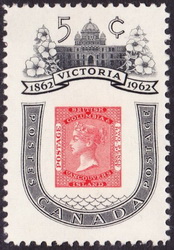 Also, several others are hinted at. The perforation change was from 11.94 to 11.85 (both listed as 12). The most noticeable difference is in the size of the holes. Has anyone seen these differences? How could one possibly detect the difference of 0.09 perfs/2cms? Should this be listed as a variety in Unitrade? (I know I should actually go and buy Mr. Goldberg's booklet to better inform myself, but in the meantime...) |
|
Send note to Staff
|
|
|
|
|
Valued Member
Canada
450 Posts |
|
|
Check out the Stanley Gibbons 'Instanta' Stamp Collecting Perforation Gauge (do a 'Gibbons Instanta' Google search and it will pop up); it may/should/will do the trick.
Someone should make up a 'kit' of essential stamp collecting tools and market it; this particular gauge would be a 'must' (along with tongs, good magnifier, UV light, watermark detector, stock pages, mounts ... what did I miss?). |
Send note to Staff 
|
|
|
Pillar Of The Community
Canada
2277 Posts |
|
|
With computer gauges and precise mathematical instruments now availiable there are likely many variations not before even thought to matter. Until the hobby adopts a more precise method these things will probably not be cataloged . Until then the instanta is about the best we can rely on and of course its all dependent on 20/20 vision. |
|
Send note to Staff
|
|
|
Pillar Of The Community
3860 Posts |
|
|
The perforations on the right plate block look bigger and look cleaner cut than the ones on the left plate block. The perforations on the right plate block are also perforated around 0.10 less than the ones on the left plate block. 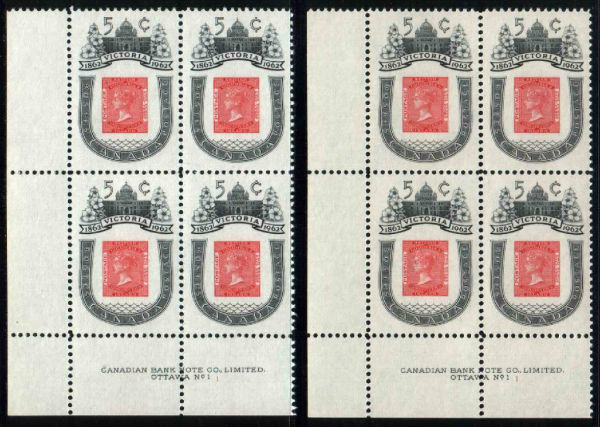 |
|
Send note to Staff
|
| Edited by jogil - 01/21/2014 7:05 pm |
|
|
Pillar Of The Community
923 Posts |
|
|
Okay, Jogil, I superimposed the left one on top of the right one. 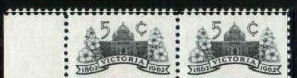 Whereas the perfs line up exactly at the left, they don't quite at the right. I'd say, to differentiate them, one might use a whole sheet of each and there'd probably be one perf difference. Studystamps: I can't believe that I could tell the difference using that perf gauge on just one stamp. I wonder if such a variety is collectable and which other stamps that year had a dual perforation? |
|
Send note to Staff
|
|
|
Pillar Of The Community
3860 Posts |
|
|
Pillar Of The Community
923 Posts |
|
|
Yeah, pretty clear, jogil. Thanks. (I just ordered a perf gauge!)
(I'd better order the book, too, I guess.)
(Hey! 100 posts!) |
|
Send note to Staff
|
| Edited by sak - 01/21/2014 9:17 pm |
|
|
Rest in Peace
7742 Posts |
|
|
Jogil....both sets of stamps in your post have 21 perforations each on each stamp. |
|
Send note to Staff
|
|
|
Pillar Of The Community
3860 Posts |
|
|
Rest in Peace
Canada
5701 Posts |
|
|
Quote:
Someone should make up a 'kit' of essential stamp collecting tools and market it; this particular gauge would be a 'must' (along with tongs, good magnifier, UV light, watermark detector, stock pages, mounts ... what did I miss?).
An accurate ruler to 1/64th of an inch and a calculator  |
|
Send note to Staff
|
|
|
|
Pillar Of The Community
3860 Posts |
|
|
I use the German Philatelic Society (GPS) Buildings Study Group (BSG) perforation gauge which is considered to be more accurate than any other perforation gauge. |
|
Send note to Staff
|
|
|
Rest in Peace
Netherlands
963 Posts |
|
|
When it comes to quarters: 11.85 => 11 3/4 and 11.94 => 12 so most Europeans would find this significant! :) |
|
Send note to Staff
|
|
|
Pillar Of The Community
3860 Posts |
|
|
It affects at least 16 different other Canadian stamps that look alike but that also have this perforation difference just like # 399. This is not something to be ignored since it concerns more than 16 different stamps that otherwise look the same except for the perforation measurement. Too bad that the catalogue hasn't noted this yet, not even with a footnote, since some of these may be not as common as others may be. Sometimes, beating the catalogue can result in finding these stamps ahead of others before it gets listed resulting in stamp prices going up for them afterwards. |
|
Send note to Staff
|
| Edited by jogil - 01/24/2014 10:25 am |
|
|
Pillar Of The Community
923 Posts |
|
|
Let me jump in again and say:
1) Thanks to everyone who has posted. I've learned a lot.
2) I would be happy to acquire the 16+ varieties, if I could find them. Perhaps someone at the forum will create a little business.
Jogil: Blocks would be nice |
|
Send note to Staff
|
| Edited by sak - 01/26/2014 01:53 am |
|
|
Pillar Of The Community
3860 Posts |
|
|
Are you looking for single stamps or blocks of these? Also, having the booklet helps to show which stamps they are. However, there is a possibility that more such different stamps could be found and added by anyone finding them to the list of 16+ which makes this interesting and potentially openly ongoing. Here's another picture of the # 399 in question: 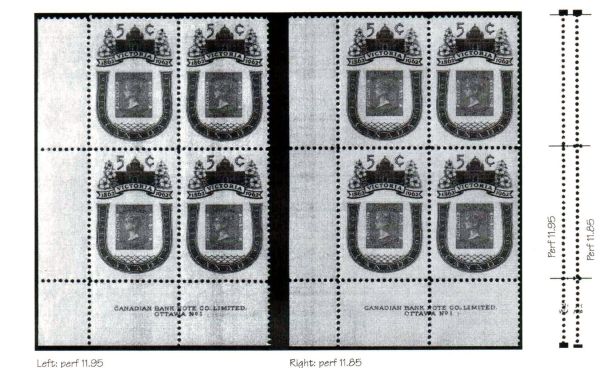 |
|
Send note to Staff
|
| Edited by jogil - 01/25/2014 4:06 pm |
|
|
Pillar Of The Community
3860 Posts |
|
|
When was the book review from since I don't see any reference to it on the Canadian Stamp News website? |
|
Send note to Staff
|
| Edited by jogil - 01/26/2014 10:40 pm |
|
|
Replies: 21 / Views: 5,058 |
|




 Posted 01/21/2014 5:21 pm