| Author |
 Replies: 15 / Views: 2,005 Replies: 15 / Views: 2,005 |
|
|
Valued Member
410 Posts |
|
|
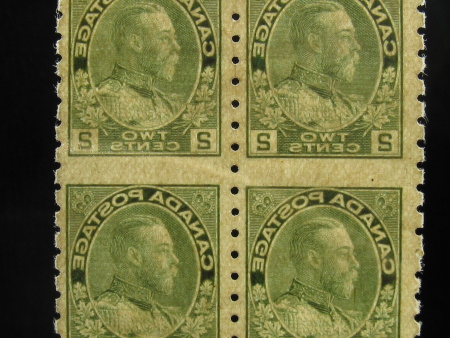
I recieved this "128a" block today and was surprised that the paper is so thin and transparent. The only listing I see for thin paper is on the Scott #107 which does not match these. Is thin paper normal on Scott #128a? Also appears to be wet printing so maybe Scott #128ai?(but still no mention of thin paper in Unitrade) What Scott # is it? 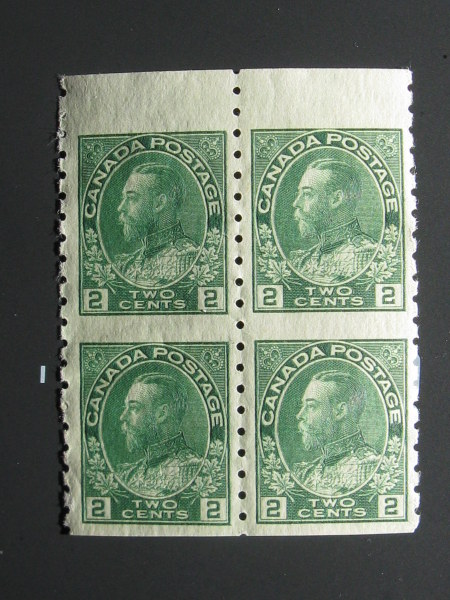 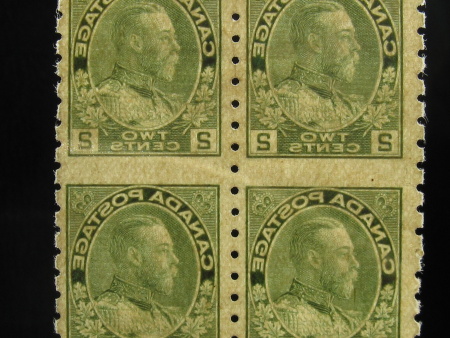 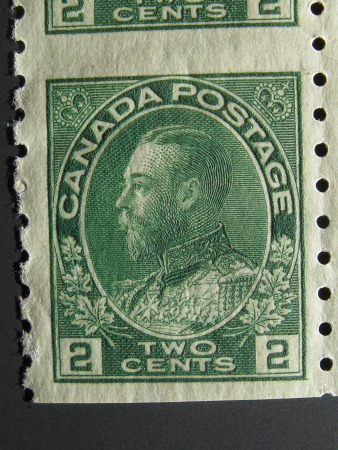 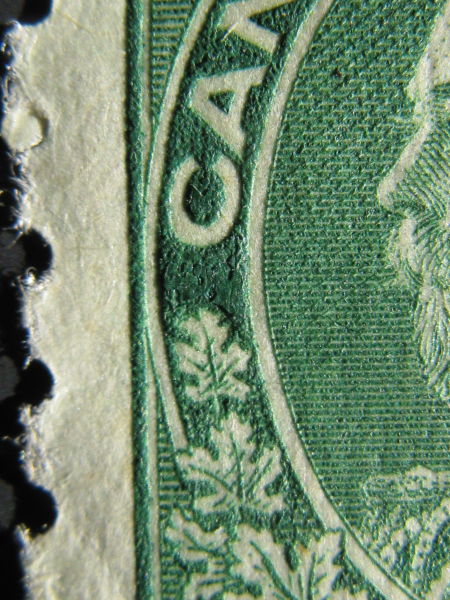 |
|
Send note to Staff
|
|
|
|
|
Pillar Of The Community
United States
2963 Posts |
|
|
I have never seen a translucent admiral stamp, and I have owned hundreds of these mint. It's possible that it is a different paper type that is not listed (I only have a 2008 Unitrade with me in my office), but I have my doubts. It's also possible that the appearance is due to regumming that soaked the paper. Hopefully someone with some expertise on this issue will chime in on paper types. As for the 'wet' printing, I do not believe yours is a wet printing. I have attached a copy of item #1177 from the Spink Shreves sale on SAN for reference to a 128ai. https://stampauctionnetwork.com/f/f10859.cfmBrian 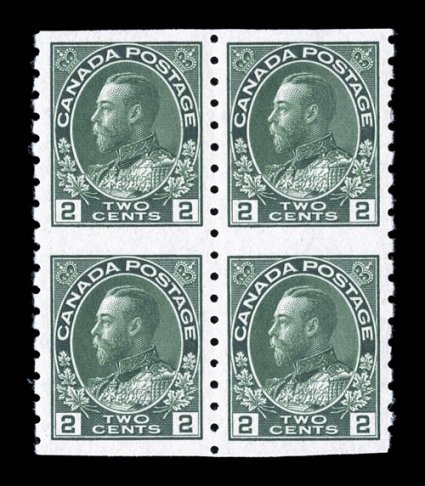 |
Send note to Staff 
|
|
|
Valued Member
Canada
382 Posts |
|
|
Hello COINWATCHER. A simple test for wet / dry printing is to look at the gum side of the stamp. A dry printing usually has a full "embossed" impression of the stamp in the gum. All dry printings were done on pre-gummed paper. A wet printing carries little or no impression as the gum was applied after the paper dried.
GJP |
|
Send note to Staff
|
|
|
Pillar Of The Community
United States
2963 Posts |
|
|
Quote:
A simple test for wet / dry printing is to look at the gum side of the stamp Normally, this would work. But in this case, there is something unusual going on, making that test completely unreliable. If this block was regummed, as I suspect, the embossing will all but disappear. Coinwatcher's close-up photos tell the story on wet/dry printing. The details are far too crisp to be a wet printing, imo. Brian |
|
Send note to Staff
|
|
|
Valued Member
410 Posts |
|
|
Here is the reverse of the block. You can see the impression clearly. The glue looks original and is smooth and shiny. 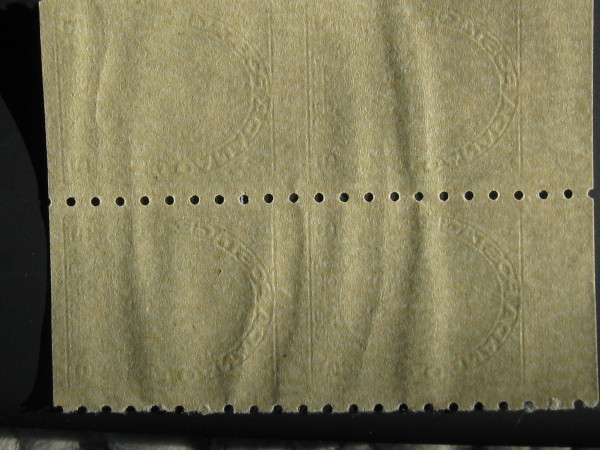 |
|
Send note to Staff
|
|
|
Pillar Of The Community
United States
2963 Posts |
|
|
The embossing is mostly clear, but appears weak in places. Still, I think that confirms it being a 'dry' printing.
The wrinkling of the paper, and the translucency is a concern. These things point to a modification. If this were mine, I'd send it back to the seller for a refund. I believe it was soaked clean in water, then regummed.
But then again, maybe there's a paper variety someone can shed light on? |
|
Send note to Staff
|
|
|
Pillar Of The Community
United States
7103 Posts |
|
|
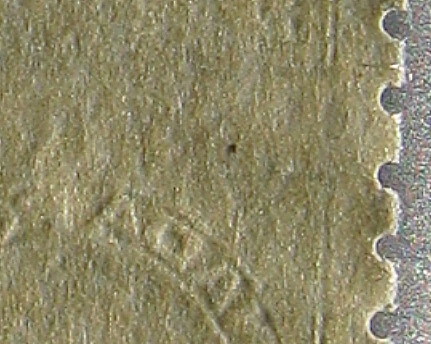
Would it be too much trouble to get a closeup of the perf tips from the back?
|
|
Send note to Staff
|
|
|
Valued Member
410 Posts |
|
|
Rest in Peace
7742 Posts |
|
|
Pillar Of The Community
3860 Posts |
|
|
I thought that dry printing could be distinguished from wet printing by the stamp design size. The size of the dry printing design would be slightly bigger in one direction (horizontally or vertically) than the size of the wet printing design. This is because wet printing would make the wet paper shrink across the paper's grain when it dried whereas dry printing is not affected by any of this. |
|
Send note to Staff
|
| Edited by jogil - 01/31/2014 11:07 pm |
|
|
Valued Member
410 Posts |
|
|
I found this on bnaps org "There are well-known,
fairly common thin paper varieties on the wet printings of the 2¢ green and the 5¢
violet. This paper is readily distinguishable by the grain of the paper, which appears
as a lattice pattern when held to the light. There are less well-known and relatively
scarce thin paper varieties on the dry printings of the 2¢ green and 7¢ red brown." |
|
Send note to Staff
|
|
|
Valued Member
410 Posts |
|
|
Valued Member
Canada
382 Posts |
|
|
Hi Coinwatcher. The thin paper for the 2 and 7 cent stamps from sheets is well documented. In checking Marler's discussion of paper for coil stamps, he states on page 345 that "the thickness of the paper for roll stamps shows as much variation as that used for the post office sheets". He states that it is more important to consider wet / dry printings than attach importance to paper thickness.
From your scans, I would surmise that you have a dry printing with full original gum. I have a number of these stamps and the impression from the back is almost identical to yours. Even the best regumming artists don't match the plate impression.
I suspect that the wrinkles have resulted from improper storage.
By the way, Jogil is correct in stating that wet and dry printings can be identified by measuring the image. My original statement about the impression in the gum is a quick test and handy if you don't have a known sample to compare dimensions. It's not always right, but it's pretty good.
GJP |
|
Send note to Staff
|
|
|
Valued Member
410 Posts |
|
|
So then is this a 127a block, dry printing on thin paper with lattice pattern? |
|
Send note to Staff
|
|
|
Valued Member
410 Posts |
|
|
Valued Member
Canada
382 Posts |
|
| |
Replies: 15 / Views: 2,005 |
|




 Posted 01/31/2014 2:58 pm



 with rileysan