| Author |
 Replies: 46 / Views: 7,808 Replies: 46 / Views: 7,808 |
|
Valued Member
410 Posts |
|
|
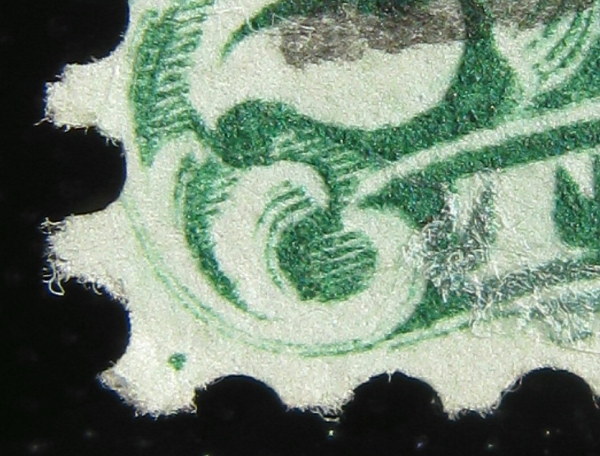
There is a dot to the right of the UL corner ornament. Is this a known variety or plate flaw? There is also ink beside the right frameline, probably a dirty plate? This LQ is on Vertical wove Bothwell paper and has a nice fancy cork cancel. Comments please. 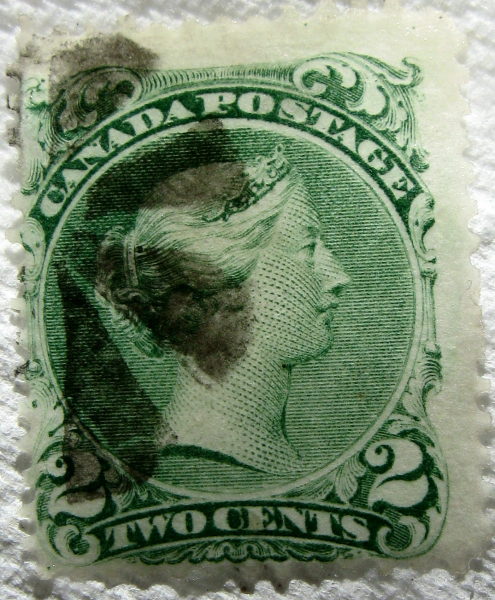 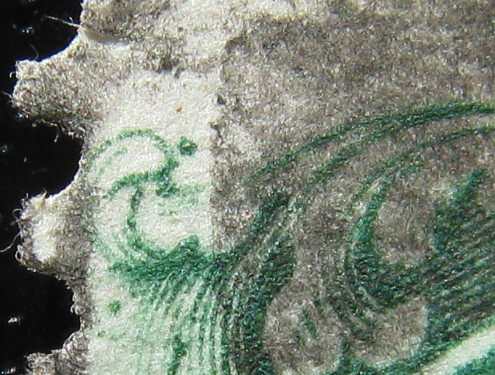 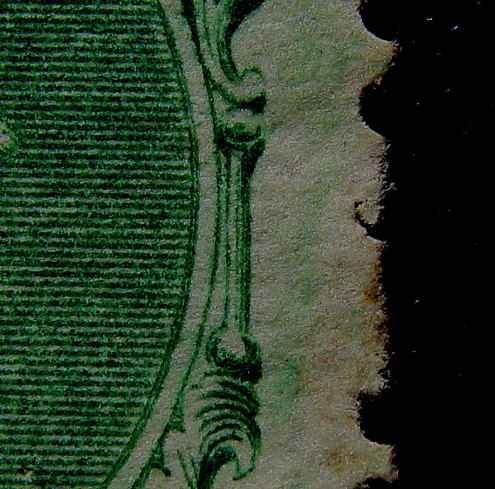 |
|
Send note to Staff
|
|
|
|
|
Pillar Of The Community
United States
1125 Posts |
|
|
The dot is a guide dot used when laying out the plate. They put the dots down, then aligned the transfer roller to the dots.
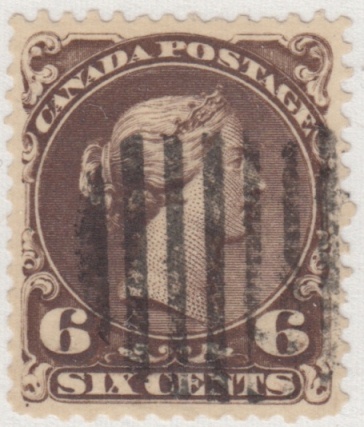
They are especially noticeable on the 6 cent, where they can be seen under the image at the lower left corner or under the word "Six"
The green on the right is caused by one of two things:
- As they pressed the image into the plate, the metal could come up on the sides of the impression. If noticeable, they would burnish it out. In this case, either they didn't think it was bad, or they didn't burnish it enough.
- It's a bit of extra ink that wasn't wiped away properly. They inked the plate, then wiped the plate, hopefully leaving ink only in the grooves. If they didn't wipe it well enough, some ink remained and was transferred to the paper.
Either way, no big deal.
C.
Just for curiosity, are you a fan of conspiracy theories? You seem to find stuff everywhere that you attribute to something more than it usually is. The answer is usually simpler than you make it out to be - this stuff was made by hand, under time pressures, and printed on crappy paper. Quality control was not the best. |
Send note to Staff 
|
|
|
Pillar Of The Community
United States
1125 Posts |
|
|
Valued Member
410 Posts |
|
|
Pillar Of The Community
Canada
2277 Posts |
|
|
As Chip said with many of the examples you have posted , you have to consider the time and materials they were using. I'm sure no printer or engraver ever thought nearly 150 yrs later people would be flyspecking their work with the intensity we do now. That said you are finding some great anomolies and showing them very well but you have to be careful . Re entries for example are well documented from specific plate positions after the research of the full sheets and plates from archives. Thats not to say there arn't many printing issues that are far more dramatic and theres times when those EFO 's should probably be worth more than the cataloged varieties. However wether we agree or not the catalog varities are what are sought after and wanted. Trust me I have found some very strange unique things on stamps from unlisted perfs to 1 of a kind tagging mishaps but they have no place in anyones album and no value can be set so they basically fall to the side.
Don't let anything said here or anywhere else stop or sway you from doing the searching you do, as I said before you have a good eye and there are many things still to be found.
|
|
Send note to Staff
|
|
|
Valued Member
410 Posts |
|
|
Pillar Of The Community
United States
1125 Posts |
|
|
Pillar Of The Community
607 Posts |
|
|
Dot UL is probably an alignment dot for counter or imprint, both of which appeared in selvedge at top of sheet. The large upper margin suggests a top row stamp. |
|
Send note to Staff
|
|
|
Valued Member
Canada
69 Posts |
|
|
@nitrolures: I know that these fly-speck errors are best put in the EFO category, but I'm surprised by your comment that unlisted perfs (and to a lesser extent, tagging errors) have no place in a collection. For the perfs, especially, it could be that you found the first example of a major error. (Or it could be a fake, too, I suppose). |
|
Send note to Staff
|
|
|
Pillar Of The Community
Canada
1416 Posts |
|
|
Finding unlisted varieties may still be a rewarding experience, such as the one I was lucky to find on a 5$ diamond jubilee. It has since been explained and posted by Mr. Trimble on this web site. http://www.re-entries.com/jubilee16_S5.html (see#3) The lesson here: keep looking since you never know what lies in that pile of stamps. |
|
Send note to Staff
|
|
|
Pillar Of The Community
United States
728 Posts |
|
|
I agree with Gilles le timbre. You never know what you might find this is a link to a never before discovered 1 cent Jubilee re-entry I stumbled upon http://www.re-entries.com/jubilee2_1c.html (see #1). A keen eye and a magnifying glass come in pretty handy. Enjoy the hunt and keep sharing what you find. |
|
Send note to Staff
|
|
|
Valued Member
410 Posts |
|
|
Those Diamond Jubilees are very nice discoveries. Congrats on those! Thanks very much to all of you for your encouragement. |
|
Send note to Staff
|
|
|
Pillar Of The Community
Canada
1416 Posts |
|
|
Nice one Michael. I also like the corner block of 4. Time to check my 1c jubilees... |
|
Send note to Staff
|
|
|
Pillar Of The Community
Canada
2277 Posts |
|
|
In no way do I mean these types of items don't have a place in a collection and in fact I believe these things are what truly makes a collection. I find the issue more with album pages and catalogs that give the impression that all there is to find is what is shown. Even some specialist would rather excuse some of these things instead of investigating the option of other possibilities. Short of expertization and even submission to a catalog alot of the coolest finds don't get alot of recognition. Below is the tagging freak I found on the $5 moose. There is always a the small security moose on these only seen with UV but this pair is a total wash with tagging agents. I can even explain what likely happened in the printing process but short of a few more being found it just has a good home with me. [URL=http://s1134.photobucket.com/user/nitrolures1/media/mooseuv2.jpg.html"]  [/URL] |
|
Send note to Staff
|
|
|
Valued Member
410 Posts |
|
|
When I first found this dot in UL corner I was quite excited considering there was also a guide dot in the LL corner so I submitted this stamp to Ralph Trimble. Ralph responded today and here is what he said:
"I do not believe this is a re-entry. The interesting dot in the UR corner
could possibly be the one referred to by Lees-Jones in Duckworth's book on
the Large Queens. Under "Other plate varieties" is a notation that reads,
"No. 2 of Plate has a guide dot at the N.W. corner, almost touching the
part of leaf that curls round at the corner....This is said to be on
"Plate 2". We have seen an example dated NO 7/71." While not illustrated,
this seems to fit your stamp very well. The ink in the right margin, is,
as you surmise, likely just an improperly wiped plate.
Interesting stamp!
|
|
Send note to Staff
|
|
|
Valued Member
410 Posts |
|
|
Doe's anyone have any idea what a "plate variety" Large Queen like this might be worth? |
|
Send note to Staff
|
|
|
Replies: 46 / Views: 7,808 |
|




 Posted 02/24/2014 4:41 pm