| Author |
 Replies: 27 / Views: 6,439 Replies: 27 / Views: 6,439 |
|
Pillar Of The Community
United States
728 Posts |
|
|
This is what appears to be a guide line in the lower left of stamp. Running up through S of SIX, through the 6 and into the oval and shading lines above. I have been informed that it is a constant variety. 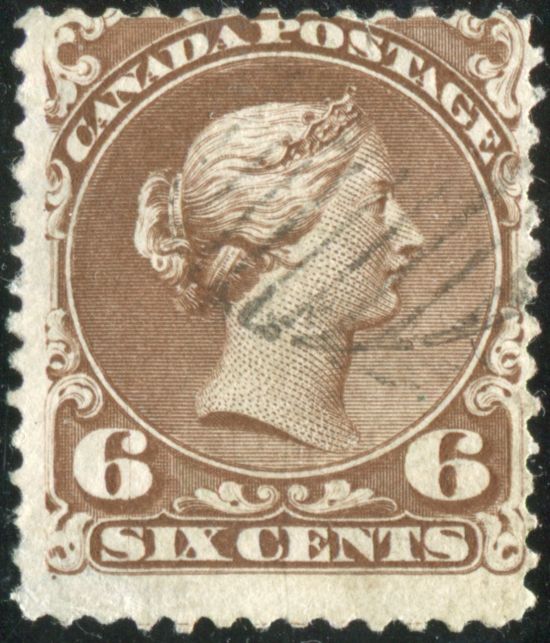 |
|
Send note to Staff
|
|
|
|
|
Pillar Of The Community
United States
8956 Posts |
|
|
Watermark, I am not used to seeing guide lines through the stamp. Was this normal at one time? I have a fairly large collection of guide lines on modern stamps, but they are all either to the left or to the right, or above or below the design!
Peter |
Send note to Staff 
|
|
|
Pillar Of The Community
United States
728 Posts |
|
|
When they laid the die into the metal plates they used various dots and lines to help align the images on the plate as the die was rocked into the steel plate an image at a time. The plates were usually 100 to 200 images. Usually the lines were hidden by the image when they rocked the die into the plate. Sometimes the plates were not prepared correctly and stray lines show up. If a mistake was bad enough it would be burnished from the plate. Sometimes they would not remove the whole mistake and an odd line shows up on stamps. I have seen a number of these and sometimes they are curved lines instead of straight. They also might be associated with guide dots. They can be found quite often on engraved stamps. These should not be confused with re-entries which are caused by re-rocking a die into the plate to repair or strengthen an image and could cause a doubling of some lines in the image of the stamp. |
|
Send note to Staff
|
|
|
Pillar Of The Community
United States
8956 Posts |
|
|
Watermark, very interesting! I did not know this.
The stamps I collect are the US Transportation Coils, and some of these were printed on the Cottrell presses. The stamps were engraved, and the engravers did use plenty of dots and lines. I call them LOM's or Layout Markings.
These LOM's were supposed to be removed, but a lot of them escaped!
Peter |
|
Send note to Staff
|
|
|
Rest in Peace
7742 Posts |
|
|
Even before drum/roller presses..They used old school equipment as shown in the pictures below..I have used every one of these pieces of equipment when I was training to be a printer/lithographer.  These Linotype machines had a keyboard to produce slugs (printable type)...They used molten lead to create the slugs as shown below which were .918 inches tall.  For quicker set up we had previously created individual slugs that could be use over and over again..They were taken fro a tray as shown below.  The final step was to add design blocks as seen in older stamps that could be added with the words to form a complete design...They, back then might use a platen press as shown below. 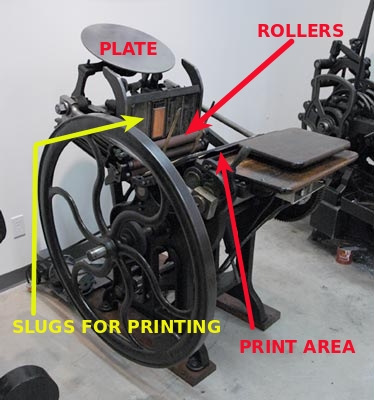 You would add ink to the top plate and as the rollers came up, it would pick up and ink the slugs/blocks for printing..Each individual sheet was hand fed to the print area and it would close and make and impression..as it opened you had to remove it and feed another one before it closed...Back then when you had stamps that had a raised desigh/numbers/words etc. we had to spray them with a powder that chemically reacted to the wet ink to raise the affected area.. |
|
Send note to Staff
|
|
|
Pillar Of The Community
United States
2963 Posts |
|
|
I love seeing this, Wert! When I graduated from HS, my best friend's dad (who was old enough to be our grandfather) had almost the exact same printing press from his days as a printer in his basement. He had drawer files lining the basement full of all kinds of dies. I got to print my graduation announcements and cards on this press. It was a blast to use!
Brian |
|
Send note to Staff
|
|
|
Moderator

United States
12330 Posts |
|
|
Fun fact, apologize for being a bit off topic…
Ever wonder where the terms 'upper case' and lower case' came from when discussing the whether or not letter are capitalized? These were the locations of the type cases (drawers) used to hold the movable type for letterpress printing. Capital letters were kept in the upper cases and non-capitals kept in the lower cases.
don
|
|
Send note to Staff
|
|
|
Pillar Of The Community
United States
2963 Posts |
|
|
Rest in Peace
7742 Posts |
|
|
Pillar Of The Community
Canada
1084 Posts |
|
|
Wert: one of my jobs roughly 60 years was melting down what I believe were zinc plugs on Saturday mornings at the local newspaper office. Some days my brain is like mud but "linotype" sure sticks in my mind.
Watermark: great image of Canada Scott#27 |
|
Send note to Staff
|
| Edited by cynical - 04/28/2014 7:42 pm |
|
|
Pillar Of The Community
Canada
5821 Posts |
|
|
Wert, thanks for showing those pics and your personal
experiences in the printing trade. |
|
Send note to Staff
|
|
|
Rest in Peace
7742 Posts |
|
|
cynical..So you have had first hands on experience with slugs...I High School we used to trow water into the lead pots that eventually became slugs...You know what happen when you add cold water to hot lead..Hey, but it was fun. Rileysan,,,You make me feel old...haha lithograving...Thanks old buddy..Glad you enjoyed it...  |
|
Send note to Staff
|
|
|
Rest in Peace
Canada
5701 Posts |
|
|
Rest in Peace
7742 Posts |
|
|
Quote:
was melting down what I believe were zinc plugs cynical..Are you sure t was zinc..or was it lead as I used.. Robert |
|
Send note to Staff
|
|
|
Pillar Of The Community
3865 Posts |
|
|
Rest in Peace
Canada
5701 Posts |
|
|
Here it is Jogil. It is definitely not laid paper  . It has horizontal grain as it curls that way when I do the "breath" test. Perforation is 11.94 x 11.94 on my LQ/SQ gauge. 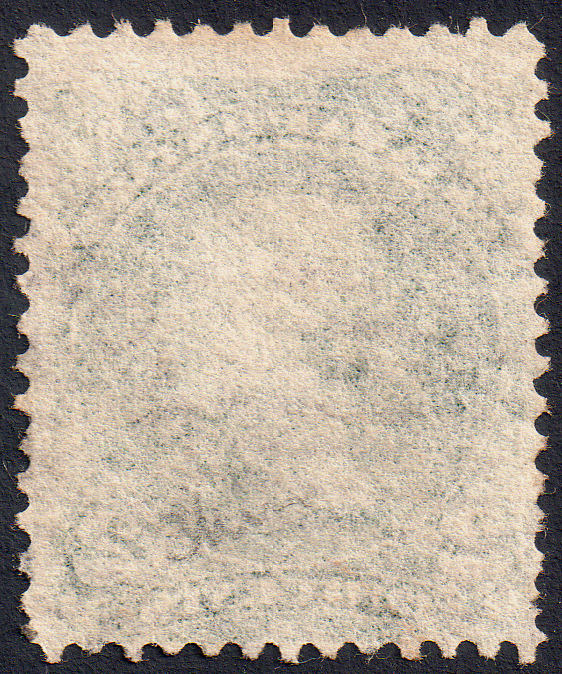 |
|
Send note to Staff
|
|
| Edited by BeeSee - 06/24/2017 1:23 pm |
|
|
Replies: 27 / Views: 6,439 |
|




 Posted 04/26/2014 5:10 pm