Note: Bumped Thread from 2014.
FYI
1976 New Press takes over printing of the Christmas Issue.
"Winter Pastime" Nathaniel Currier
Sc#1702 13c

U.S. CHRISTMAS STAMPS INTRODUCE NEW PRESS
The Postal Service has announced that approximately 70 per cent, of
the stamps based upon the Currier print, "Winter Pastime," will be
printed on the gravure portion of a new webfed eight-colour
combination gravure-intaglio press recently installed at the Bureau of
Engraving and Print-ing. The intaglio portion of the new press will
not be utilised for this issue.
The remaining 30 per cent, will be printed on the conventional
gravure press formerly known as the Andreotti press and will differ
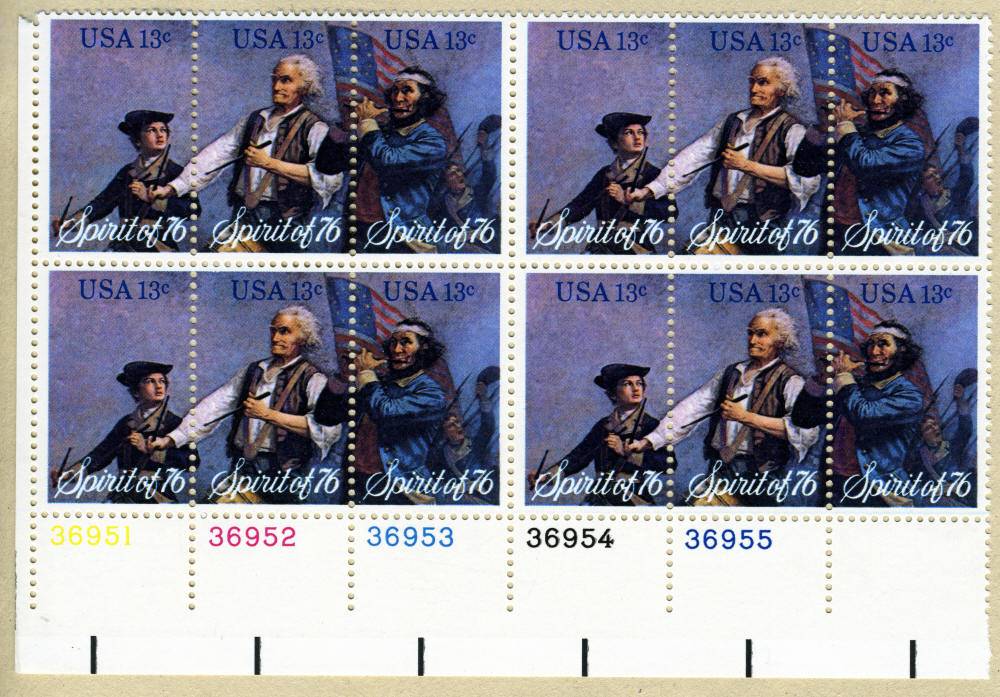
from those printed on the new press. The most apparent differences
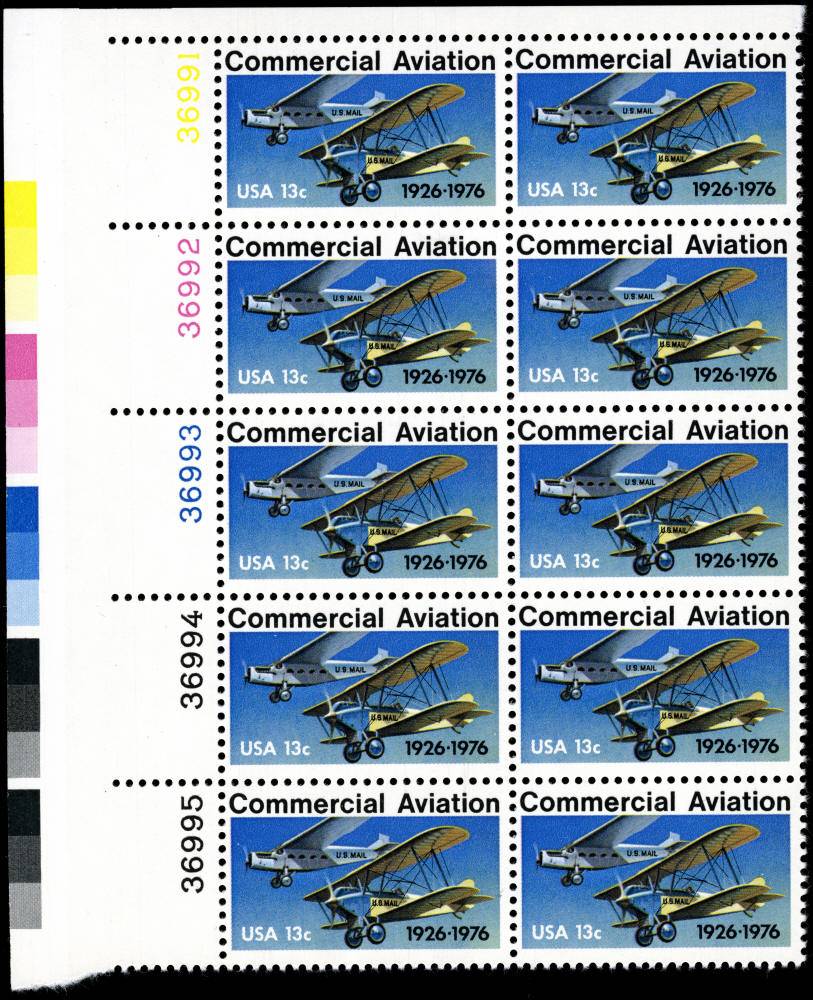
will have to do with the pane format, position of plate numbers, and
absence of some familiar marginal inscriptions.
Sheets produced on the Andreotti press will be of the standard
four-pane layout. The first plate numbers will appear in the usual
positions on each of the four panes as will Mr. ZIP, "Use Zip Code"
and "Mail Early in the Day."
The sheet format for stamps produced on the new press will be
markedly different. While there will be. four panes to each sheet,
there will be no horizontal and vertical gutters to provide selvedge all
the way around each pane.
There will be a vertical strip of selvedge on the right side and on the
left side of each sheet. This means' the two panes forming the left
half of the sheet will have selvedge on their left side of each sheet.
This means the two panes forming the left half of the sheet will have
selvedge on their left sides only and that the two panes forming the
right half will have selvedge on their right sides only.
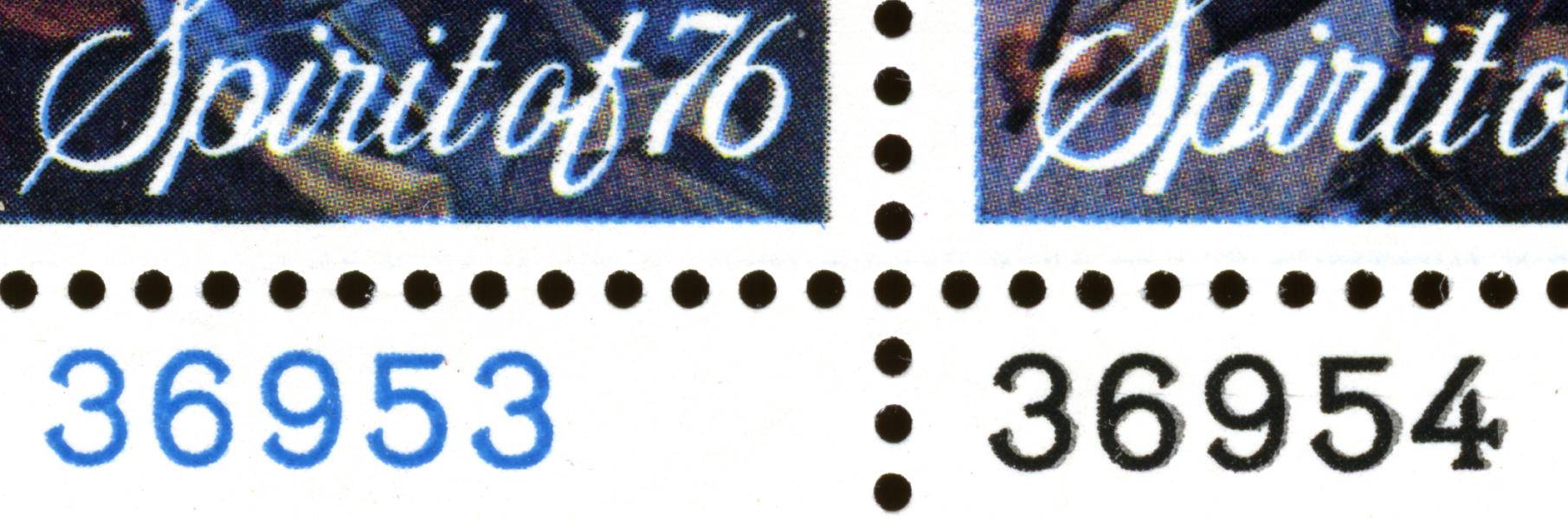
The five plate numbers will move progressively up and down the
selvedge on a pane-to-pane basis as a result of each full rotation of
the gravure cylinders printing two panes and three rows of stamps.
The plate numbers, therefore, will move with each successive
impression on the web of paper.
In addition to "floating" plate numbers and the absence of gutters,
panes of stamps produced by the new press will be distinguished by
the absence of Mr. ZIP, "Use Zip Code" and "Mail Early in the Day."
Stamps removed from panes can be identified by slight variations in
colour. These differences resulted from use of solvent-based inks on
the Andreotti press and water-based inks, on the new press.
The impending use of the new press was announced by the Postal
Service and the Bureau of Engraving and Printing at the Fourth
National Philatelic Symposium last January in Tempe, Arizona,
Both agencies said at the time that there were only two courses of
action to be taken with regard to the plate numbers — allow them to
"float" or trim them off entirely.
Gordon C. Morison, Director of the Office of Customer Programmes,
said the Postal Service after careful consideration decided it would
direct the Bureau of Engraving and Printing to let the plate numbers
"float."
"We concluded that to trim off the plate numbers would be to decree
that nobody could collect plateblocks for issues printed on the new
press," Morison said, "We decided, therefore, to leave to the
individual philatelist the decision to collect them or pass them up."
He pointed out that if the new press performs to expectations,
as-many as half of the future commemorative issues could be
produced on it. "Our removing plate numbers from all of these wouh(
have amounted to the Postal Service saying that no collector,
regardless of his or her wishes, could save plateblocks from a
significant number of issues. But, by allowing the numbers to remain,
the Postal Service is saying the collector who wants them isn't bound
by the preference of the collector who doesn't want them."
The combination press promises to represent an important
development in U.S. stamp printing, combining the full-colour
potential of gravure with the sharpness and clarity of recess
engraving.
The press, when fully employed, is to be capable of printing regular,
commemorative or booklet stamps on a web of pregummed, coated
paper, phosphor-tagging them, pre-cancelling them and printing on
the back if desired, perforating, cutting and delivering stacks of 100
sheets.
Source : Australian Stamp Monthly, October 1976





 Posted 04/30/2014 5:03 pm









 in the most part, you are way over my head. I do post items I know that you will find interest.
