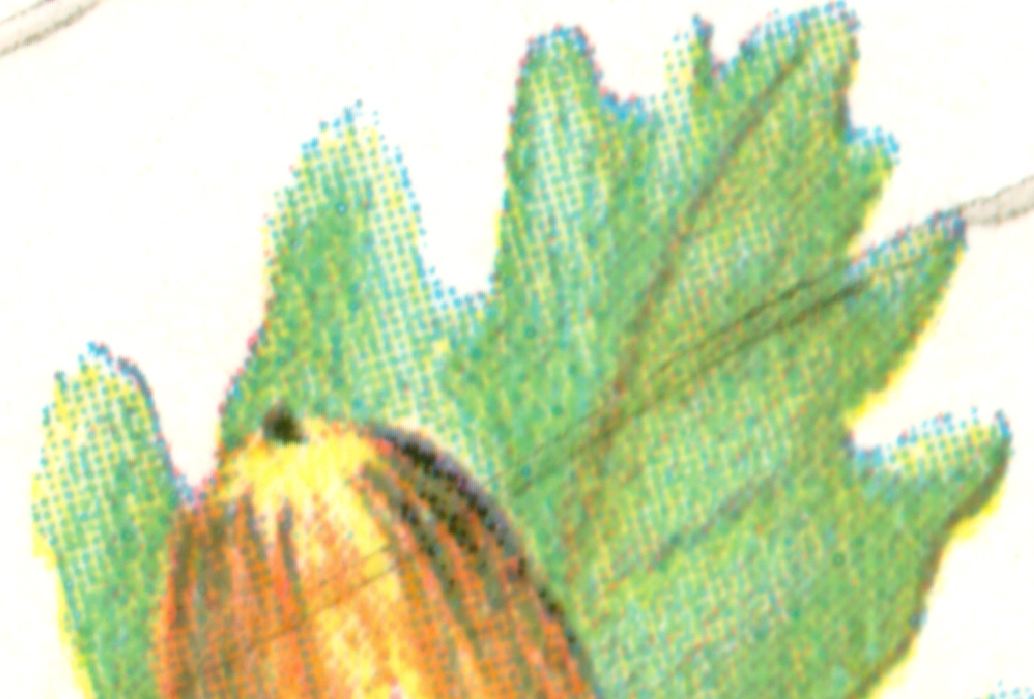
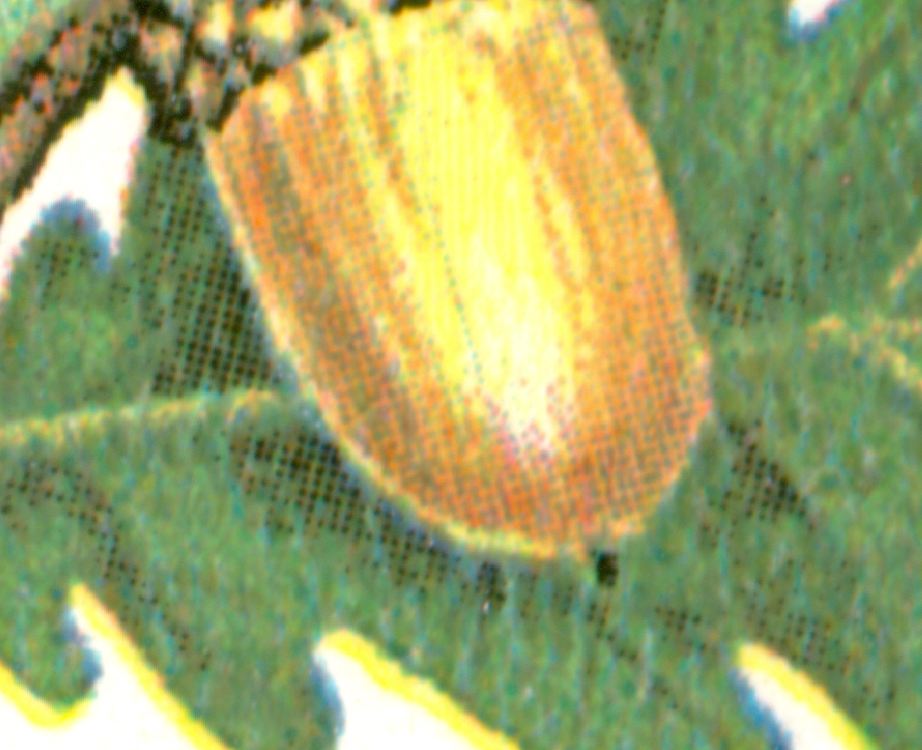
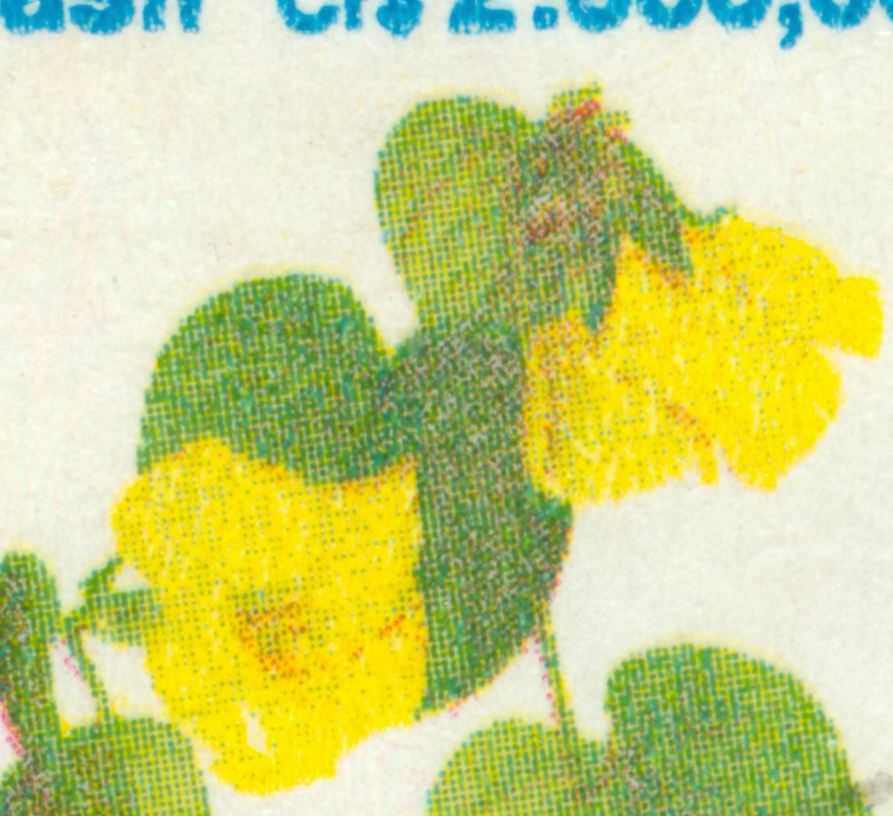
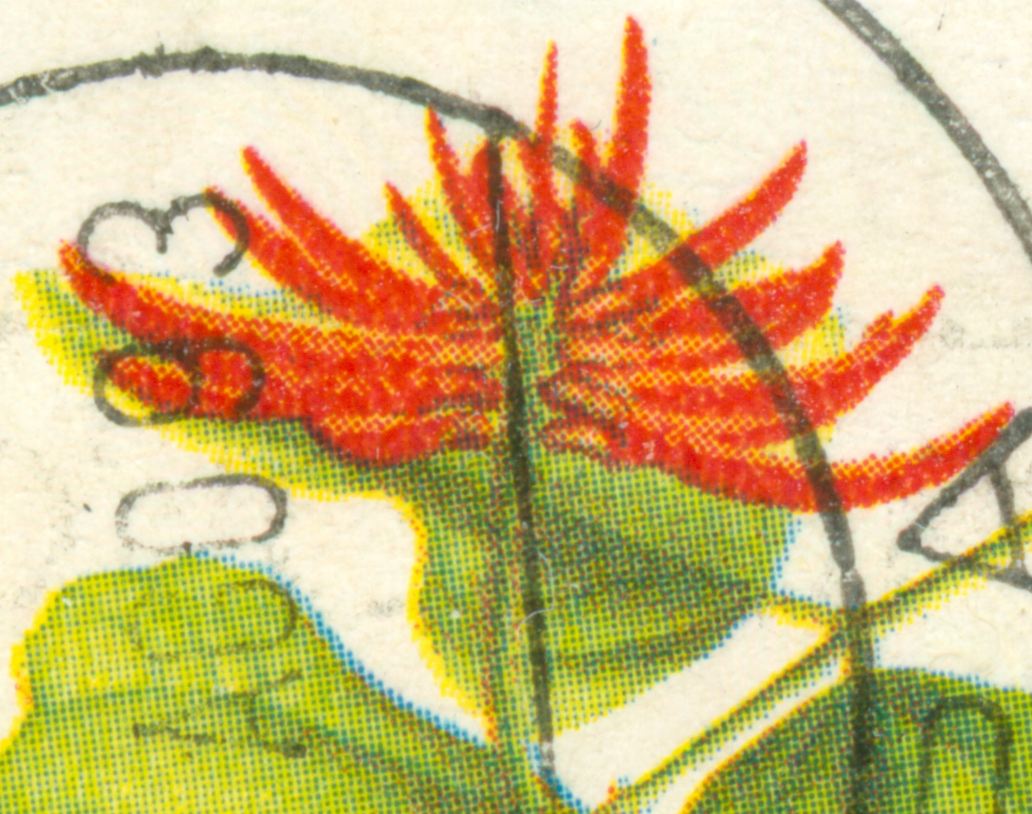
José Leal: Sometimes halftone litho-offset and photogravure look very similar, in such cases the main differences from each other is that in photogravure there are a great variation in tone, in litho-offset doesn't.
José,
the difference lies in the type of screens used for half-tones:
i.g. depth-variable dots for photogravure and surface variable for offset-litho and typography. The layer of ink is equally "deep" everywhere but the surface of the dots can vary.
This goes for traditionally etched photogravure! The electro-mechanical engraving, however, has a combination of BOTH depth-variable and surface variable dots in the screen! For postage stamps this method was used in Belgium for the first time! In 1982! Only several years later, other countries followed like the US, Japan, etc. The first UK stamps in EME were printed by Joh. Enschedé of Haarlem, The Netherlands, in 1991 for several Machin QEII definitives. The UK printers hardly used the EME process properly for the Machins! The dots in EME usually have a rhombic shape [for the cyan blue and magenta colours] or square for black and yellow. Both Harrison & sons [later De La Rue] and Walsall Security Printing prefer to have square dots for all colours! So you really can not tell it was EME unless you pay attention to the dots of the outlines where smaller and less deep ones can be seen!
Apart from this there is an autotypical photogravure - surface variable dots - used for postage stamps in a limited number of occasions! Quite some USA stamps, a few Polish stamps, some Brasil stamps and even a few Irani [Persian] stamps!
Disclaimer: While a tremendous amount of effort goes into ensuring the accuracy of the information contained in this site, Stamp Community assumes no liability for errors. Copyright 2005 - 2026 Stamp Community Family - All rights reserved worldwide. Use of any images or content on this website without prior written permission of Stamp Community or the original lender is strictly prohibited. Privacy Policy / Terms of UseAdvertise Here





 Posted 05/04/2014 11:08 am